
Something for every season: Fashion, curiosity, and community at the GRPM’s new archive center
Inside the Grand Rapids Public Museum’s new Archives Center, Kendall College of Art and Design students are turning decades-old garments into inspiration for their next designs.
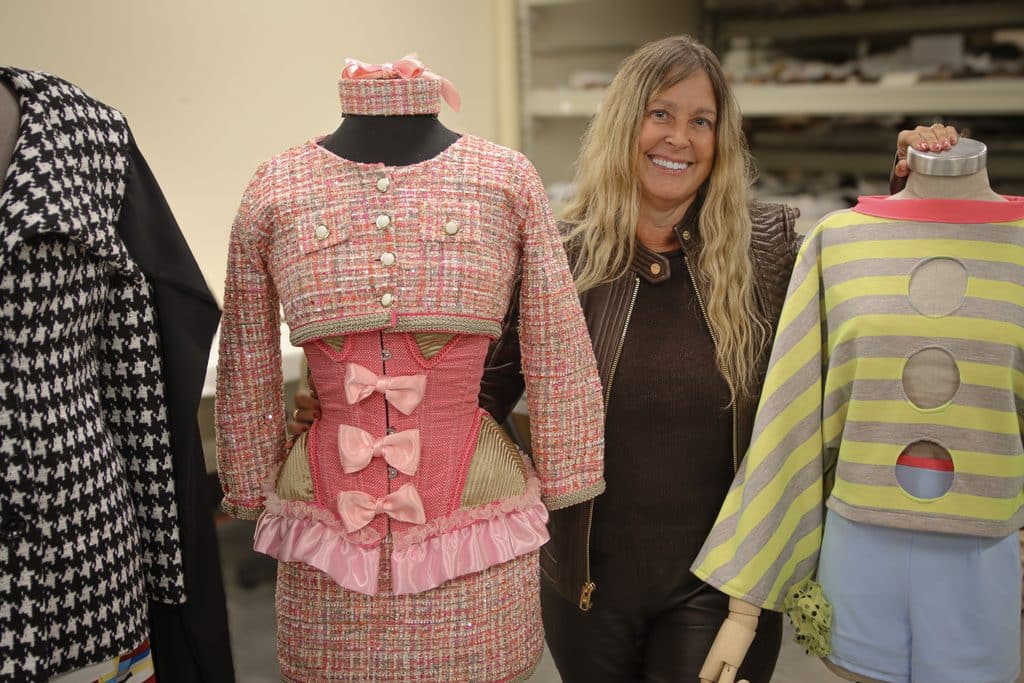
Expecting a simple story about a fashion collection when I arrived at the Grand Rapids Public Museum’s Archives Center, I instead discovered a community being granted access to its vast historical wardrobe—a powerful reminder of why this institution feels so deeply connected to the city and provides a place for curiosity to flourish.
Justin Vanderlaan felt it the moment he walked into the fashion archive.
“As soon as I arrived, my jaw dropped,” says Vanderlaan, a junior in the Fashion Studies program at Ferris State University’s Kendall College of Art and Design. “I didn’t realize how big it was.”
Wearing protective gloves, he wandered the aisles of clothing organized by period, examining everything from pleats and embroidery to delicate seams. When he and KCAD Fashion Studies Professor and Chair Lori Faulkner spotted uneven stitching attaching a sleeve to a garment, they recognized that it had been sewn by hand.
It is the kind of detail most of us might walk past. For a designer, however, this level of access through KCAD’s partnership with GRPM can be both educational and inspiring for one’s next idea.
Beyond the front door are 250,000 artifacts
Rapid Growth Media visited as the Museum was preparing to open the newly completed public space inside its Archives Center at 223 Washington St. SE. The facility houses roughly 95% of GRPM’s collections—more than 250,000 artifacts and specimens.
“The Museum’s collections belong to the community,” GRPM President and CEO Dale Robertson said at the center’s opening day.
That promise was already being fulfilled one floor away, where Vanderlaan held a sleeve up toward the fluorescent lights to study the garment’s construction.
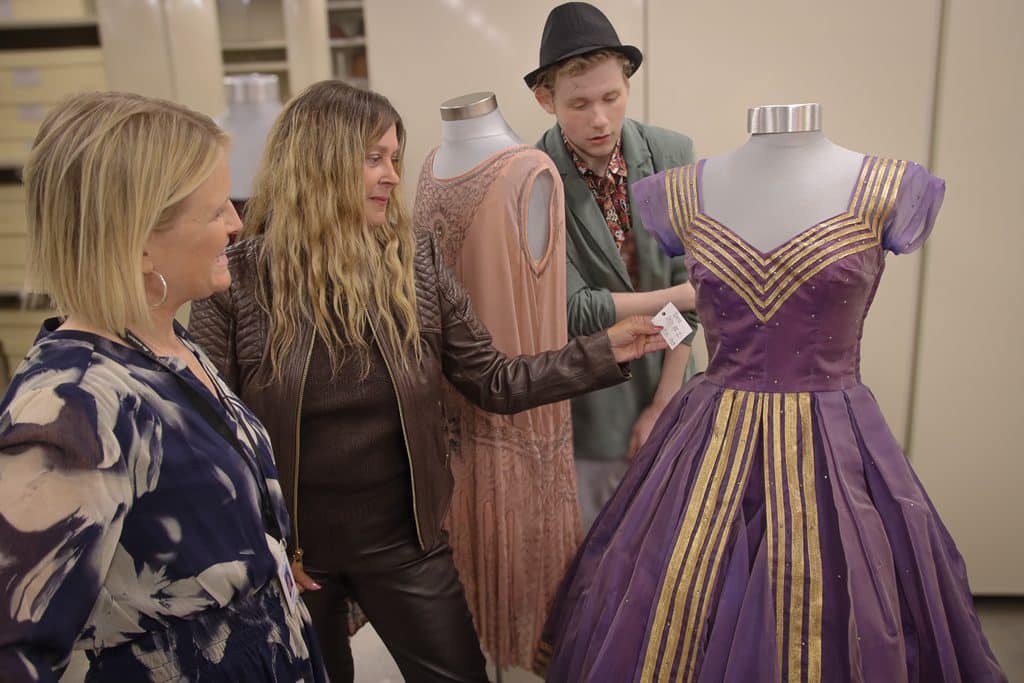
GRPM opened its fashion archive to journalists on this day just as New York Fashion Week was getting underway. Far from the booming runway soundtracks, glasses of champagne, and superficial air kisses, we found ourselves inside what Andrea Melvin, GRPM’s senior collections curator, warmly calls “Grand Rapids’ largest closet.”
Melvin displayed archival pieces beside contemporary creations handcrafted by KCAD students, including a striking work by Vanderlaan. Together, the garments allowed us to study how historical influences continue to flow into contemporary design.
A community preserved in clothing
The numbers alone are a lot to take in: 10,000 pieces of clothing and accessories, from wedding dresses and military uniforms to shoes, hats, children’s clothing, athletic wear, and what people wore to move through an ordinary day.
Melvin has worked at GRPM for about 16 years. She says the collection was already rich in pieces connected to local people and their stories when she arrived. Much of it exists because someone decided that what they wore or inherited was worth preserving.
“The community is extremely generous,” Melvin says. “It’s what the community wants to save, wants to see here in the Museum – their voices here in terms of that curation.”
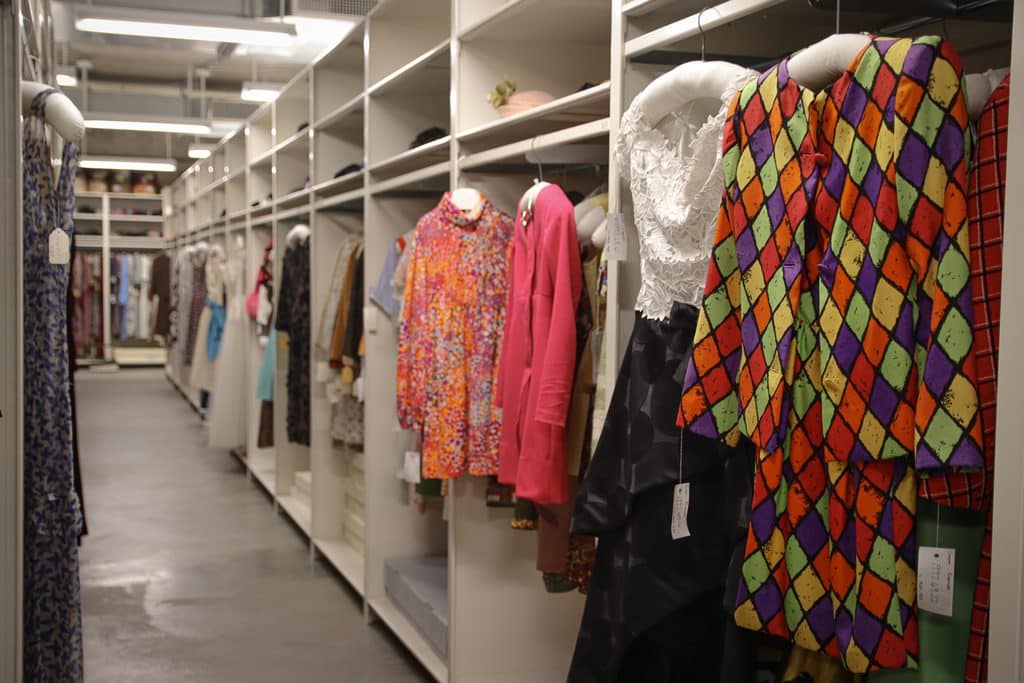
Formal wear tends to find its way into museums naturally as families preserve wedding dresses and baptismal gowns the way they preserve photographs. What lights Melvin up is the collection’s archive of everyday clothing: swimsuits, athletic wear, and the things people normally use until they fall apart.
“I think people have done a really great job in this community of deciding that it’s important to document the everyday and everyday life and those experiences that we have,” she says.
Together, these garments create an incomplete but continually growing portrait of West Michigan. It helps us see what earlier generations valued, wore, and believed was worth passing down. They can also reveal what was left out.
Thankfully, a major inventory and digitization project helped GRPM identify those gaps. Melvin says the Museum is actively seeking contemporary menswear, inclusive sizing, gender-neutral fashion, and garments made from sustainable or unusual materials.
Out of the closet, into our (gloved) hands
But what does ten thousand garments mean if no one can find or study them up close?
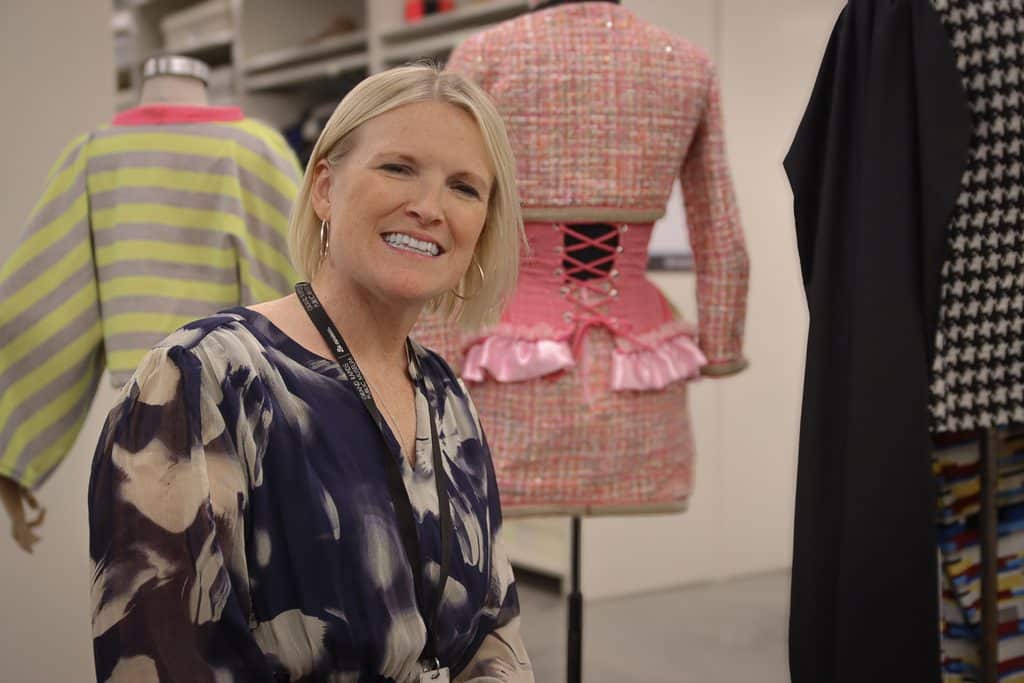
Melvin spent several years working with KCAD interns to photograph the collection and expand GRPM’s online records. They documented designers, construction details, donor histories, and, when available, stories about where garments were worn. Some pieces were photographed to reveal their interiors, allowing researchers to study hidden seams and construction methods.
“When it comes to fashion, the importance is actually in the details,” Melvin says.
The digitization project also helped GRPM develop exhibitions such as the wildly popular “Fashion + Nature,” which ran from 2022 to 2025 and examined fashion’s relationship with the natural world, including the industry’s environmental toll and emerging, innovative approaches to sustainability.
For Faulkner’s students, the online catalog is useful, as digital access is easy. Entering the physical archive, however, creates another kind of discovery.
“It’s one thing to go to a museum and see what they have on display—to see what has been curated and chosen for you to look at,” Faulkner says. “It’s a whole other thing to walk into an entire collection where you become the curator of your own designs.”
Bring 10 students into the archive, she says, and they will follow 10 different paths. Each arrives with a distinct eye, pulling details from garments and historical periods that collide with ideas already developing in sketchbooks, mood boards and camera rolls.
A young designer encountering so many forms of construction, fabrication, and expression can feel their “brain go into this whirl,” Faulkner says.
“They’re seeing what’s been done,” she says. “They’re seeing it with new eyes, and that helps them to create what they want to do that’s different than the past.”
Learning how to see
The archive teaches students to look beyond a garment’s appearance and into how it was made.
They determine whether embroidery was completed by hand or machine, examine how a pleat was formed or a sleeve attached, and study how different fabrics move. They learn to distinguish silk from polyester and ready-to-wear construction from couture.
Fashion does not move in a straight line from old to new, Faulkner says. It circles back. Materials and techniques fall out of use and later become relevant again – a lesson that matters as the industry confronts textile waste and the costs of fast fashion on the planet’s health.
Sustainability is built into KCAD’s fashion curriculum, but it is also a practical necessity. Fabric is expensive, so students often turn to transforming donated textiles, thrift-store suits, and even old curtains into upcycled designs. Faulkner challenges them to use as much of a garment as possible when deconstructing and rebuilding it.
In this example, the limitation becomes the assignment: What can be made from what is already here?
From classroom to community
When Faulkner began building KCAD’s Fashion Studies program in 2012, she made community experience central.
Students work with GRPM and other cultural institutions, including the Grand Rapids Art Museum, Grand Rapids Civic Theatre, Grand Rapids Ballet, and Opera Grand Rapids. Other partnerships include local businesses, like Wolverine Worldwide, Meijer, and Public Thread, whose proximity to the fashion industry also shows students how to go from an idea to a sketch to a finished product.
Faulkner says that by graduation, her students already understand many of the region’s professional and cultural institutions and how to navigate them.
“They feel like they’re already part of the community because their work has been out there,” Faulkner says.
For Vanderlaan, that access distinguished KCAD from the larger fashion schools he once considered for his education. West Michigan may not carry the fashion reputation of New York or Paris, but KCAD gives him room to explore and build a strong foundation before entering those larger worlds.
“Part of learning as an artist is learning from other people,” Vanderlaan says.
Studying an older garment is not about copying it. It is about understanding how another maker solved a problem, thus moving us forward with what they created.
Kaleidoscopic Kraziness
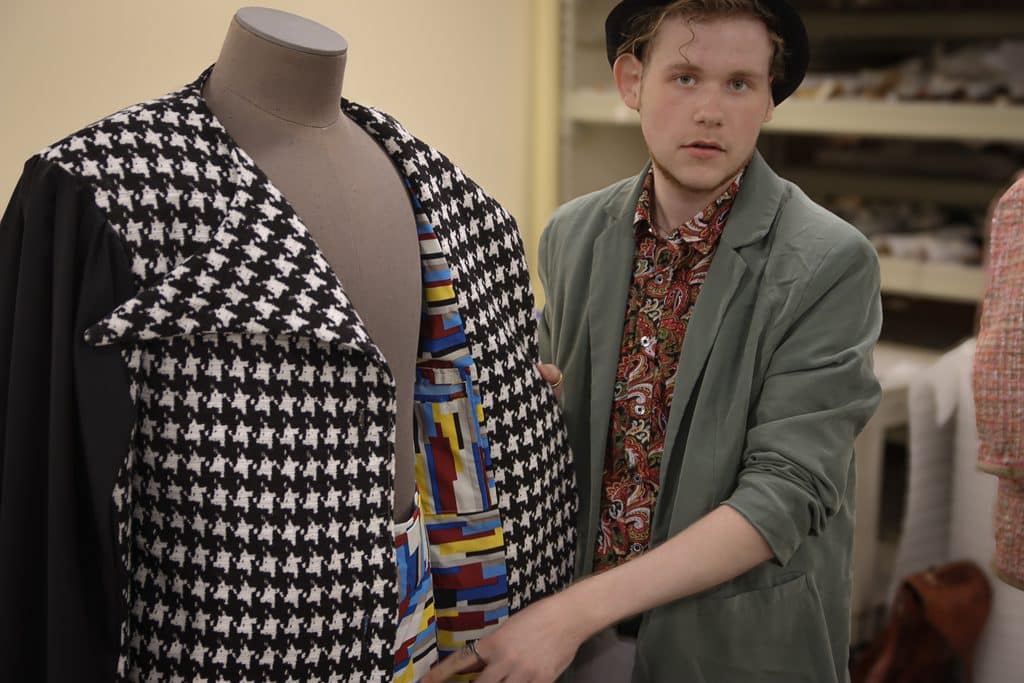
Vanderlaan’s own garment, curated by Melvin, stood near three mannequins she had dressed in response to the students’ pieces with fashions from GRPM’s archive.
Titled “Kaleidoscopic Kraziness,” Vanderlaan’s extreme-silhouette suit pairs black-and-white houndstooth with a vivid lining that resembles a Mondrian painting when the blazer flares open.
“I wanted this suit piece to have lots of patterns, colors, and shapes – hence why it’s called kaleidoscopic – almost reaching the point of gaudy,” he says. “I wanted a wow factor that would bring your attention to how amazing menswear can be.”
The idea began with Vanderlaan’s lifelong attraction to color and pattern, as well as his frustration that interesting clothing often appeared in the women’s section while menswear remained safely restrained.
“I wanted to create something to my liking,” he says. “I want to wear clothes that make me feel good and comfortable inside, even if that means I get random strangers staring at me.”
For Vanderlaan, clothing is both construction and self-expression. During his time in GRPM’s archive, we found him sketching new possibilities, including a men’s corset he hopes to create in an upcoming class.
A collection still being made
The garments inside “Grand Rapids’ largest closet” represent many versions of West Michigan, revealing how people celebrated, worked, played, conformed, and even pushed back through what they wore.
But the collection is not finished because the community behind it is not finished.
Young designers entering GRPM’s archive are not only learning from those who came before them. They are helping the Museum consider whose bodies, identities, and experiences should be represented as the collection grows.
Some of what the students make today may become artifacts that a future generation studies to better understand us and our time through our fashions.
Through its expanding connections with area educational institutions – and now through greater public access via its Archives Center – our GRPM is building another bridge to encouraging community curiosity. Much like our own closets, with pieces we cannot part with because of what they mean, history does not hang quietly on a rack here. It simply waits for someone like Vanderlaan to look closely, understand how it was made, and begin the work of sketching what comes next in our story.
Photos by Tommy Allen
This story is part of the Bridge to Community Curiosity, underwritten by the Grand Rapids Public Museum. Through this partnership, we highlight GRPM’s mission to inspire curiosity, deepen understanding, and foster belonging by showcasing the transformative power of arts and education in West Michigan.
Related Articles
Can “Poetry Saves Lives?” Festival shares how poetry benefits mental health
Free three-day event includes panel of local mental health professionals.
#RG20LookBack: When public art becomes a part of the place
In his 31st #RG20LookBack column marking Rapid Growth’s 20th anniversary, Publisher Tommy Allen revisits Grand Rapids’ relationship with public art, from Calder and Maya Lin to ArtPrize, and considers what the city might make room for next.
Kent District Library lets neighbors borrow, discover and explore together
From birdwatching kits to local music, KDL helps people try new things, save money, and share experiences.


