How Michigan organizations are tackling food insecurity on the local level
Fair Food Network, Groundwork Center for Resilient Communities, and Detroit Food Policy Council increase families’ healthy choices while supporting local growers and retailers.
At a Michigan farmers market, Holly Parker watched a young boy excitedly pick out fresh peaches. His mother explained that they had purchased peaches the previous week through Double Up Food Bucks (DUFB), a program that helps families receiving food assistance afford fresh produce. Until then, she had never bought peaches for her son. With a limited grocery budget, trying an unfamiliar food was a financial risk she couldn’t afford. What if he didn’t like them?
But he did. And now they were back for more.
For Parker, CEO of Fair Food Network, the exchange illustrates how something as simple as buying fruit can carry financial consequences for families struggling to put food on the table. Across Michigan, organizations are helping families stretch grocery budgets, connecting local farmers with food pantries, and strengthening neighborhood food systems.
Alyssa Beaver, a member of the Detroit Food Policy Council, says conversations about food access often focus on the availability of grocery stores. While proximity matters, she emphasizes that food insecurity is fundamentally an economic condition. Families must balance grocery expenses with rent, utilities, transportation, and medical bills. Even when food prices remain stable, rising costs elsewhere can leave less money for groceries.
“If something else gets expensive, like gas, that’s more money elsewhere that you need to spend,” Beaver says.
Benefiting families, farmers, and grocers
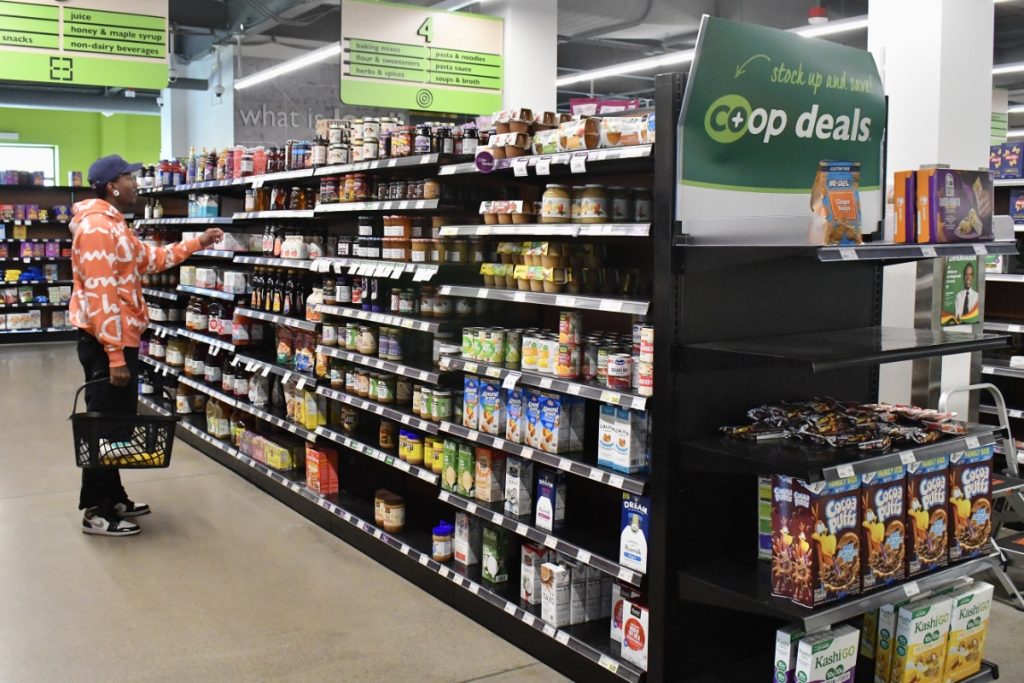
In Detroit, residents without reliable transportation may depend on smaller neighborhood grocers where prices can be higher than at national chains. Rural families face different obstacles, including long distances to supermarkets and the expense of getting there.

Beaver advocates for income supports, tax credits, and food assistance programs that help families afford groceries. During the pandemic, expanded Supplemental Nutrition Assistance Program (SNAP) benefits helped families manage financial strain. As those measures ended, many households faced rising living expenses with fewer resources. For Fair Food Network, one way to address affordability is to make existing food assistance dollars go further.
The Michigan-based nonprofit launched DUFB in 2009 at a handful of Detroit farmers markets. Today, the program operates at roughly 250 participating locations statewide, including grocery stores and farmers markets. DUFB matches eligible SNAP purchases dollar for dollar, providing additional purchasing power for fruits and vegetables. The program recognizes that families managing tight budgets cannot always prioritize fresh produce, particularly when less expensive alternatives may last longer.
“The risk of bringing home food that will spoil is too great for families who are on a very limited budget,” Parker says.
Fair Food Network has expanded the program to include frozen fruits and vegetables, giving shoppers more flexibility to plan meals without worrying about food spoiling before they can use it. The organization has also increased its daily earning limit to $50, allowing participating shoppers to receive more assistance when purchasing eligible foods.
But Parker says making benefits available doesn’t necessarily mean families will use them. Some eligible shoppers are unaware of DUFB. Others hesitate to ask about the program because of the stigma associated with receiving government assistance. She recalls how outreach workers adjusted their conversations with shoppers. Rather than asking directly whether someone uses a Michigan Bridge Card, staff began asking whether they knew anyone who might benefit from the program.
The program also benefits farmers and grocery retailers by encouraging additional produce purchases. Fair Food Network supports food entrepreneurs through financing initiatives, including the Fair Food Fund and Michigan Good Food Fund, helping businesses access traditional capital.
Connecting farmers, pantries, and families
In Northern Michigan, Groundwork Center for Resilient Communities works with farmers, schools, food pantries, and community organizations to get locally grown food to families. Jen Schaap, food and farming director of Groundwork, points to the logistical challenge of getting fresh produce to families, including resources that often receive less attention than the food itself.
“You can say, yeah, let’s feed people, but if you don’t have farmers with trucks, how do you actually get food where it needs to go?” Schaap says.
Pantries may lack refrigeration while schools may struggle with the equipment or staffing needed to prepare locally grown food. Through its Building Resilient Communities initiative, Groundwork provides small grants and technical assistance to help organizations address those needs. One recipient, the Nehemiah Project, is a northern Michigan homeless shelter serving more than 200 people annually.
With Groundwork’s support, the shelter purchased a refrigerator to increase its capacity to store fresh, locally grown produce. The organization also developed plans to provide cooking kits containing pots, pans, utensils, recipes, and nutritional information to residents transitioning into independent housing. The project originally considered raised garden beds, but staffing limitations led Groundwork and shelter leaders to prioritize refrigeration and cooking resources.
Groundwork has also helped connect local growers directly with emergency food providers. Through the federally funded Local Food Purchase Assistance program, its food equity specialist coordinated $258,970 in purchases from local farmers, including more than 100,000 pounds of fresh produce for food pantries and meal sites in the Northwest Food Coalition.
A separate three-year initiative, Resilient Relationships, Resilient Supply, brought together producers, distributors, processors, schools, and emergency food providers across 16 counties. Funded by the U.S. Department of Agriculture, the initiative helped establish at least 188 new partnerships and implement 23 solutions to regional food system challenges. Participating organizations reported approximately $2.1 million in local food sales during the project’s third year.
Still, demand for assistance remains substantial.
According to Manna Food Project, its pantry served 21% more people between January and April 2025 than during the same period in 2024. At a mobile food pantry in rural Bliss Township, the number of people served increased 53% between March and April 2025. A severe ice storm contributed to that increase, leaving some northern Michigan households without electricity for weeks. Families lost refrigerated food, missed work, and faced unexpected expenses. For households already struggling financially, disruptions like these can quickly intensify food insecurity.
The experiences of organizations like Groundwork also highlight the importance of public investment. Michigan’s 10 Cents a Meal for Michigan’s Kids and Farms program helps schools purchase Michigan-grown fruits, vegetables, and dry beans, creating additional markets for farmers while expanding access to local food for students. After the program lost funding for the 2025-26 school year, lawmakers restored $4 million for fiscal year 2027. However, Schaap says the restored funding does not include dedicated administrative support, creating uncertainty about implementation. Early childhood education providers were also excluded from the new funding arrangement.
In Detroit, another state investment is supporting neighborhood food access. In September, the Michigan Department of Agriculture and Rural Development announced a $494,960 grant to the Detroit Food Policy Council. The funding will support neighborhood food hubs, urban agriculture education, composting initiatives, and agricultural policy development. Among its goals, the council and its partners aim to distribute more than 1 million pounds of food annually through neighborhood food hubs, helping provide meals to more than 2,500 Detroit residents.
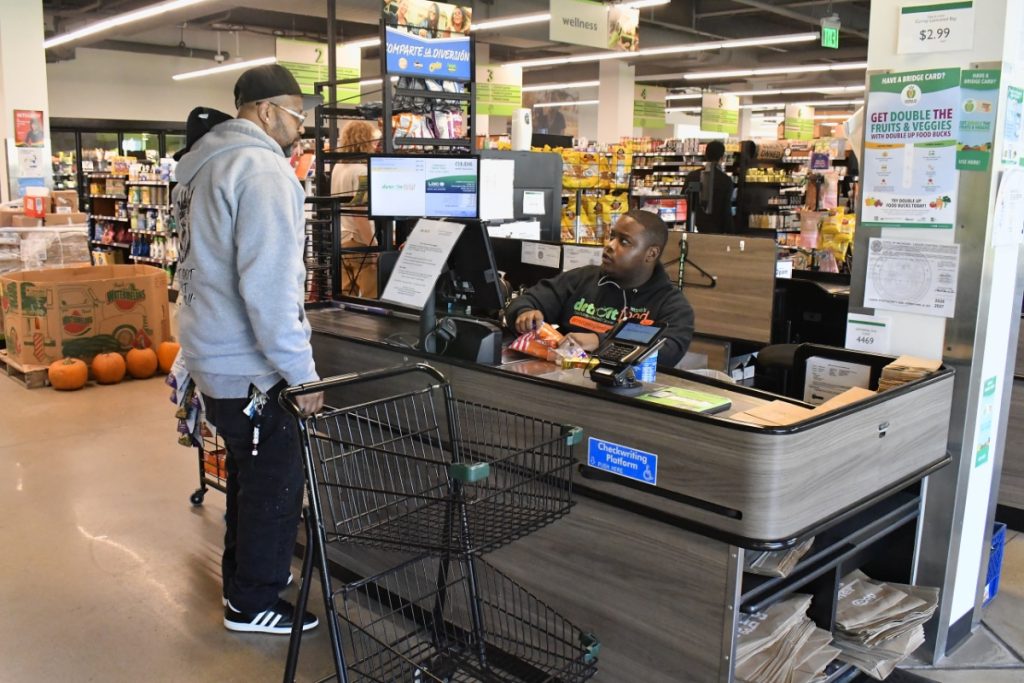
For Beaver, investments like these raise the important question of how community organizations sustain successful programs once their initial funding expires. Grants frequently prioritize launching new initiatives rather than supporting the ongoing operations of organizations already doing effective work.
“If you have something that’s working, it’s gonna need more funds,” Beaver says.
Parker believes that distinction matters. Emergency food providers remain essential, but programs like DUFB are an opportunity to help families access nutritious food before they reach a crisis.
“This isn’t an emergency food system,” she says. “This isn’t a food pantry or a soup kitchen.”
For the mother Parker encountered at the farmers market, that meant being able to purchase peaches without worrying that an unfamiliar food might go to waste. For her son, it meant discovering something he liked enough to ask for again. And for the farmer selling those peaches, it meant welcoming a returning customer.
The exchange was small, but it captured the possibility driving much of Michigan’s food access work: Giving families more choices while supporting the communities that grow, distribute, and sell their food.
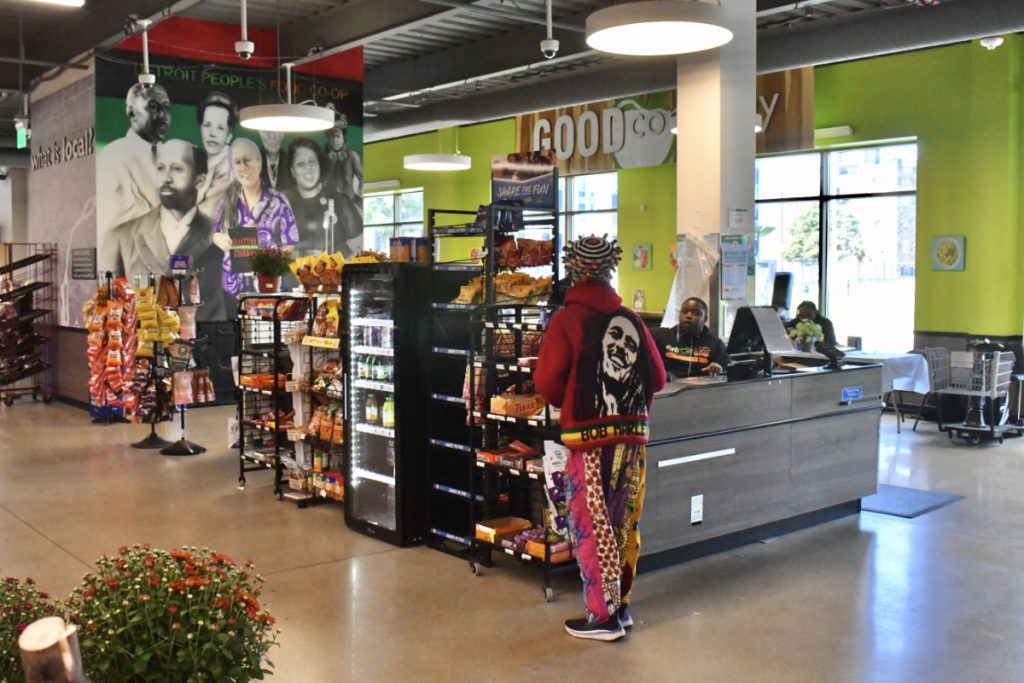
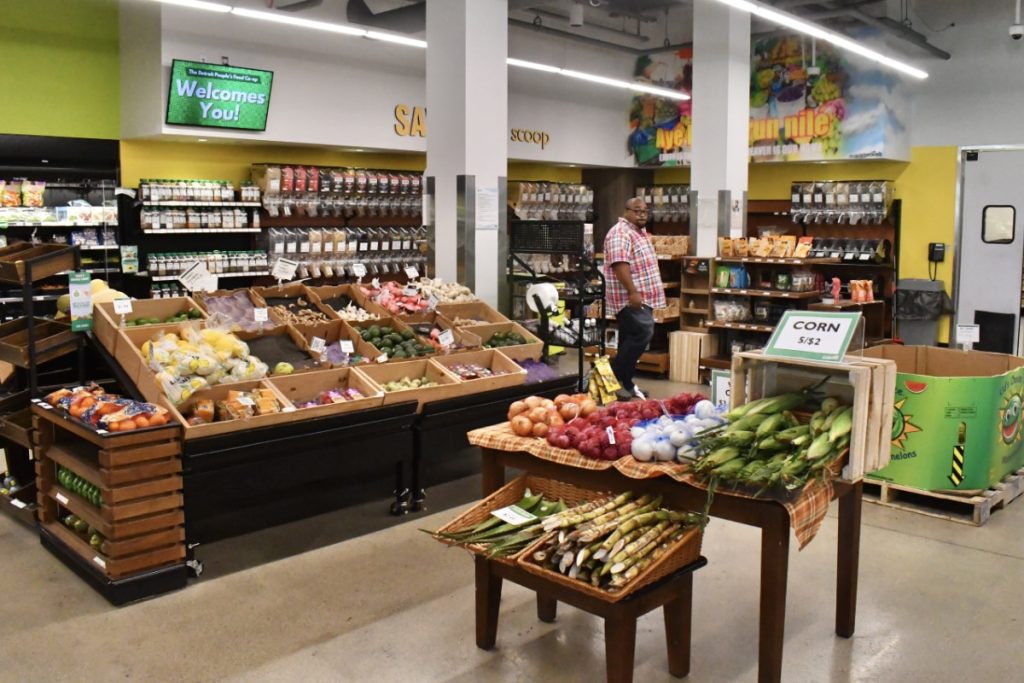
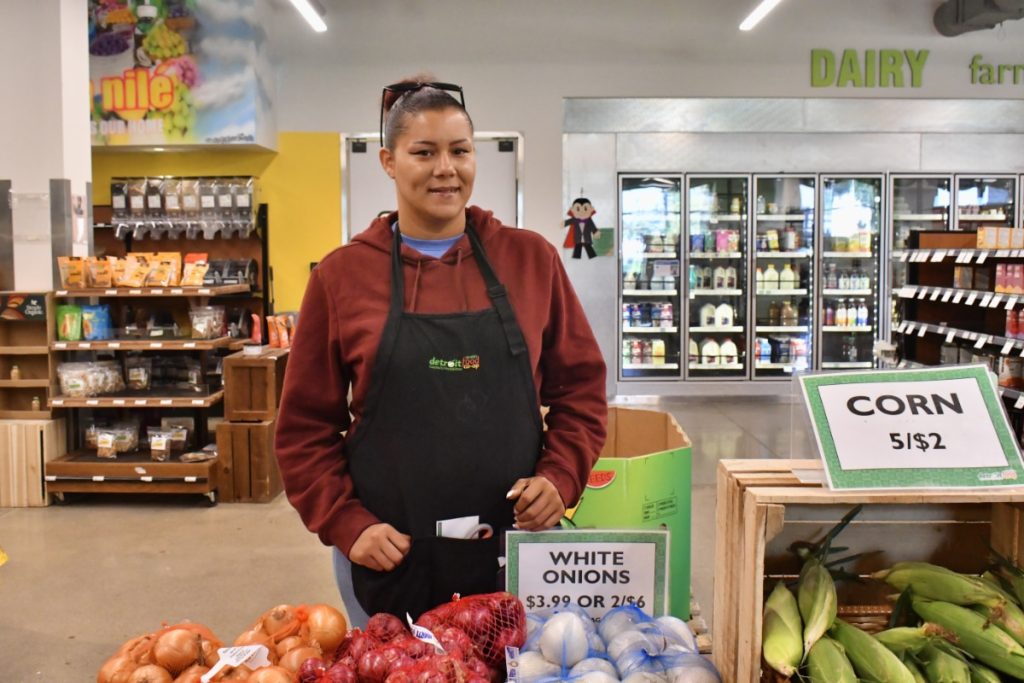
Photos by Leslie Cieplelowcz. Thank you, Detroit People’s Food Co-op, for hosting the Mi Families photoshoot for this story. Photos of courtesy subjects.
MI Families shares the work of community organizations, healthcare providers, educators, employers, and other Michiganders as they work to create better health, educational access, and economic security for all Michigan families. It is made possible with funding from the W.K. Kellogg Foundation.
Author