
Alpena builds accessibility roadmap by listening first, improving public spaces for everyone
Alpena’s accessibility assessment helps prioritize affordable improvements, showing small communities how resident input can guide inclusive planning and investment.
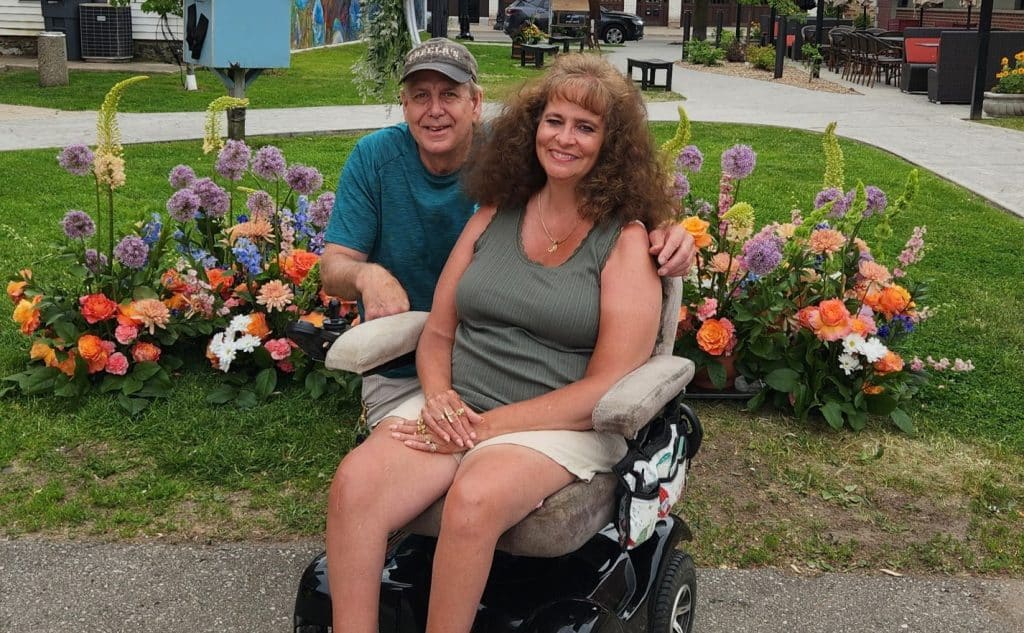
Amy Stevens has spent decades thinking about accessibility, not because it’s her job, but because it’s her life.
Living with limb-girdle muscular dystrophy, Stevens, 61, has used a walker, a manual wheelchair, and now a power scooter as her disease has progressed. Each change has given her a new perspective on how difficult it can be to navigate parks, sidewalks, and public buildings that many people take for granted.
“My background is just life experience,” Stevens says. “I realize what’s needed just from my own experiences and travels.”
So when Alpena leaders began looking for ways to make the city more accessible, they didn’t start by drawing blueprints or applying for construction grants. Instead, they turned to people like Stevens, who experience those barriers every day.
The effort began after Stevens and other residents approached city officials with concerns about obstacles they encountered in public spaces.
“It really started with people reaching out from the community, Amy being one of them, and a few other community members asking us what we were doing,” says Montiel Birmingham, Alpena’s planning director. “They were saying, ‘How can we make this better? How can we work together?’ So we decided that we really needed some type of an assessment done to understand where we needed to improve.”
Seeing a broad picture
Rather than reacting to accessibility issues one project at a time, the city partnered with Disability Network Northern Michigan to conduct a comprehensive assessment of parks, downtown spaces, sidewalks and public buildings. The resulting roadmap identifies barriers, prioritizes improvements, and helps city leaders incorporate accessibility into future planning and budgeting.
The approach offers a model for other small communities with aging infrastructure, particularly those balancing historic preservation with the need to make public spaces welcoming for residents and visitors of all abilities.
Stevens approached the project differently than an engineer or architect might. She visited all 26 city parks in her scooter, documenting barriers and suggesting practical improvements based on decades of firsthand experience.
“I went to all of them, and I did a roll through all of them, and I made notes and gave them my opinion on what things needed to be done so it would be accessible for all to enjoy,” she says.
Some issues were obvious. At one playground, thick wood mulch made it difficult for wheelchair users and people using walkers to reach play equipment.
Elsewhere, Stevens found sidewalks with significant elevation changes that created tripping hazards and made navigating a wheelchair difficult.
She also noticed accessible picnic tables placed where people using wheelchairs couldn’t reach them.
“Accessible picnic tables are a big thing,” Stevens says. “I think each one, or at least one of the tables, should be accessible.”
Her recommendations often focused on relatively simple improvements rather than expensive renovations.
“I don’t expect everybody to pay for an elevator,” she says later. “I just look at it and see the easiest and least expensive way to make it accessible for all. It’s doable if people want to do that.”
Making usable spaces
That practical perspective became an important part of the city’s planning process.
Lacey Rouse, a quality assurance and compliance specialist with Disability Network Northern Michigan, says assessments go beyond determining whether a community complies with accessibility standards.
Instead, they ask a different question: Can people actually use the space?
One location that stood out was Alpena’s Culligan Plaza, a downtown gathering space that once featured a large fountain accessible only by stairs.

“Most of us can walk down to this fountain and see it if it was running,” Rouse says. “But so many people have a disability or mobility issues that they can’t get down those steps.”
Rather than simply replacing the fountain, the city asked residents what they wanted the space to become.
“We prioritized accessibility,” Birmingham says. “Some people were very attached to the nostalgia of the original fountain, but it’s not accessible to everyone, and that’s not good.”
The city surveyed residents, worked with a design firm, and shared concept drawings before beginning construction. The plaza now includes an accessible stage with a circular ramp, gathering spaces, landscaping and water features that everyone can enjoy.
“They did a beautiful job at Culligan Plaza,” Stevens says. “Before there were steps going on all four sides down to it, so it was totally not accessible.”
“Now it’s been completely redone. I love the circular ramp going up to the stage. It’s completely accessible now, and it’s very beautiful.”
The redesign illustrates what city leaders hoped to accomplish: preserving beloved public spaces while ensuring they can be enjoyed by more people.
The assessment was valuable because it gave the city a long-term strategy rather than a list of disconnected projects.
Priorities and possibilities
Instead of waiting for grant funding, the city incorporated the work into its capital improvement plan.
“We did not actually apply for grants,” Birmingham says. “We had a timeline that we wanted to do it within and we didn’t want to wait, so we just made sure that it was in our capital improvement plan.”
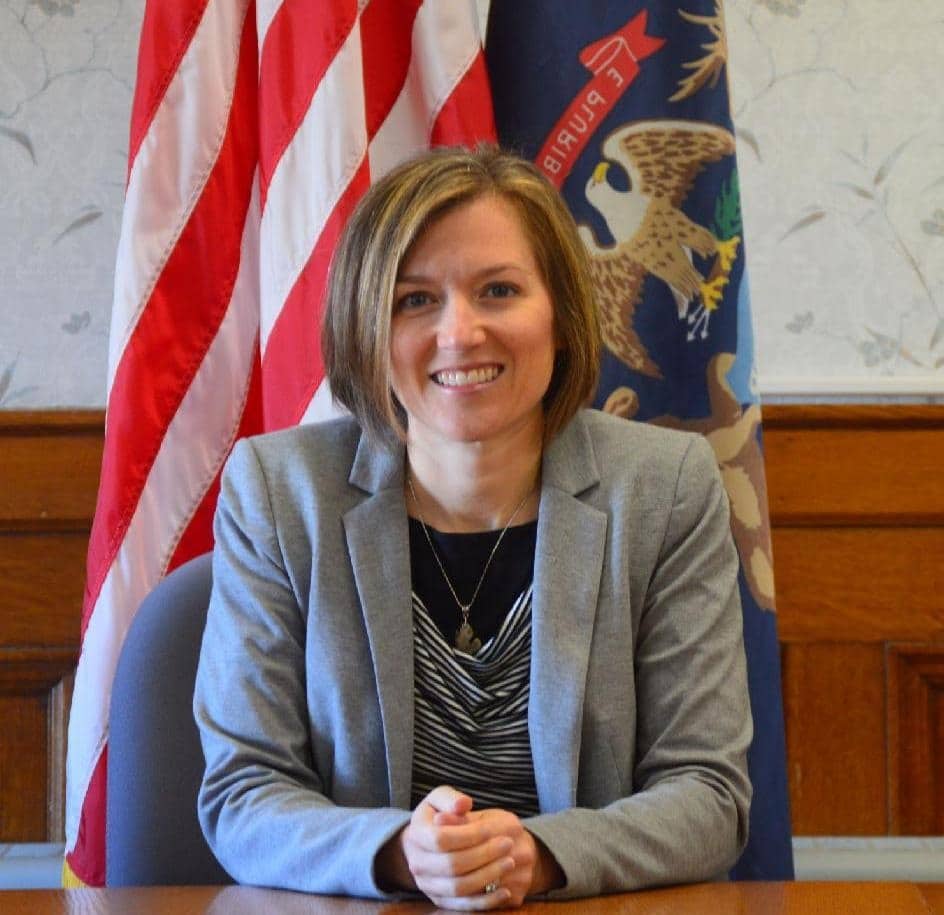
Disability Network Northern Michigan also helped city leaders understand which improvements were most urgent and which could wait.
“Their expertise is just amazing,” Birmingham says. “They helped us understand what was lacking, prioritize what should be at the top of the list … and identify the low-hanging fruit versus the more expensive projects.”
Rouse says the organization continues working with communities after the assessments are complete.
“We always try to make sure that it won’t cause a burden,” she says. “There’s a ton of grants out there. We do write letters of support. We try to keep it cost-efficient.”
The city still consults Disability Network Northern Michigan on questions ranging from accessible trash receptacles to park furnishings, helping ensure accessibility remains part of future decisions rather than being a one-time project.
“I know they’re still in progress with a lot of upgrades, but it’s that initial step that they took, which is really, really big,” Rouse says.
Stevens says one of the biggest misconceptions about accessibility is that it only benefits people who use wheelchairs.
“People automatically think accessibility is just about wheelchairs, but it’s not,” she says.
“It’s about the moms with the strollers. It’s about the older people in our community. They’ll want to be able to go and do things too. It’s for everyone. It’s just smart. It’s smart building. Universal design should just be that. It should be everywhere.”
Rouse says she often sees people’s perspectives change after they begin looking at spaces through someone else’s eyes.
“You throw out, ‘parents with a stroller, think about that,’” she says. “If you have to push your stroller up on a curb, that’s a lot of work. People are like, ‘Oh yeah, I didn’t think about that.'”
Get first-hand advice from users
Birmingham says involving people with lived experience transformed how city staff approached projects.
“I would say talk to people in your community that are using your parks and your public spaces to see what they’re experiencing,” she says. “Having some of those original conversations with Amy were so eye-opening because she lives in public spaces in a very different way than we do.”
She says those conversations shifted the city’s focus beyond simply meeting accessibility standards.
“You want to know what the minimum requirements are,” Birmingham says. “But thinking about the usability of it is also super important, not just what the requirements are.”
As Michigan’s population continues to age, Rouse believes, those design decisions will become increasingly important.
“Baby boomers are getting older,” she says. “More and more people are going to have physical disabilities or issues with mobility. So starting now is always great.”
Completing the assessment was only the first step.
“The assessment itself is very eye-opening,” Birmingham says. “But now we know what we have and what we need. Now we have to do something with implementation.”
Some improvements can happen quickly. As parks replace picnic tables, benches or other amenities, the city can choose more accessible designs. Other recommendations, including infrastructure projects, require more planning and larger investments.
“There are always things that you can do right away,” Birmingham says.
Stevens has already seen another outcome from the project: greater awareness among city staff.
After she pointed out that an automatic door button at City Hall was mounted too high for her to reach from her power chair, the building inspector immediately recognized the problem.
Later, another city official told Stevens she had started noticing accessibility barriers she had never paid attention to before, including a bench blocking an automatic door button at another building.
“That just helps to raise awareness,” Stevens says. “That’s what I’ve done all my life, basically, is to try to raise awareness and make a positive difference and make the world a little more accessible.”
Birmingham says the city is working to ensure accessibility remains part of every future planning decision.
“We’re continuing to go back to that document and that assessment and treat it as a living document and not just something that we did, we checked it off the list and put it on the shelf,” she says. “We’re trying to connect all of our planning documents to make sure that we’re considering that and including that.”
Birmingham says Alpena’s work can help other small towns that want to make parks and public spaces easier for everyone to use, even if they don’t have a lot of money.
Instead of trying to fix everything at once, she says, cities should start by talking to the people who face those challenges every day.
“Talk to people in your community that are using your parks and your public spaces to see what they’re experiencing,” she says. “They offer great insight.”
Photos courtesy of the City of Alpena and Amy Stevens.
The multi-regional Disability Inclusion series is made possible through a partnership with Centers for Independent Living organizations across West Michigan.
Author
Related Articles
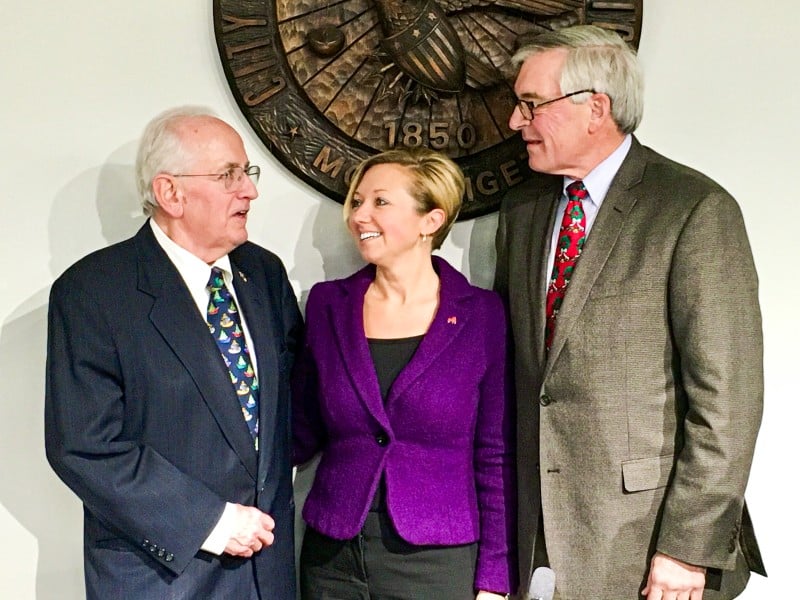
#RG20LookBack: 20 years after Grand Rapids bet on a new generation
In his 28th #RG20LookBack column celebrating Rapid Growth’s 20th anniversary, Publisher Tommy Allen revisits a 2006 story about former Grand Rapids Mayor Rosalynn Bliss and her start on the City Commission as its youngest woman ever elected.
Childcare fraud myth misses the larger story
The disproven allegations have burdened providers and threaten access as fewer seek to enter the field.
Why early childhood belongs on every Michigan voter’s ballot
Why Michigan voters should pay attention candidates’ stands on childcare and early learning.


