
Community Media Center helps convert old tapes into lasting digital memories
Grand Rapids Community Media Center helps residents digitize aging tapes and photo negatives, offering affordable tools and training to preserve family memories for future generations.
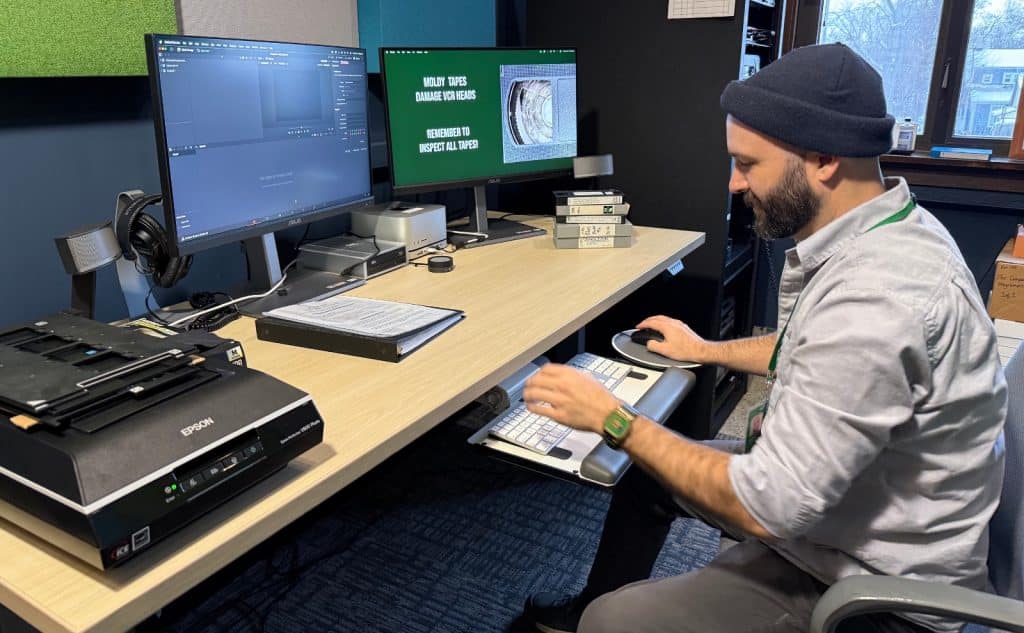
Joel Miller has dedicated hours to preserving images from another era. They include long-gone family members, childhood moments, and scenes captured on film nearly a century ago.
“I hadn’t seen that since I was 5, 8 years old, probably,” he says.
The footage had been sitting for years on aging VHS tapes, part of a collection from his father and grandfather. Miller knew the recordings mattered, but he was initially at a loss for the best way to watch or preserve them.
He briefly considered packing them in a box and shipping them to a digitization company.
“I just did not have a good feeling about shipping these tapes that were my father’s to somebody that I didn’t know or trust,” he says.
Saving your own memories
Instead, he found an option close to home: the Media Preservation Suite at GRTV, part of the Grand Rapids Community Media Center. There, he learned how to digitize the tapes himself, saving money while gaining new skills.
“It was seamless. The equipment they got is state-of-the-art, and everyone in there is so nice,” Miller says.
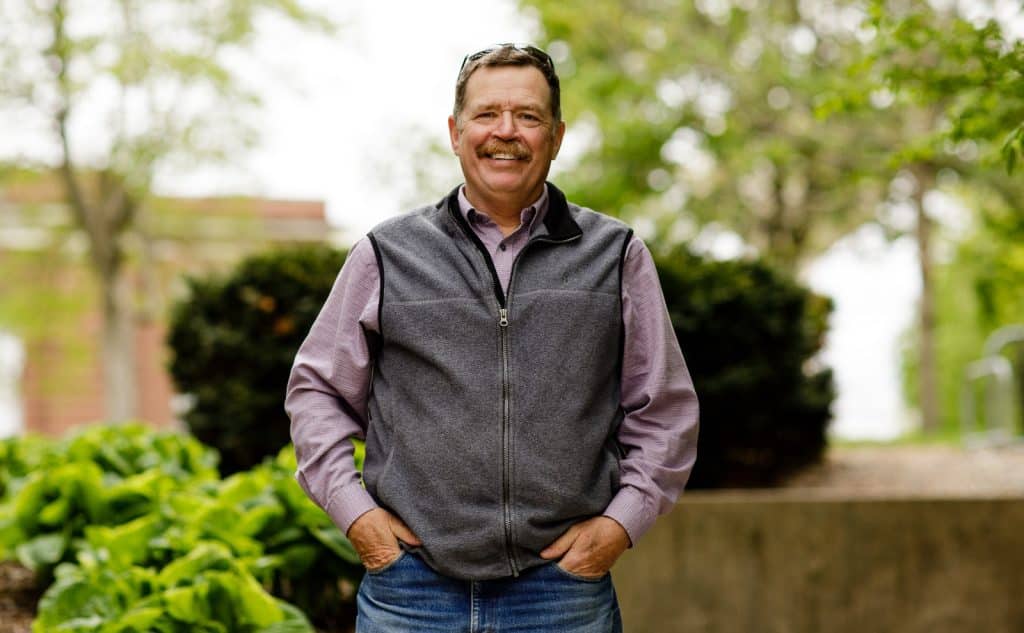
He spent several sessions converting about 15 hours of footage. Some of it dated back to the 1920s. He then shared the files with family members on thumb drives.
“These are all family videos. The point is, you’ve saved them and preserved them from being destroyed,” he says.
Miller’s experience reflects a broader effort by the Community Media Center to address a growing challenge: how to preserve memories stored on obsolete formats.
“This resource that we’ve built out here and iterated on this year is really meant to fill that gap,” says Joe Zook, production manager for GRTV.
Reducing cost of access
The Media Preservation Suite allows community members to digitize VHS tapes, film reels, and photo negatives using professional-grade equipment that would otherwise be costly or inaccessible.
Commercial services often charge per tape, which can quickly add up.
“As soon as you get into more than a few tapes, it really becomes cost-prohibitive for so many people,” Zook says.
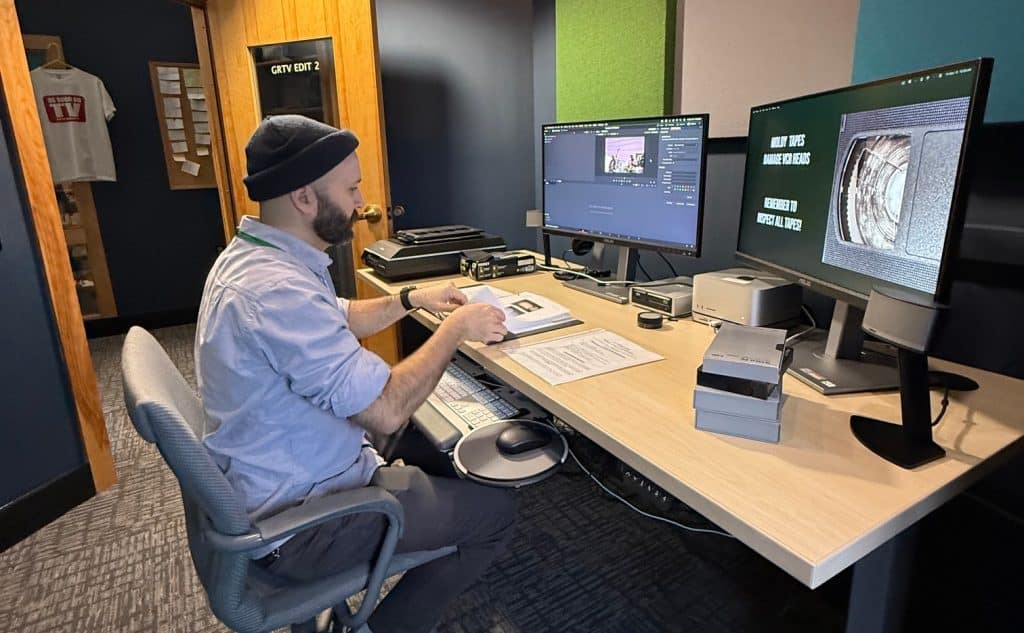
At the media center, users can pay for staff-led digitization starting at $25 per tape or take a one-time training course to use the equipment themselves at no additional cost.
“It’s even less expensive than that if you do it yourself,” he says.
That approach reflects a broader mission focused on access.
“Everyone should have access to these tools. There should not be a financial burden that prevents you,” Zook says.
Users must have a GRCMC all-access membership, which costs $40 annually. The certification training costs $40 and will be offered by appointment. You can schedule a certification training online here. GRCMC memberships can be obtained online or at the time of the training.
Fighting obsolescence
The need is becoming more urgent as older media deteriorate and playback devices become scarce.
“VHS, for instance, is a truly obsolete format,” Zook says.
“There’s an urgency right now to get that into a digital format. Those tapes will not last forever.
This is a challenge for many families who are fortunate to have photos and videos, but they can’t wait.
“These home movies are precious, personal historic resources,” Zook says.
Beyond providing tools, the center helps people navigate the process.
“A big part of what we do is that initial consultation, where folks come in and say, ‘The only thing I know about this is that I have tapes and I can’t watch them. What comes next?’” Zook says.
Some users upload their videos to platforms like YouTube or Vimeo, often using private links for family sharing.
“You can make your videos unlisted or private, so even if you’re uploading them to a public platform, strangers aren’t seeing them,” he says.
Formats constantly evolve
Digitization extends the life of these materials, but does not fully solve long-term storage challenges.
“It is truly a global challenge on an individual level, and it is a generational challenge every time we change a format of recorded history,” Zook says.
Digital files can be copied easily, but they still depend on evolving storage systems and platforms.
“It’s always just a constant strategy and challenge,” he says.
The process can take time, and some users are intimidated by the technology.
“There can be a mental or emotional barrier to entry,” Zook says.
Preserving these photos and videos allows Miller to revisit moments he had forgotten.
“It’s just comical, the stuff you see back then,” he says, describing scenes of family life from decades past.
By turning fragile tapes into digital files, Miller made those memories easier to revisit and share with others.
“It was a very good find, and I had a great experience with it,” he says.
Photos by Shandra Martinez and courtesy of Joel Miller
Author

Related Articles
Kent District Library lets neighbors borrow, discover and explore together
From birdwatching kits to local music, KDL helps people try new things, save money, and share experiences.
Something for every season: Fashion, curiosity, and community at the GRPM’s new archive center
Inside the Grand Rapids Public Museum’s new Archives Center, Kendall College of Art and Design students are turning decades-old garments into inspiration for their next designs.
From ‘Unseen Oceans’ to GVSU, exploring the Great Lakes anew
Grand Rapids Public Museum’s Unseen Oceans reveals the hidden wonders of the sea, while Grand Valley State University’s Water Resources Institute, just 40 miles away, brings that exploration closer to home on the Great Lakes.


