
Created with love: East Kentwood students deliver empathy through our stomachs
Behind each illustrated recipe showcased by East Kentwood students lies a story of family, culture, and connection, demonstrating how food can serve as a universal language of empathy.
If you live long enough — and pay close enough attention — patterns start to reveal themselves. One that never changes: every generation hungers to be heard. They arrive with a perspective the world hasn’t quite seen yet, and they need the right conditions to say it out loud.
A skilled teacher and the right assignment can do something remarkable. They can turn a young person’s inner world into something the rest of us get to step inside. That’s what Voices of Youth is built around — not just the stories young people tell, but what happens to us when we actually listen. For a long time, that meant the written word. But as our Voices of Youth program has grown, something else has started coming through, and honestly, it’s been just as moving: young people using art and design to say things that words don’t always have room for.
East Kentwood teacher Le Tran asked her students to look past the ingredients. Past the instructions. To find the people living inside the recipe — the grandmother who never measured anything, the holiday table everyone still talks about, the dish that traveled across an ocean and landed in a new country without losing its soul.
What started as a visual storytelling exercise turned into something much bigger.
East Kentwood is one of the most diverse school communities in Michigan, with students representing more than 90 countries and over 60 languages spoken in the building. The school’s welcoming stance is on display from the moment a student enters the high school, with flags from nations all over the world filling the student’s field of vision in a colorful and inspiring display of diversity.
Tran saw what was right in front of her: food, culture, and art as a way to connect those worlds. She didn’t ask students to just document a dish. Instead, she asked them to go after the memory behind it, the person who made it, the tradition it carried, how it traveled across generations and borders to land on their family’s table. The work that came out of that wasn’t just artwork. It was a conversation about identity and heritage and what it means to belong somewhere — or to carry a place with you even when you’ve left it.
One of the things I’m most proud of in how Voices of Youth has evolved is that we’ve made room for this. Visual art belongs here. So does photography, illustration, design, and whatever comes next that we haven’t seen yet.
Young people communicate through more than words, using a variety of methods such as images, design, music, and many other forms of expression. Our responsibility isn’t to decide which language matters most, but to create opportunities for those voices to be heard, those perspectives to be seen, and that creativity to find an audience.
What we discovered on our day with these East Kentwood High students this spring was that the artists in these illustrations were lifting up people living within these recipes. We see this in the grandmother who never measured anything, in the holiday table everyone still talks about, and in the dish that traveled across an ocean and landed in a new country without losing its soul.
The results are worth sitting with. The artwork pulls you in first — color, craft, care on every page. But linger a little longer and something else happens. You find yourself somewhere else entirely, inside a life that isn’t yours, transported through the most universal thing we share: a meal made by someone who loves you.
More than just food
When the students talked about what they chose to illustrate, a theme emerged immediately. These weren’t just favorite foods. They were acts of love, passed down like heirlooms.
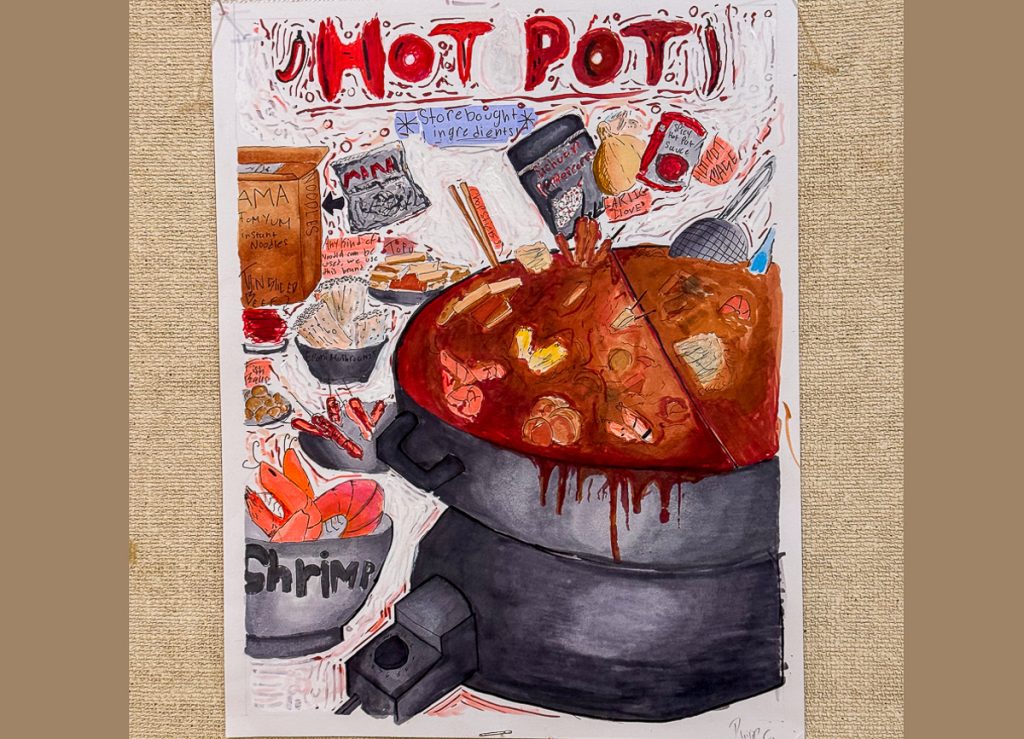
Philip Chawn drew his family’s hotpot — a dish made only on special occasions.
“One memory that stands out is when several of my cousins were preparing to leave the country,” Chawn says. “Before they left, our family gathered around the table for one last dinner together.”
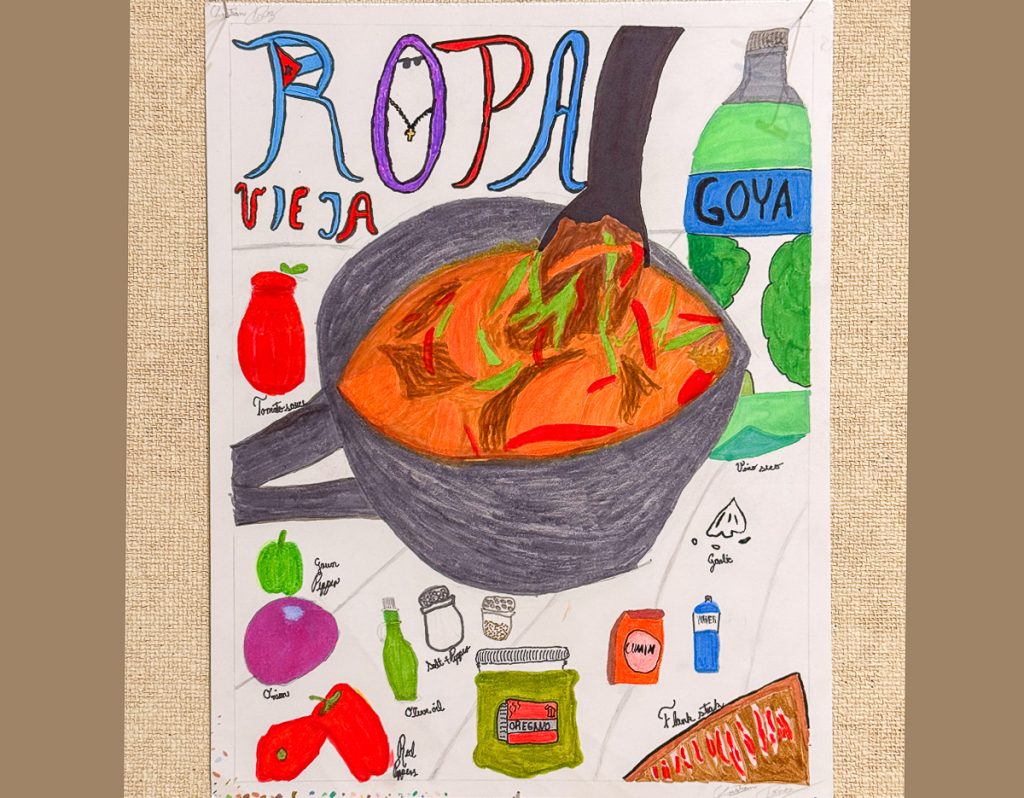
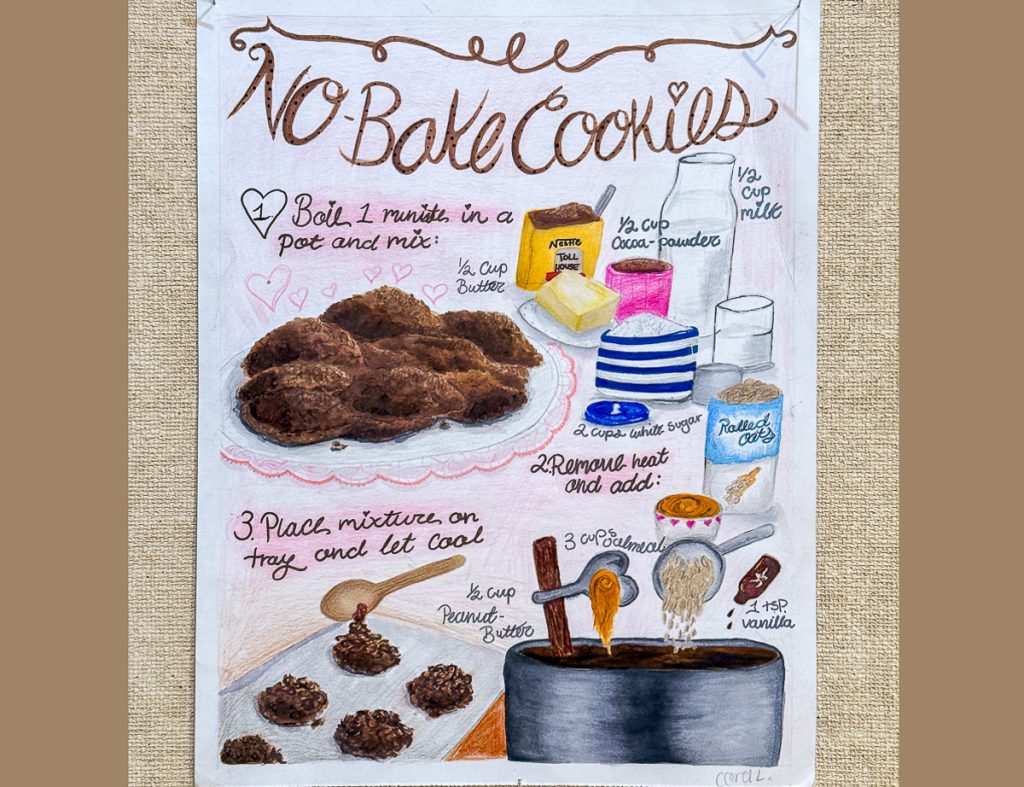
Cora Lopez captured no-bake cookies and the afternoons in the kitchen with her mother and grandmother. Christian Perez-Licea illustrated ropa vieja, Cuba’s beloved slow-cooked classic, and the New Year’s gatherings it anchors.
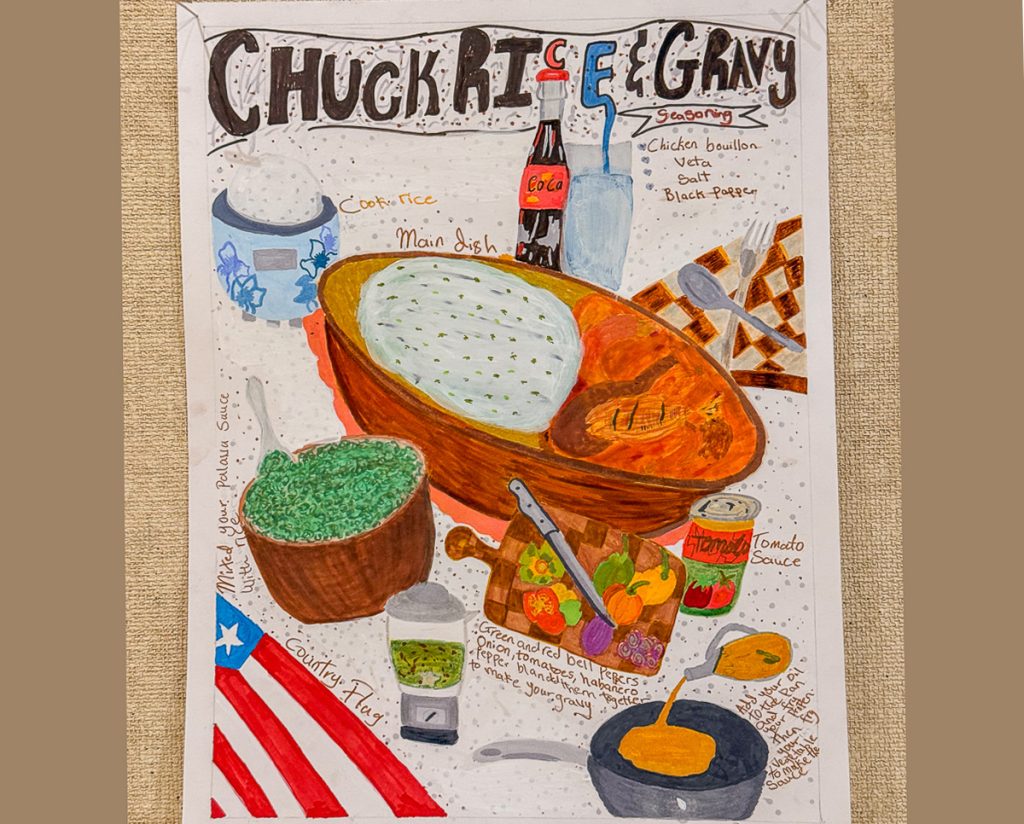
“This meal is my favorite dish,” Olivia Neewray says of her grandmother’s chuck rice and gravy. “It reminds me of the happy times I spent with my grandma watching her cook and learning her recipe.”
Every recipe here is a vessel. They carry nourishment, yes — but also history, memory, and the texture of a family’s life together.
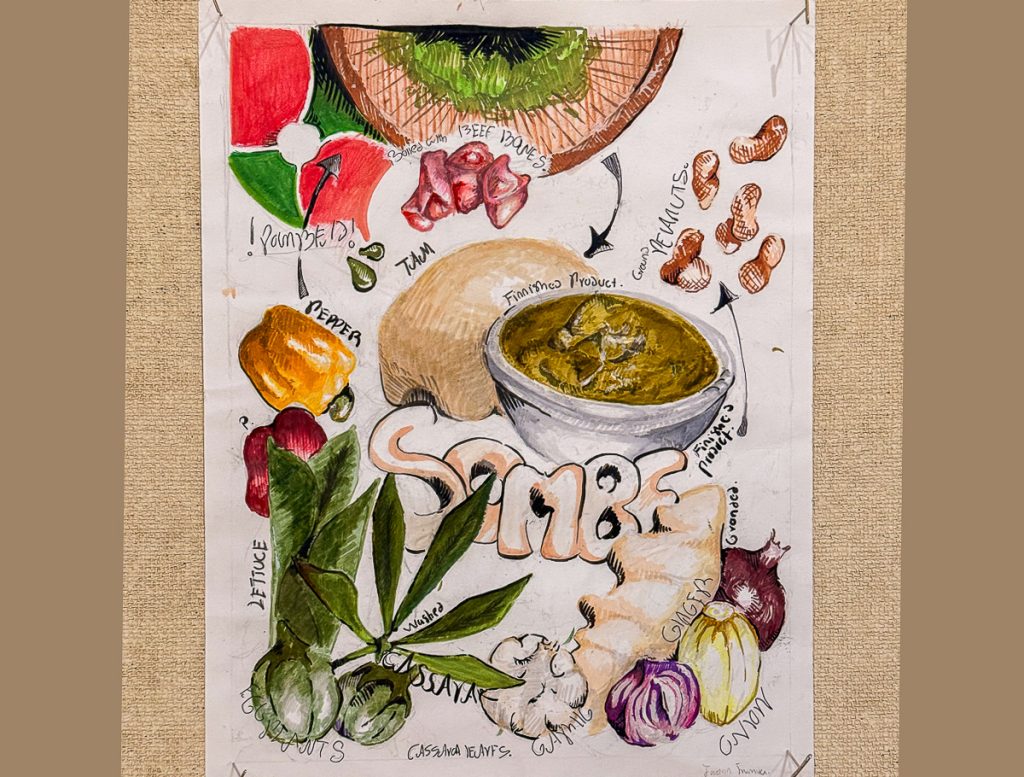
Some dishes carry even more. Yakini Irumva’s illustration of sombe — a cassava leaf stew enjoyed across Africa that is also known as pondu, saka saka, or kwem, depending on where you are — shows how one recipe can hold an entire diaspora together, connecting communities across regions and languages through something as simple as a shared pot.
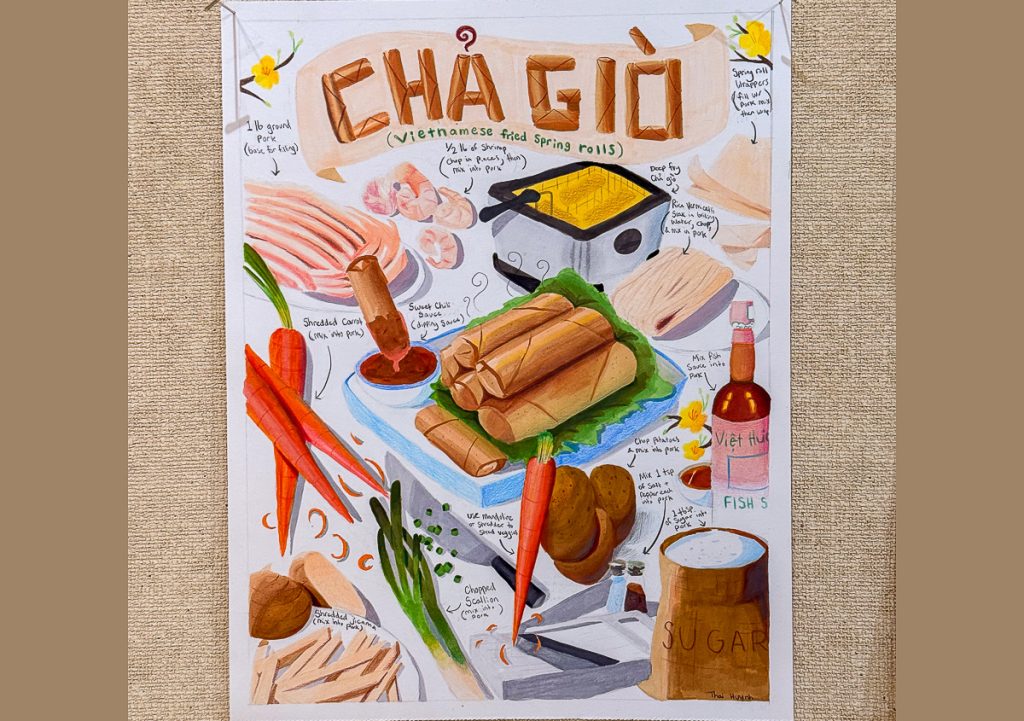
Thai Huynh’s drawing of Vietnamese chả giò, fried spring rolls, is a love letter to a dish and to the traditions his family carried from Vietnam to the United States.
“It is a connection to my Vietnamese roots and what my family has brought to the United States from Vietnam, and what my family has maintained despite everything,” says Huynh. “This dish represents the comforts of home and brightens up childhood memories of parties, playtime, and buzzing family gatherings.”
These are stories of migration, adaptation, resilience, and heritage — the kind that often go untold unless someone thinks to ask.
That might be the most important thing Le Tran did here: she asked.
Most of us, whatever our background, know what it feels like to be fed by someone who loves us. That’s the common ground this project stands on. By asking students to illustrate recipes that actually mean something to them, she created a space where differences don’t divide — they invite. These drawings aren’t food illustrations. They’re portraits of belonging, offered openly to anyone willing to spend a few minutes with them.
That’s what Voices of Youth has always been about. Not speaking for young people. Just making sure the rest of us stop long enough to hear them.
To learn more about Rapid Growth’s Voices of Youth project and read other installments in the series, click here. This series is made possible via underwriting sponsorships from the Steelcase Foundation, Frey Foundation, PNC Foundation, and Kent ISD.
Related Articles
Can “Poetry Saves Lives?” Festival shares how poetry benefits mental health
Free three-day event includes panel of local mental health professionals.
#RG20LookBack: When public art becomes a part of the place
In his 31st #RG20LookBack column marking Rapid Growth’s 20th anniversary, Publisher Tommy Allen revisits Grand Rapids’ relationship with public art, from Calder and Maya Lin to ArtPrize, and considers what the city might make room for next.
Kent District Library lets neighbors borrow, discover and explore together
From birdwatching kits to local music, KDL helps people try new things, save money, and share experiences.


