
Passing it forward: At GRPM, volunteers of all ages teach history and get taught right back
With 46% of its volunteers under 50, the Grand Rapids Public Museum is challenging assumptions about who volunteers and showing how interaction across generations transforms objects into shared understanding.
Inside Rudell Drug Store, retired compounding pharmacist Ron Marsteiner is surrounded by medicine bottles, compounding tools, and the herbs and door-to-door remedies of another era.
“I’m in hog heaven here,” he says, eyes lit up, surveying stacks of tins and jars packed with chemist ingredients from the late 1800s. “This is all real stuff.”
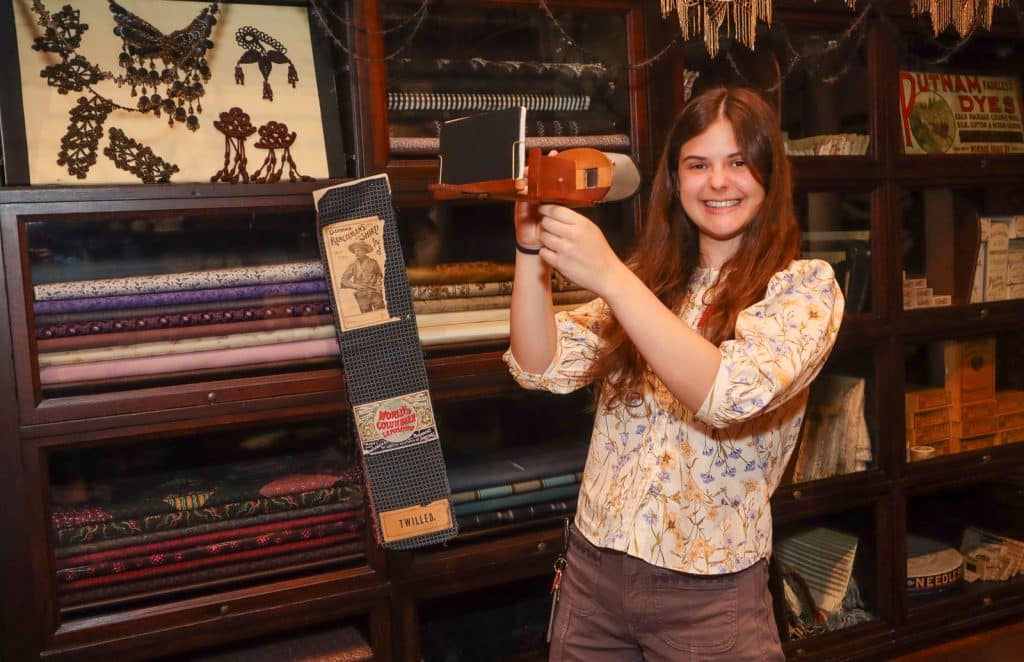
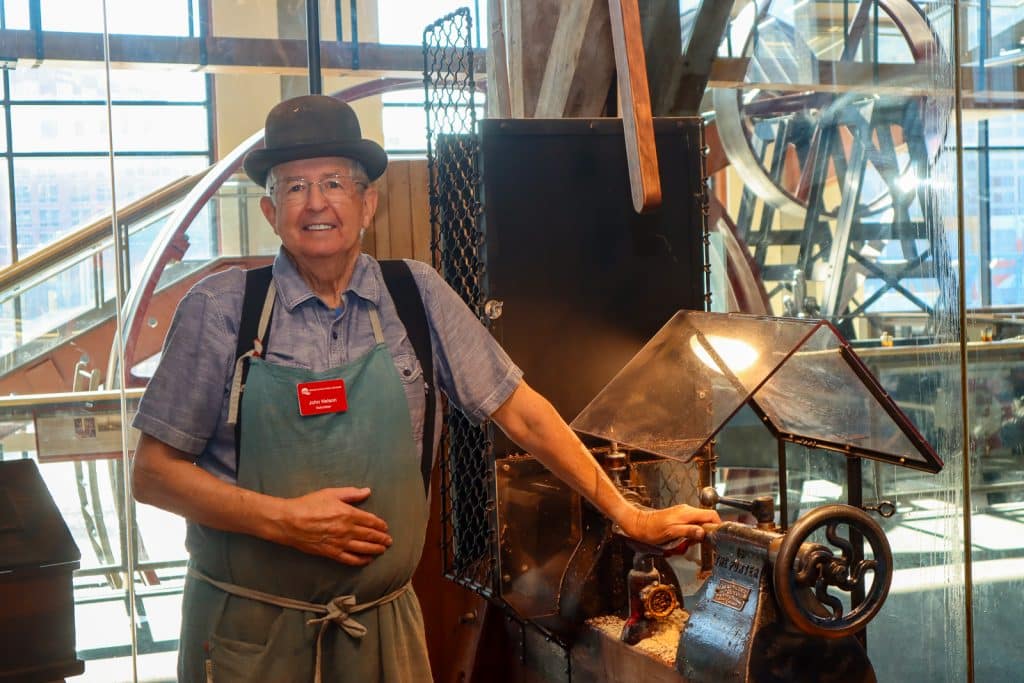
Not far away, Ella Hengeveld welcomes visitors into Herpolsheimer’s, helping them picture what shopping – and working – felt like for women in the 1890s. Upstairs, John Nelson runs a historic wood lathe and explains how the Grand River, with its easy access to lumber, and local ingenuity turned Grand Rapids into Furniture City.
I went to the Grand Rapids Public Museum expecting a story about volunteers who bring its Streets of Old Grand Rapids exhibit to life. What I found was bigger than that: GRPM is using its volunteer program as an intergenerational classroom, one where the people interpreting history are being changed by it too.
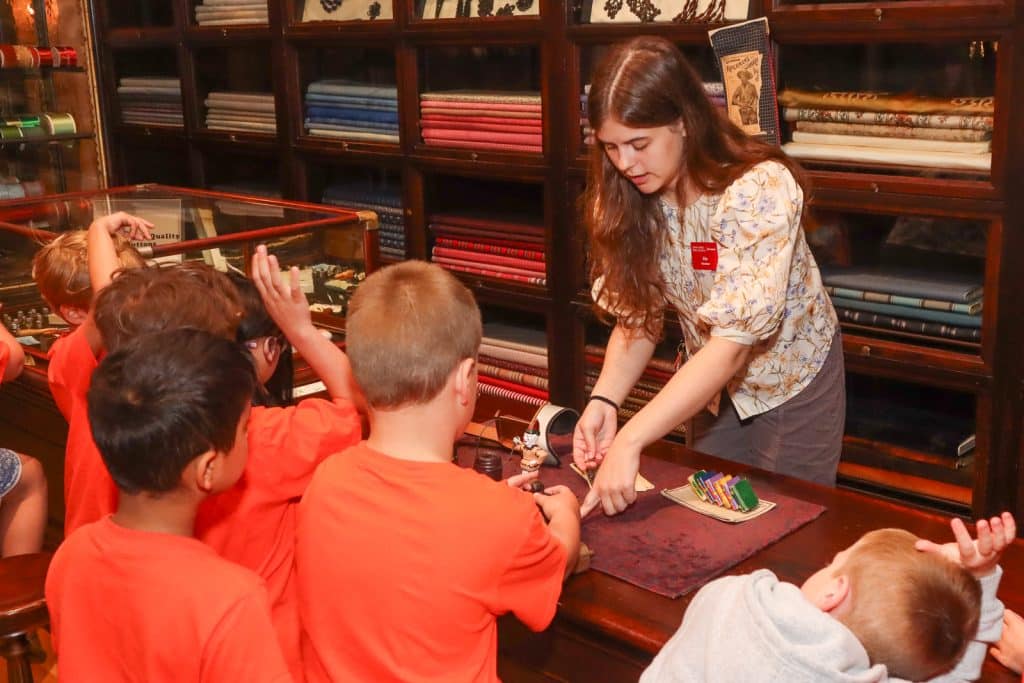
The numbers back that up. The museum has more than 125 active volunteers, and their average age is 54 – compared to a national museum-volunteer average of about 70, according to GRPM Volunteer Manager Mo Fleming. Thirty-seven percent are younger than 30, and 46 percent are younger than 50. The largest single age group is volunteers in their 20s, followed by those in their 70s, then teenagers.
That mix isn’t an accident. Fleming says the program had to drop the assumption that volunteers are retirees free during regular business hours. Younger volunteers tend to give their time on weekends, over the summer, or around school schedules, so the museum built roles around that instead of expecting people to fit a mold.
“Volunteering should bring you joy,” Fleming says of the approach she brought to the program almost a decade ago. “If volunteering doesn’t invoke joy, it is not a good fit.”
She sees GRPM’s volunteers as part of the museum’s education team, not people filling shifts. Her expectation is direct: “I want you to be the best experience a guest has all day.”
Bringing artifacts to life
That takes more than a memorized script. Volunteers are trained to draw visitors into conversation, listen to what they bring, and connect their interests to other parts of the museum. Fleming describes a volunteer as a living conduit between the guest and the artifact.
For Marsteiner, who spent 47 years as a pharmacist before he started volunteering at GRPM in 2013, the Rudell Drug Store bridges three eras of medicine: pharmacy in the late 1800s, the profession he entered as a young person, and the increasingly complex field it’s becoming now.
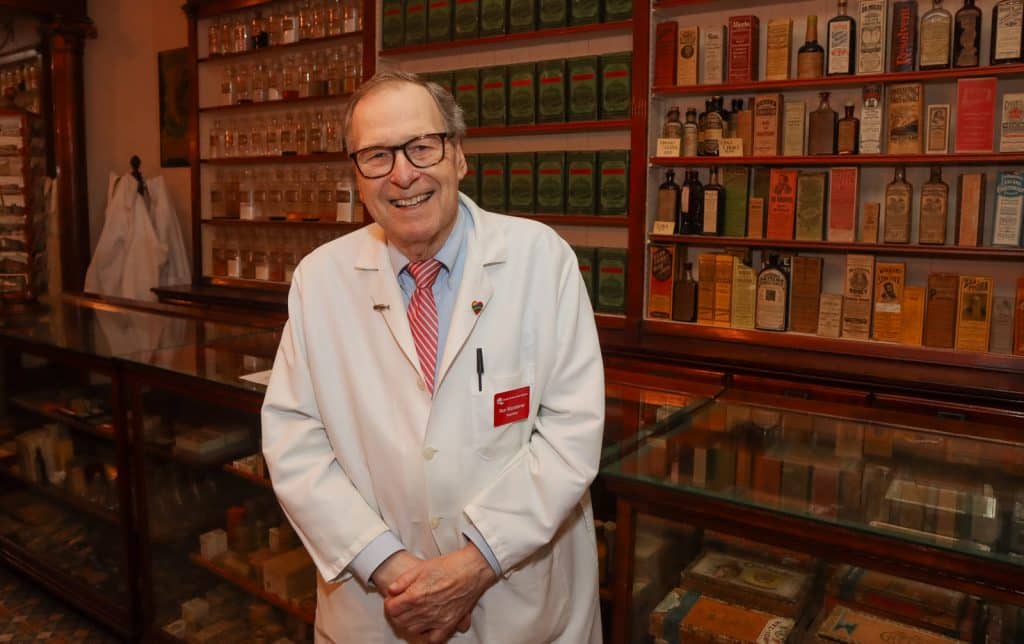
The old drugstore is also a reminder that exaggerated medical claims are nothing new. Marsteiner points to the wall of potions and elixirs from traveling “snake oil salespeople” – remedies that, before modern regulation, might have amounted to little more than wine with a dash of herbs. Families would bring those bottles to their local pharmacist and ask if they actually worked.
That history gives him an opening to talk about the value of trained, trusted guidance – pharmacists today study as long as doctors do. When pharmacy students from Ferris State University and pharmacy technician students from WMCAT visit, he emphasizes more than the science; he talks about the responsibility of caring for people.
“The best thing you can do is listen and be respectful,” he tells them. Patients often share deeply personal stories,” he says, adding that sometimes because they need help, and sometimes because they’re looking for a little hope.
Marsteiner’s biggest joy, though, comes from his younger visitors. “If I can instill a little science, a little history that maybe the young people can hang on to, I’ve done my job,” he says.
Curiosity blooms
Hengeveld is an example of what that kind of early curiosity can grow into. A former GRPS Museum School Middle School student and 2024 City High School graduate, she started volunteering in high school and now studies history and anthropology at the University of Michigan.
Standing in the reproduction of Herpolsheimer’s – a downtown store that began operations in the late 19th century – she thinks about how few choices women had a century ago, and how many she has now.
“Today I can go get an incredible education in a public university, and I have the choice over what I want to do with my career,” she says, reflecting on the limits women often faced in the era Herpolsheimer’s started.
Yes, the exhibits along the Streets of Old Grand Rapids are frozen in another era, but they also spotlight events and people who broke the boundaries of their time – including women like Grand Rapids’ own Anna Bissell, who became president of the Bissell company in the late 1800s and whose brass office door plaque is located on this exhibition space’s second floor.
Hengeveld says museum volunteers offer something a placard can’t: a conversation shaped around whatever a visitor is curious about. Different people notice different objects, ask different questions, bring their own memories into the room.
“People are why I got into museums,” she says. “I would not feel as confident as I do about my degree and career choices without this experience here at GRPM.”
Discovering a new world – and sharing it
Nelson found his way in differently. A Grand Rapids native and retired Army officer, he started volunteering about 23 years ago after his wife introduced him to the museum. He’d never touched a wood lathe before. Curiosity pulled him into woodworking, and from there into the history of the city’s furniture industry.
History wasn’t his favorite subject as a young man. Volunteering at GRPM changed that.
“It opened up a whole new world for me that I then can share with others,” he says. “Volunteering at the GRPM opens you up.”
Nelson built a reputation for creating wooden tops and randomly giving them to patrons who visit his second-floor woodshop. But once, a visitor had a more challenging request; she asked Nelson to turn a wooden darning egg – a hard-to-find tool for mending one’s holey socks by hand. He’d never made one before, but within minutes he’d shaped a piece of walnut into what she needed.
She left with a tool that enabled an old skill worth reviving in an age of disposable clothing. He left with a new skill, and another story about a place where people who listen first tend to find the solution.
That kind of exchange happens throughout the museum, not just on the Streets of Old Grand Rapids. And it doesn’t only run one direction. A student can help a retiree see an artifact differently. A visitor’s memory can add texture to an interpreter’s research. A historic storefront can remind a young woman how much has changed, and how much is still hers to change.
And we can see another example of why intergenerational exchanges are so important for learning.
Objects don’t explain themselves. People do that. At GRPM, volunteers in their teens, 20s, 70s, and beyond aren’t just standing next to history – they’re learning from each other, asking each other better questions, and making room for visitors to feel like part of the story too.
Maybe that’s why the Streets of Old Grand Rapids still feel alive: nothing there is frozen in time, as time is always moving us forward. It’s still a place people travel through, and sometimes leave a little more curious than when they came in.
Photos by Tommy Allen
This story is part of the Bridge to Community Curiosity, underwritten by the Grand Rapids Public Museum. Through this partnership, we highlight GRPM’s mission to inspire curiosity, deepen understanding, and foster belonging by showcasing the transformative power of arts and education in West Michigan.
Related Articles
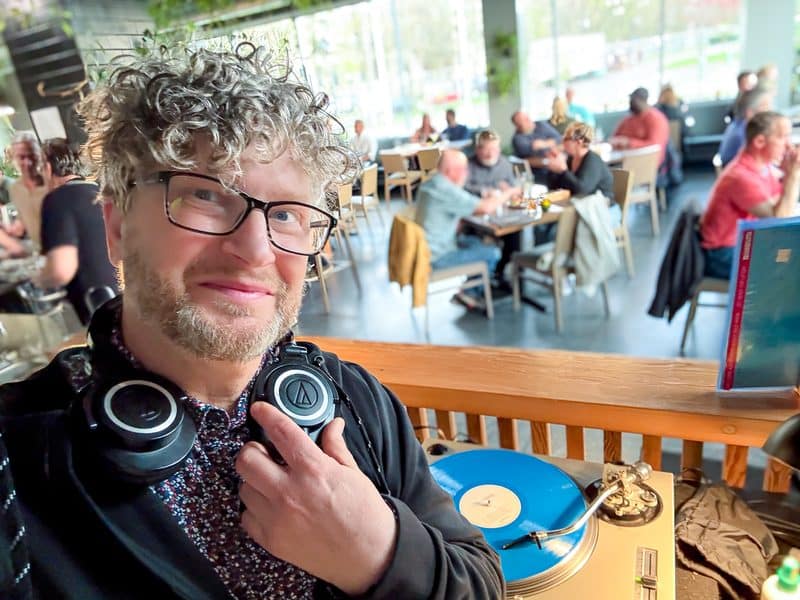
Kent District Library lets neighbors borrow, discover and explore together
From birdwatching kits to local music, KDL helps people try new things, save money, and share experiences.
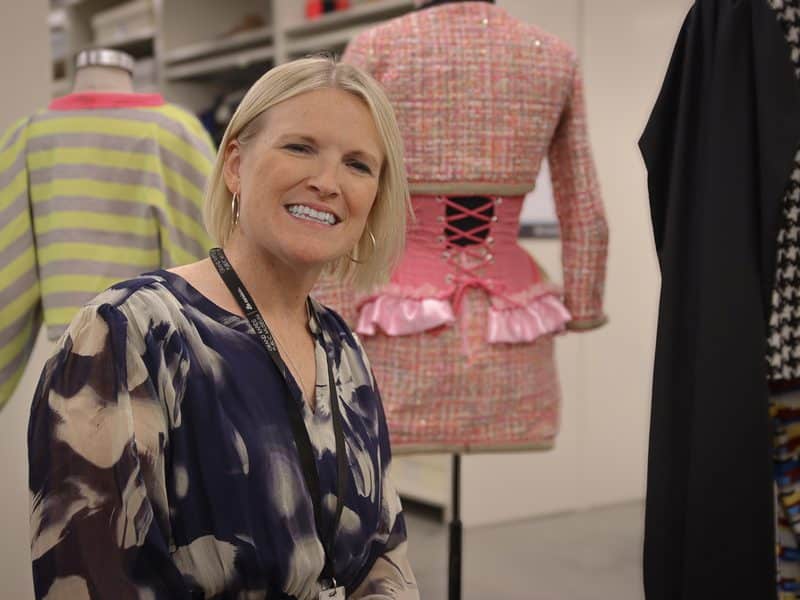
Something for every season: Fashion, curiosity, and community at the GRPM’s new archive center
Inside the Grand Rapids Public Museum’s new Archives Center, Kendall College of Art and Design students are turning decades-old garments into inspiration for their next designs.
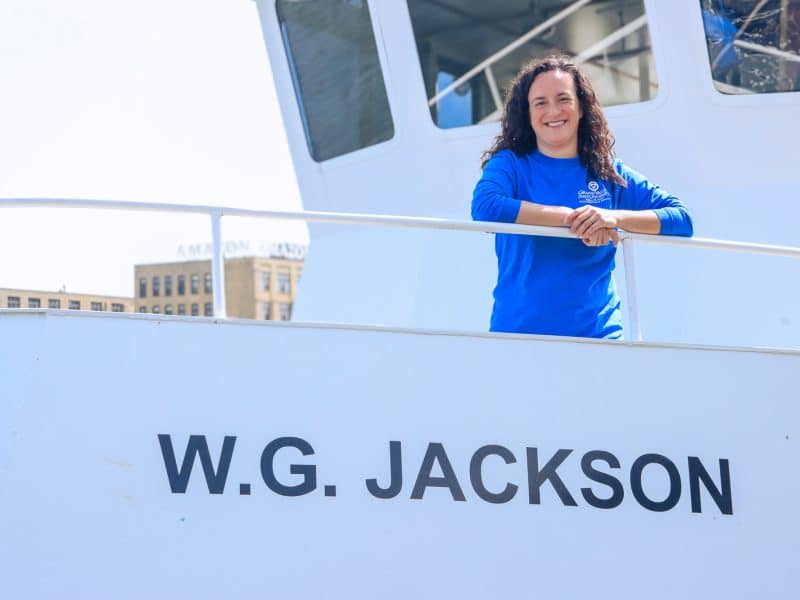
From ‘Unseen Oceans’ to GVSU, exploring the Great Lakes anew
Grand Rapids Public Museum’s Unseen Oceans reveals the hidden wonders of the sea, while Grand Valley State University’s Water Resources Institute, just 40 miles away, brings that exploration closer to home on the Great Lakes.


