
Illustrator debuts uplifting children’s nature story celebrating resilience
KCAD alumna Kirbi Fagan releases The Big Empty, a lyrical picture book aimed at inspiring children to embrace hope and environmental partnership.
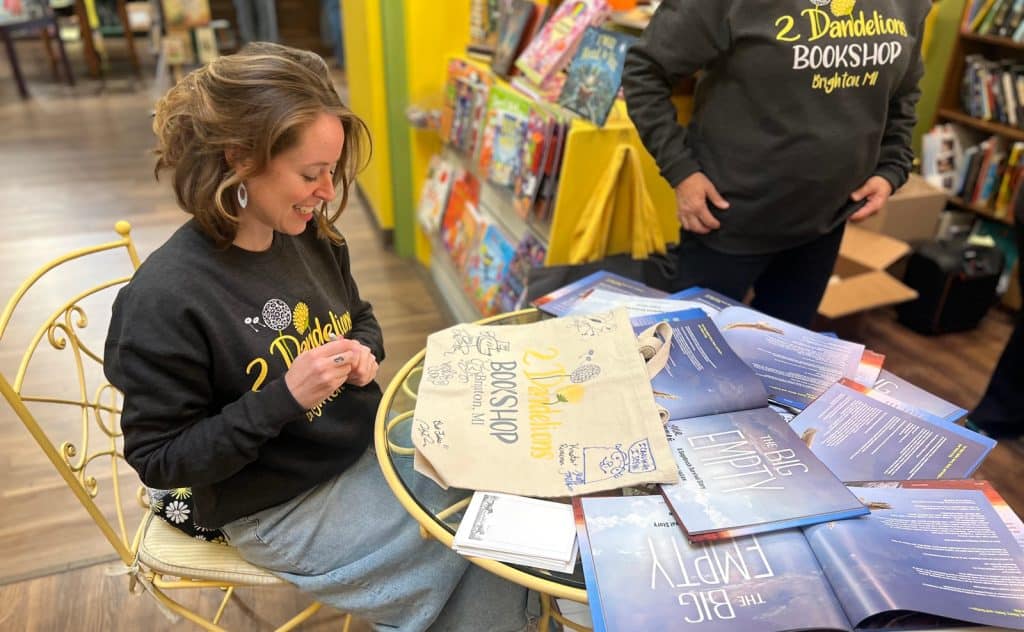
Kirbi Fagan has built a career out of capturing imagination through color, texture, and storytelling. With The Big Empty, her new book published in October by Lerner Publishing, she enters a new creative chapter as author and illustrator, inviting readers to see nature not as something fragile to fear losing, but as a partner with resilience worth celebrating.
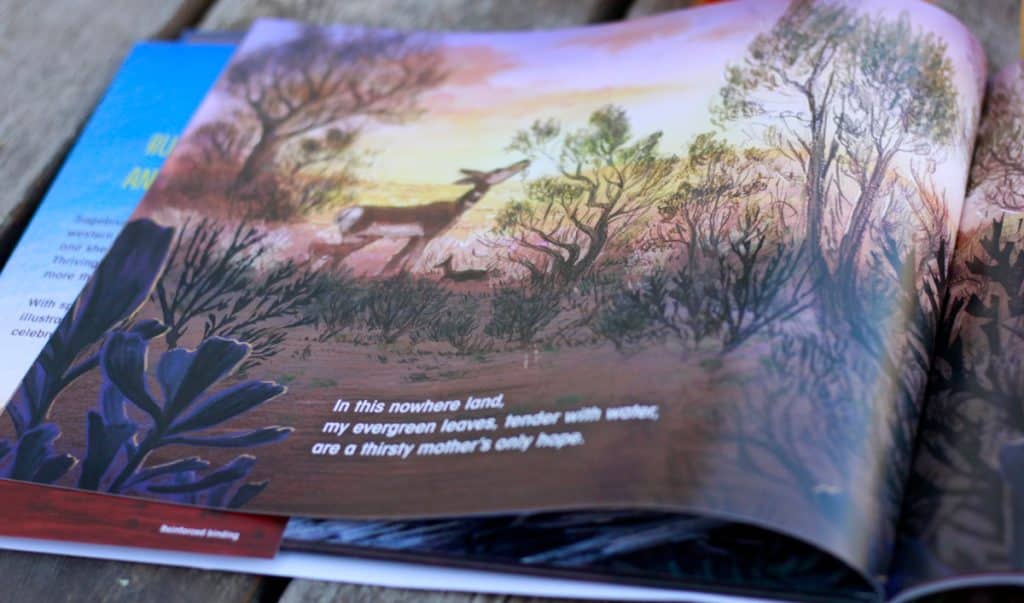
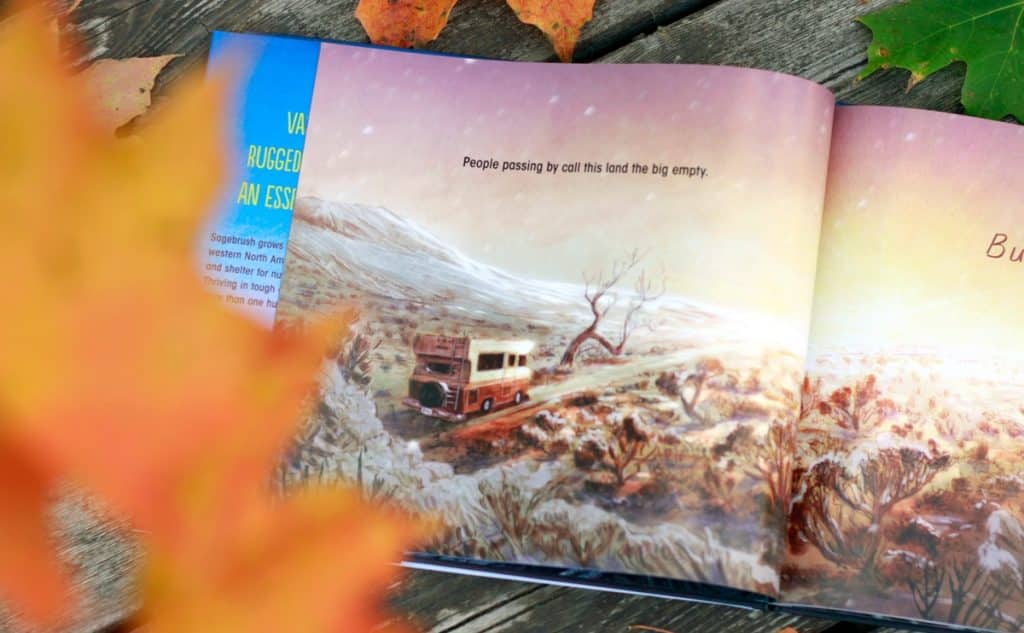
The picture book, designed for children ages 5 to 10, follows a humble sagebrush and its community of animals surviving together across the desert plains of the American West.
The story gives educators and parents an entry point to discuss conservation and empathy through an approach that highlights nature’s endurance rather than decline.
“Sagebrush is a powerful symbol of hope,” Fagan says. “The story approaches conservation by highlighting extraordinary resilience instead of an impossible mission, inviting readers to find that same resilience in themselves.”
From illustrator to full authorship
Fagan, a 2013 graduate of Kendall College of Art and Design (KCAD) at Ferris State University, has been a standout in illustration since earning her degree in 2013. Her work has appeared on covers and inside pages of acclaimed titles that include We Are the Scrappy Ones by Rebekah Taussig and the long-running New York Times bestseller A Horse Named Sky.
She began her career focusing on cover illustration, an art form that challenged her to distill complex stories into a single image. “I was really dedicated and narrowed my focus on cover illustration,” she says. “That’s what I started out doing — mostly book covers for middle grade and young adult novels, even for Marvel comics.”
Mentorship helped her develop her craft and confidence.
“I had a terrific mentor, Dan Dos Santos, who is a cover artist,” Fagan says. “Through his mentorship program, he brought my portfolio up so that I could really be competitive.”
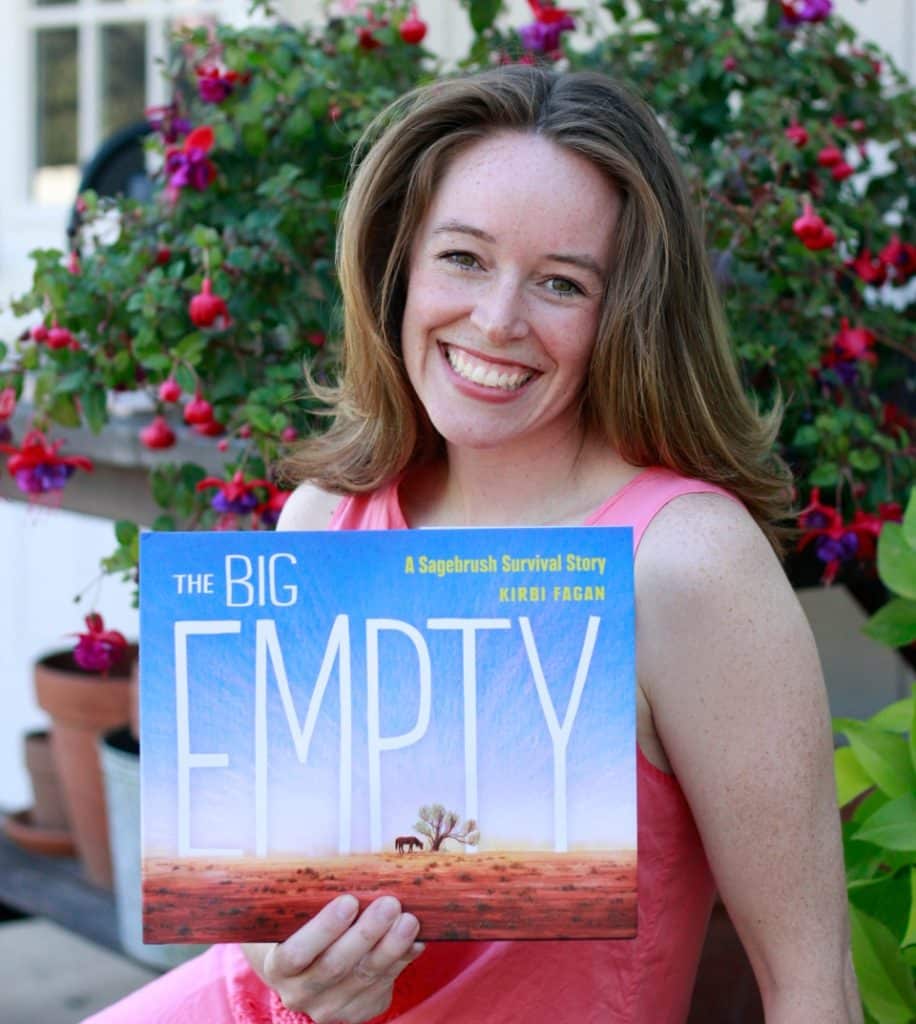
The years of honing technique and voice built a strong foundation for The Big Empty, the first book she truly authored in addition to illustrating it.
Fagan’s idea for The Big Empty began when she was researching wild horses for earlier illustration projects. Her interest in the animals’ habitats led her to the sagebrush, a plant she describes as architecturally fascinating — its branches twisting and sprawling across arid landscapes.
“I became really infatuated with sagebrush and the branches. They’re so architectural,” she says. “I was just filling my notebook with imagery of that sagebrush. The more I was researching about it, the more I learned about all of these resilient and unique traits that personally became a symbol of hope for me.”
The desert plant became her muse. Fagan saw in it a story of persistence not through dominance, but through cooperation. She wanted to write a book that would help children see that same persistence in themselves and in the planet around them.
“I hoped to create a book that wasn’t going to be a burden for young kids,” she says, “but that they could be encouraged when they have concerns about the environment and partner with something that is truly extraordinary.”
Balancing her roles
Illustrating and writing The Big Empty required Fagan to develop a rhythm between text and art, one that mirrored the balance she found in the story’s theme.
“This is my first book I’ve ever authored and illustrated,” she says. “I kind of described it to a friend the other day as playing chess against myself. I would write the words, then spin the table on myself and try to top that with my art, and then get to come back to the words until the text and image became so married that they couldn’t really exist without each other.”
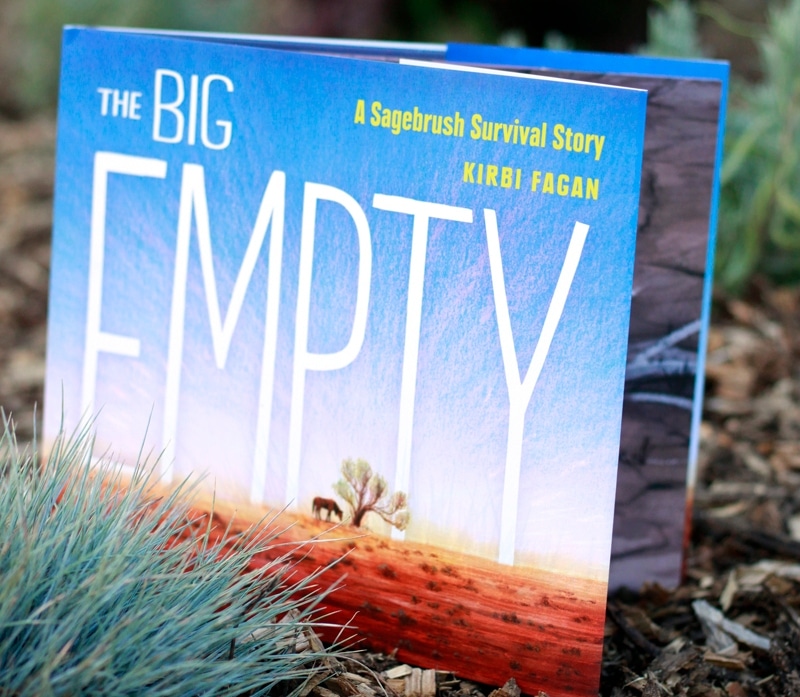
Her process blended multiple media, including pastel, collage, and carved lino cuts stamped directly into the illustrations. “It’s one of the first books that I’ve done with all traditional media,” she says. “It blends that realism and abstraction.”
That hybrid approach is reflected in early critical praise. Kirkus Reviews calls the book “a dramatic depiction of an unusual ecosystem,” while Publishers Weekly highlights the “moody, dusky-hued illustrations” that portray the life intertwined around the sagebrush.
Reflects her life story
Behind Fagan’s creative drive is a personal story about how art gave her the opportunity to pursue her passion even as she dealt with a challenging health issue. Diagnosed as a child with Crohn’s disease, an autoimmune disorder that can affect the digestive system, skin, and joints, she found in art a form of therapy and purpose.
“It affects the whole system,” she says. “I was diagnosed as a kid, and so reaching for hope and resilience over and over again was a big part of the story.”
Her condition requires frequent medical treatments, but art has provided both flexibility and fulfillment.
“This career has been a beautiful way for me to work,” she says. “It gives me time and flexibility, and it’s something I can do even when other paths wouldn’t have been possible.”
Fagan says her collaboration with disability advocate Rebekah Taussig on We Are the Scrappy Ones gave her the courage to speak more openly about living with a chronic illness.
“That book gave me the confidence to talk about my illness a little bit more,” she says.
KCAD influence
Fagan’s time at Kendall College of Art and Design left a lasting mark on her creative identity. She was drawn to KCAD because of its rigorous approach to technical training and its sense of community among artists.
“The technical skills of the students there blew me away,” she says. “I wanted to draw like they could. I knew if I could learn those skills, I could apply them to any idea I wanted in the future.”
She credits professors such as Matthew Schenk for introducing her to essential industry tools and the legacy of commercial illustration.
“He introduced me to the old illustration art annuals that really helped me understand what commercial art was,” she says.
“Jon Mcdonald was a professor there as well when I was there, and he really had great encouragement to hustle, hustle along,” Fagan adds.
Her experiences at KCAD continue to inform how she mentors others. “I’ve always wanted to help young artists understand that creativity is a career that can evolve alongside your life,” she says.
Fagan often speaks about the importance of community, both among artists and within the public spaces that host their work.
“Grand Rapids reminded me of a micro Chicago,” she says. “It was a community that really wanted to support artists and enjoyed art, and that just seemed like a perfect place to be.”
Uplifting lesson
Fagan’s environmental storytelling reflects her belief that optimism can drive engagement more effectively than fear.
“A lot of books these days end kind of sad when we talk about the environment,” she says. “I wanted to flip that story a little bit — that the Earth has our back. If we just become a partner, we could do a lot more together.”
That idea defines The Big Empty: rather than presenting ecological collapse, the book shows a thriving network of species supporting one another. It offers children a model for cooperative, hopeful action.
Her accompanying educator’s packet encourages activities that prompt students to explore local ecosystems, draw what they see, and discuss how even small plants and insects contribute to balance.
“I wanted to empower kids to see the world around them as something they can connect with — not something broken that they can’t fix,” she says.
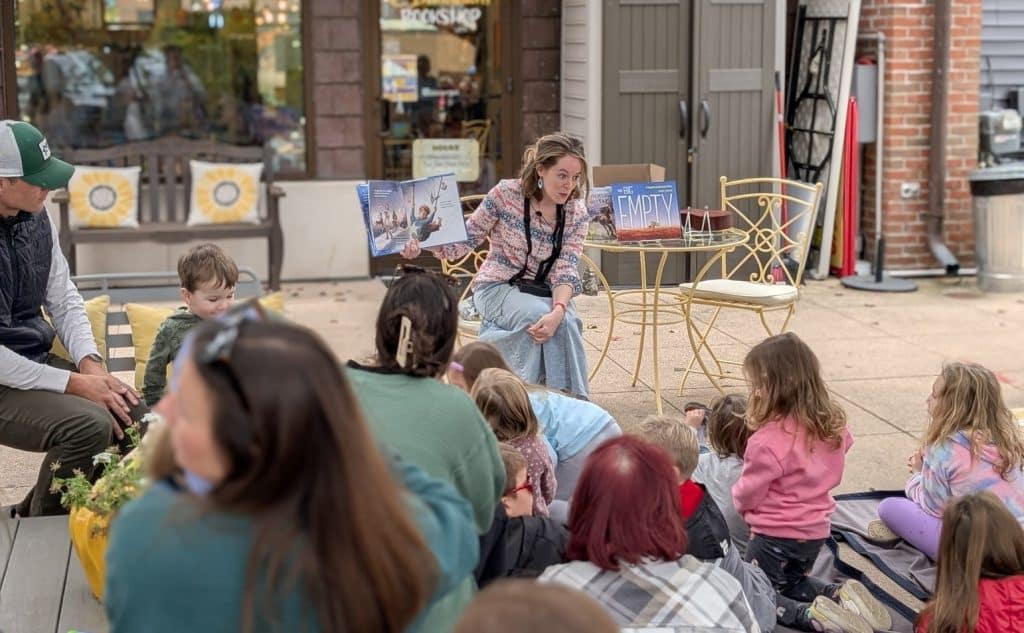
She has school visits scheduled for National Reading Month in March. These events, she says, allow her to connect directly with readers and educators who are using her work to inspire curiosity and compassion.
“If we just become a partner with the Earth, we can do a lot more together,” Fagan says.
Photos courtesy of Kirbi Fagan.
From furniture to shoes, from arts to education to even policy creation, design is everywhere you look. Designed in Michigan, a story series coming out of West Michigan, is devoted to sharing the expansive role design plays in Michigan’s past, present and future. It is made possible through the support of Kendall College of Art and Design of Ferris State University.
Author
Related Articles
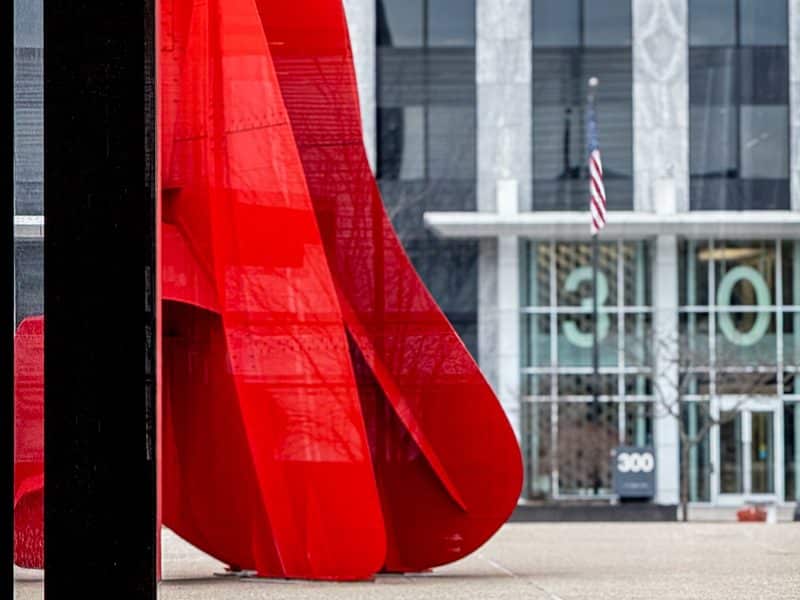
#RG20LookBack: When public art becomes a part of the place
In his 31st #RG20LookBack column marking Rapid Growth’s 20th anniversary, Publisher Tommy Allen revisits Grand Rapids’ relationship with public art, from Calder and Maya Lin to ArtPrize, and considers what the city might make room for next.
Kent District Library lets neighbors borrow, discover and explore together
From birdwatching kits to local music, KDL helps people try new things, save money, and share experiences.
Something for every season: Fashion, curiosity, and community at the GRPM’s new archive center
Inside the Grand Rapids Public Museum’s new Archives Center, Kendall College of Art and Design students are turning decades-old garments into inspiration for their next designs.


