
More than housing: Housing Commission builds stability, opportunity and community
The Grand Rapids Housing Commission helps families build stable lives through affordable housing, support services, and community partnerships.
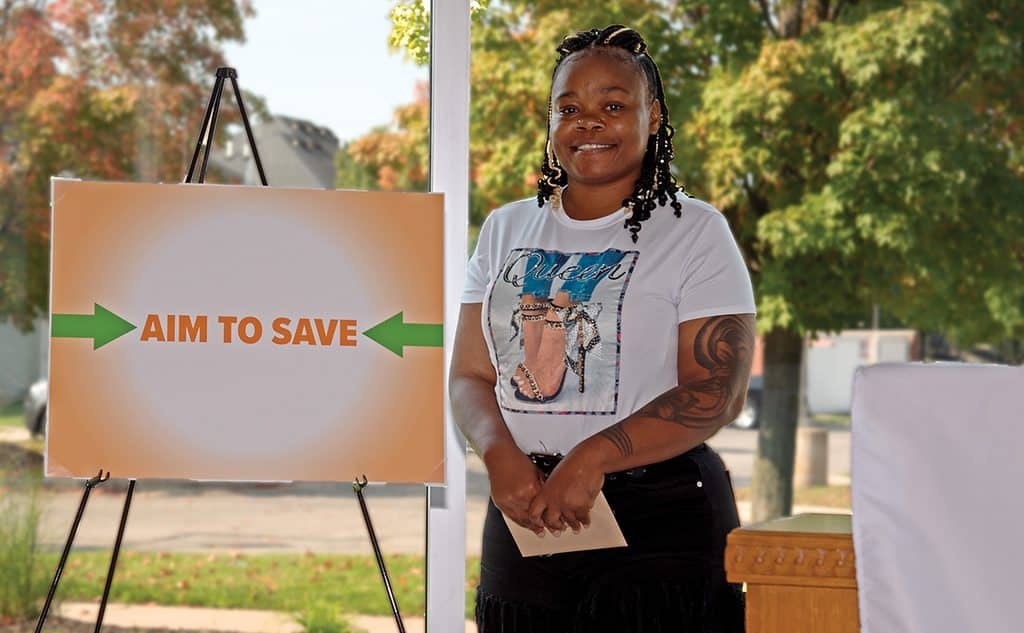
Wanda Couch moved often as a child. Her family moved about six times from sixth grade to the end of high school. Each move meant Couch had to make new friends. She sometimes worried about where her family would live.
“You’re a kid and can’t have your friends come over because you don’t know where you’re going to be living,” Couch says.
Couch now serves as family self-sufficiency manager at the Grand Rapids Housing Commission, helping families who receive housing assistance plan for their future.
“Once they’re housed, what’s next?” Couch asks. “Let’s work with the families to see where they want to go from that.”

The Housing Commission does more than provide homes. Staff help residents find services, save money and build credit. They help them work toward goals such as keeping a job or buying a home. Other groups bring food, counseling, health services and more to where residents live.
Lifting a burden
Essence Trimble is the commission’s acting director of property management. Before joining the commission, she spent eight to nine years managing other rental homes. She met families who worried whenever their leases came up for renewal because they did not know whether they could afford a rent increase.
“Every year rents became less and less affordable,” Trimble says. She wanted to help those families.
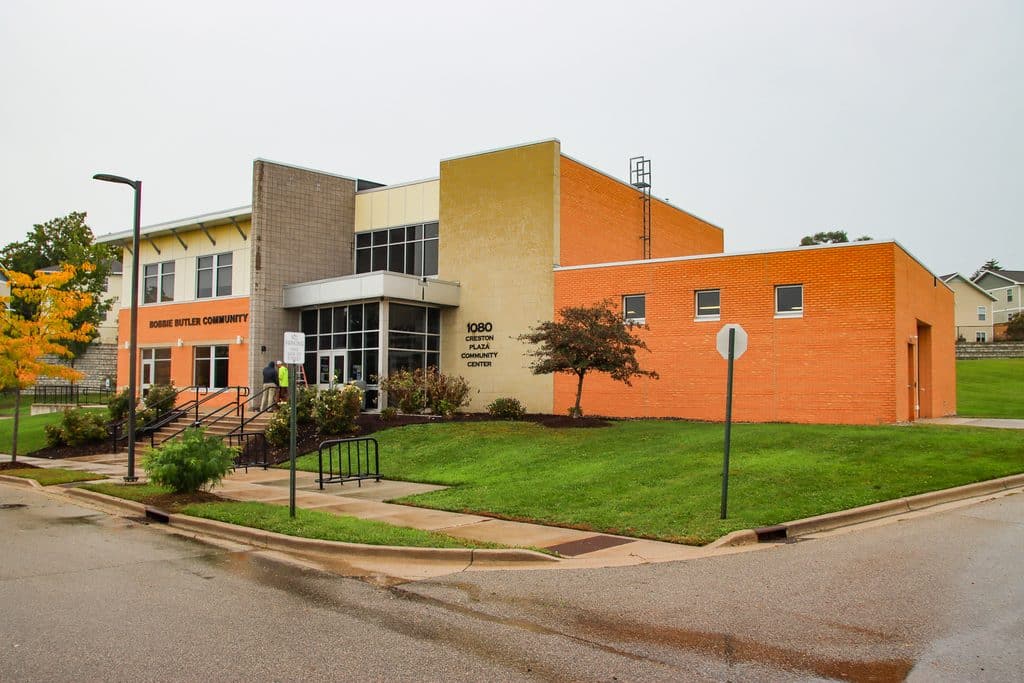
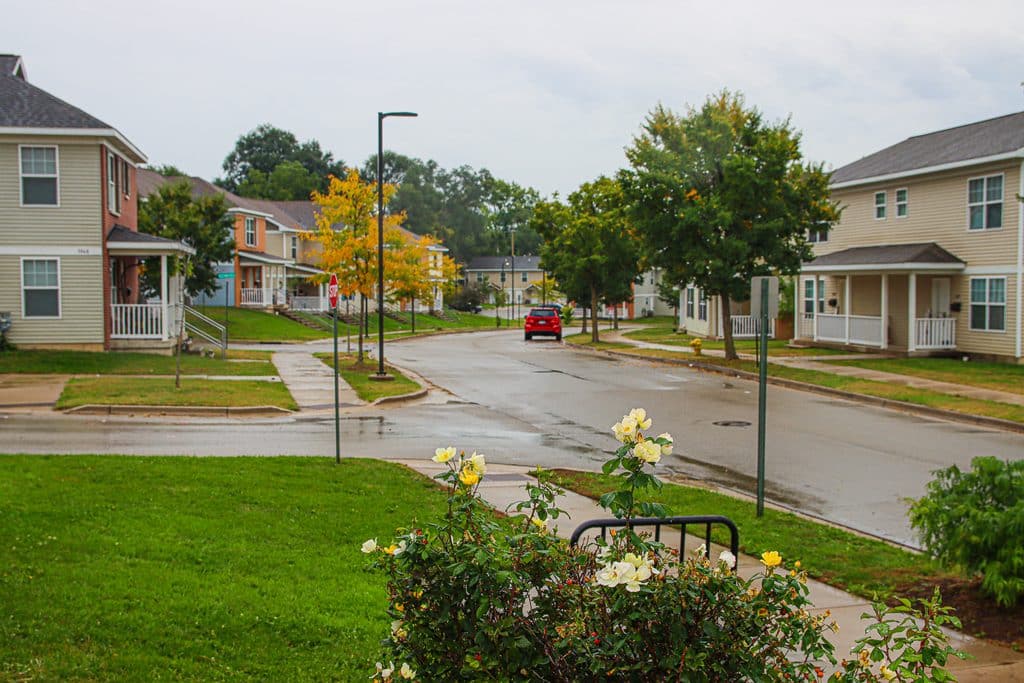
The Housing Commission manages 977 agency-owned housing units, including three family developments, 20 duplex units and six developments serving older adults and people with disabilities. Hope Community also serves people who have experienced homelessness. About three-quarters of the people the commission serves are older adults, people with disabilities or people experiencing chronic homelessness.
Trimble says many people are waiting for housing. When someone moves out, staff prepare the home for the next person on the waiting list.

Having an affordable home can give a family time to focus on other needs. Trimble recalls a mother who was able to spend more time helping her children with school, making doctor’s appointments and learning about programs that might help her family. She did not have to spend as much time worrying about where they would live.
Another woman told Trimble she had wanted a place of her own for years. After moving into a commission home, she and her son had a place they could afford. She could keep working and plan for their future.
“They’re able to focus less on the hard, stressful parts and live a more fulfilling life,” Trimble says.
Individual goals
The commission offers several ways for residents to take the next step. Couch says staff first ask people what they need and what they hope to do.
“Let’s just start where we are right now, this present moment,” she says. “What are your needs? And let’s try to meet those needs.”
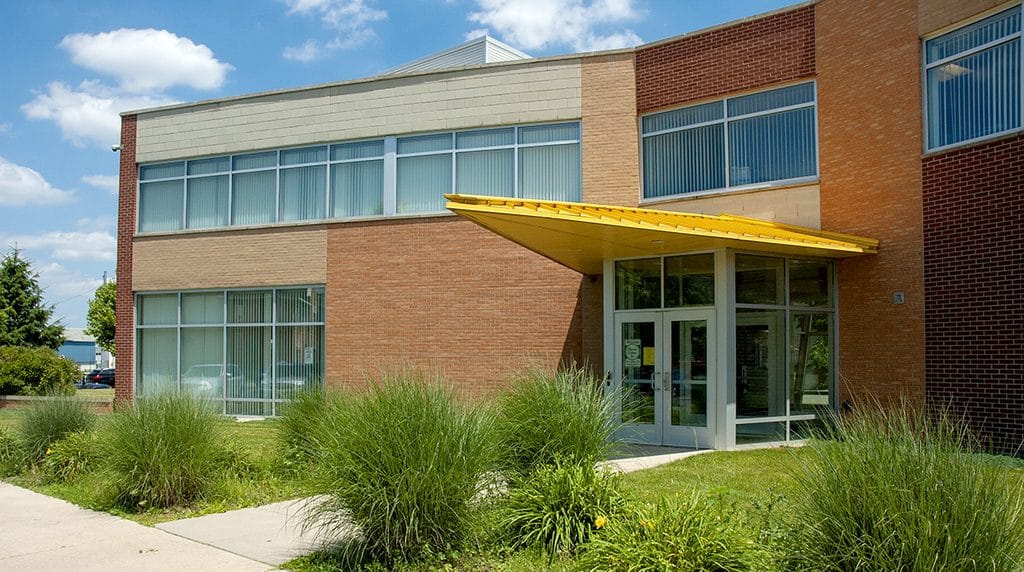
The commission’s EnVision Center, located within the Campau Commons Community Center at 821 Division Avenue S., offers classes that help with jobs, health, school and other life skills. In 2025, the center offered 71 workshops focused on personal financial management, life skills or career development, according to the commission’s 2025 impact report.
Its Family Self-Sufficiency Program pairs each family with a staff member. Together, they make a plan and find services to help the family reach its goals.
The program, which can last up to five years, can help families save money. When a family earns more and pays more of its rent, the program may put money into an account for them. The family can use the money when they finish the program. In 2025, the Housing Commission awarded a total of $262,289 to 27 program graduates.
Couch remembers a participant who did not have a job when she started. Over time, her account grew to about $34,000. She earned more money and bought a home, using some of the savings for a down payment and other costs.
“Anyone who completes any of our programs, I see that as success,” she says. “Every story is different.”
Buying a home is a goal for many families, but that can take time. A bank must agree to lend the money. A family may need to save more or improve its credit first. Getting to work or finding child care can make these goals harder to reach.
Staff help families find services that may make those problems easier to handle while allowing each family to move at its own pace. Workshops help residents through the process. Some people who receive assistance through the Housing Choice Voucher program can use that money to pay a mortgage instead of rent.
The commission also helps residents with day-to-day needs. Erin Shibley is a resident services specialist. She gets to know people who live in commission homes and helps them find support. She also works with groups that bring services to residents.
“Sometimes those steps are getting a job or saving money, and sometimes those steps are making it through a day at a time,” she says.
Collaborating with outside groups
Many groups work with the commission. Pine Rest Christian Mental Health Services has two full-time staff members who visit Adams Park, Antoine Court and other sites. They talk with residents one-on-one or in groups to help people find care.
Each commission site has a food pantry that Feeding America West Michigan helps stock. Meals on Wheels helps serve lunch at three sites. In the summer, two sites host a Grand Rapids Public Schools meal program for children.
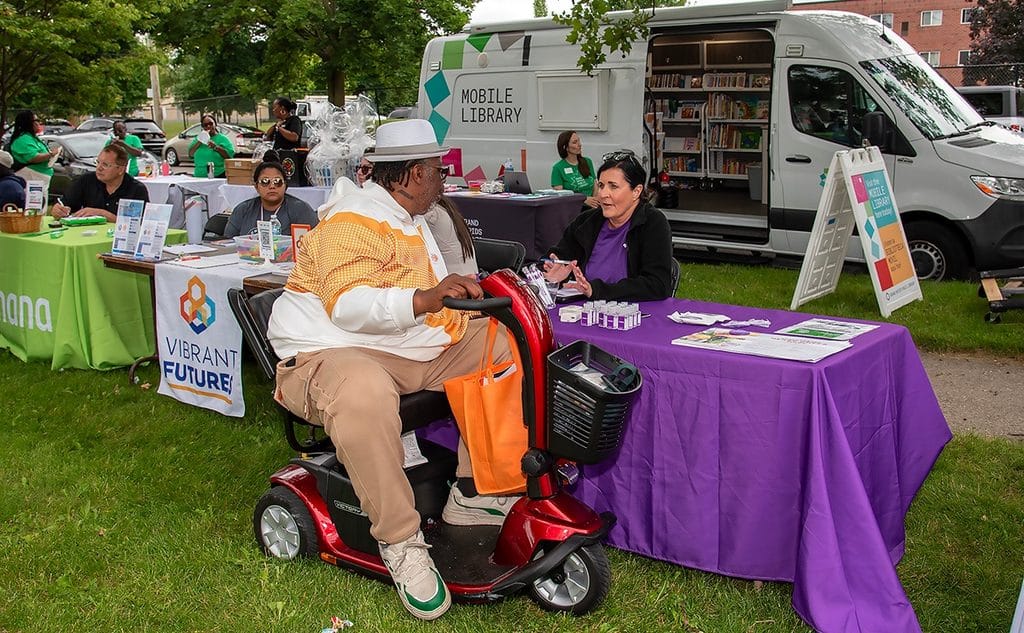
A YMCA van visits several sites so people can buy fresh fruits and vegetables. The Michigan secretary of state’s mobile office also visits commission sites, saving residents a trip to a state office.
Other groups Shibley works with include the Literacy Center of West Michigan, Area Agency on Aging, Grand Rapids Public Library, Corewell Health and Senior Neighbors. Churches and volunteers also give food, supplies and time.
“We make it our job to know what is available and connect our residents to those resources,” Shibley says.
The commission also has programs that help families manage money.
One program reports on-time rent payments to credit bureaus, helping participating residents build credit. Couch says better credit can help someone apply for a car loan or a home loan. Among a group of Resident Rent Reporting Program participants with the lowest credit scores, the average score rose from 507 to 580 within six months.
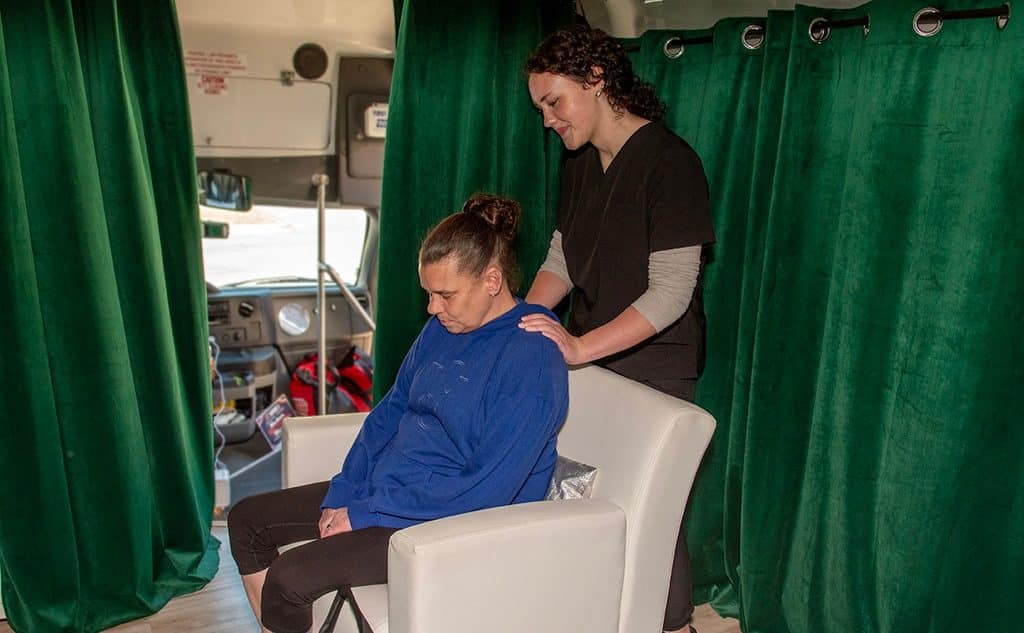
Another program, AIM to Save, helped families open savings accounts. The program made monthly deposits and matched participants’ deposits up to a certain level. Its first group of 72 participants accumulated a total of $76,159 in savings. Couch says some families used their savings to cover unexpected expenses or financial setbacks, such as a high utility bill, a job loss or a car repair. The commission plans to put more focus on savings accounts for children as the program grows.
Each service meets a different need, and no one program can solve every problem. Couch and Trimble say each resident has their own goal. One person may want to stay in their home and care for their family. Another may hope to buy a home one day.
“The end goal could be whatever you want it to be,” Trimble says.
Photos courtesy of GRHC and by Tommy Allen
Housing+ looks at how the Grand Rapids Housing Commission and its partners help residents build stability through affordable housing, rental assistance, senior and disability supports, pathways to homeownership, financial empowerment, and the many other services that shape daily life across Kent and Ottawa counties. Through our editorially independent solutions journalism, Rapid Growth digs into the people, programs, partnerships, and pressures shaping housing access, and what it really takes for individuals and families to build more stable futures. This series is underwritten by the Grand Rapids Housing Commission, which Mployer named a 2026 Top Benefits Award winner. Learn more at grhousing.org.
Author
Related Articles
‘It’s full circle for me’: GR Housing Commission adapts to changing needs
The Housing Commission’s mission begins with its people, whose passion for helping others has shaped the agency’s work for over 60 years.


