
#RG20LookBack: A lesson in inclusion, revisited at an uncertain moment
In his 22nd #RG20LookBack, Rapid Growth Publisher Tommy Allen revisits his 2025 story, “Beyond Compliance: Area nonprofit and corporation are redefining inclusive workplaces,” showing how companies like Steelcase value the insights of people who navigate barriers every day.
One of the unexpected gifts of revisiting two decades of Rapid Growth stories is discovering how often the past has something to teach us about our present.
Disability advocates across the country are raising concerns about a U.S. Department of Justice memo that challenges long-standing interpretations of Olmstead v. L.C. — the landmark ruling that helped protect the rights of people with disabilities to live, work, and participate in their communities. Or in plain English: the right to live in the world.
Legal experts have spent the week since the memo’s release debating what it actually means in practice. But the conversation keeps circling back to the same old ground — obligations, compliance, what institutions are required to do.
What worries many advocates isn’t that the memo rewrites the law overnight, a common practice under our current presidency. What we do know for now is that the Americans with Disabilities Act, Section 504, and the Olmstead ruling will remain in place.
What concerns advocates all over the country is the signal it sends about whether community participation and inclusion remain priorities in the United States.
Whether the issue is housing, transportation, education, or employment, the debate keeps coming back to the same question: who is responsible for inclusion, the individual or the systems around them?
It is also why our Disability Inclusion series matters…even more today than ever.
Through more than 150 community-sourced stories, we’ve listened to and amplified the voices of people with disabilities, documenting not only the barriers they face but also the solutions, innovations, and acts of belonging that continue to move West Michigan forward.
As I read the news about the DOJ’s memo, the thought of what’s at stake kept coming to mind. And in trying to showcase a story to look back on that reflects how we are doing here in West Michigan, I found myself returning to a story from our series about Disability Advocates of Kent County’s (DAKC) Test Pilot Program.
This story stood out as a good one to reflect on this week because it rejected the idea that accessibility is something organizations do for people with disabilities. Instead, it treated lived experience as expertise. And if I have learned anything from being in West Michigan for more than 40 years, this community, when we get it right, it is often because we do the hard work of listening to each other.
In this look-back story on DAKC’s Test Pilots and their role in the design process, “Beyond compliance: Area nonprofit and corporation are redefining inclusive workplaces,” Steelcase is among the many local companies that have recognized that the people navigating barriers every day are often best equipped to spot them.
My 2025 story wasn’t really about accommodations. It was about inviting perspectives to the table that welcomed their insights, making their design offerings valuable to an international company.
As one participant put it, “You get used to adapting to a world that wasn’t built for you.” Rather than asking people to keep adapting, the program asked designers and employers to listen more carefully to voices that had too often gone unheard.
For decades, disability advocates all over the U.S. have fought for access to schools, transportation, housing, workplaces, and public life. Those gains matter, and they’re worth protecting.
But the most meaningful progress tends to happen when organizations stop asking what they’re required to do and start asking what becomes possible when everyone is invited to participate.
We believe at Rapid Growth that the Steelcase story made that case plainly. Inclusion isn’t charity — it’s an investment in human potential. And accessible design, it turns out, benefits everyone. The result wasn’t just a more accessible workplace. It was a better one, shaped by perspectives that too often go missing from the room.
Looking back, the lesson wasn’t about accommodations at all. It was about expectations. The Test Pilot Program pushed back against the assumption that disability should be viewed through the lens of limitation and asked the question every healthy community should ask: What talents and perspectives are we missing when people are left out?
As some debate the responsibilities institutions should undertake, our Disability Inclusion story (as well as all of these stories) reminds us that resilient communities often go beyond mere compliance. The Test Pilot Program story demonstrated the impact of including people with lived experience as valued experts. This led to not only a more accessible workplace but also a stronger one.
In a political era when many fear a retreat from decades of hard-won progress, that lesson feels especially relevant today. It’s also a reminder of why readers have turned to Rapid Growth for the past 20 years — not for predictions or punditry, but for the people and solutions working quietly, often against long odds, to move our region and our people forward.
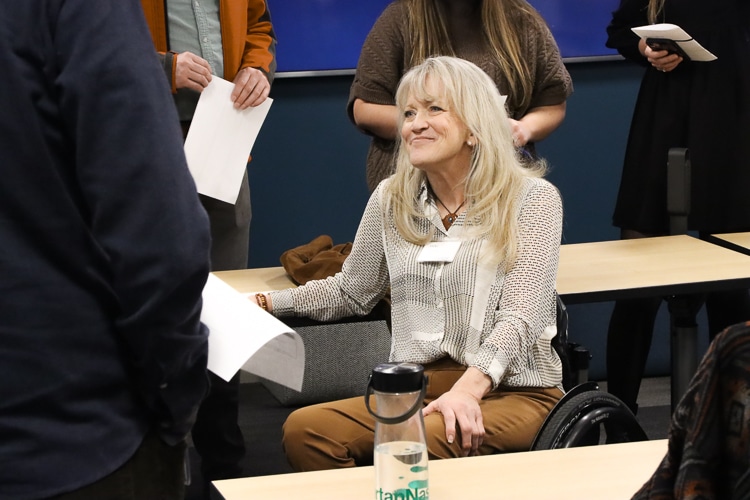
Beyond compliance: Area nonprofit and corporation are redefining inclusive workplaces
By Tommy Allen
For the Steelcase team, accessibility is far more than ramps and automatic doors. Through an innovative partnership with Disability Advocates of Kent County (DAKC), Steelcase is reimagining what it means to create truly inclusive workplaces.
For many, workplace accessibility is an afterthought — a checklist of accommodations that meet the bare minimum of compliance. But for the Steelcase team, accessibility is far more than ramps and automatic doors. Through an innovative partnership with Disability Advocates of Kent County (DAKC), Steelcase is reimagining what it means to create truly inclusive workplaces.
At the heart of this effort lies the Test Pilot program, a DAKC initiative where individuals with disabilities evaluate spaces and provide direct feedback on how environments can better accommodate all users. On February 25, Steelcase hosted its final accessibility tour with a group of DAKC Test Pilots, a process that has uncovered invaluable insights throughout multiple sessions.
Shifting the paradigm: from simulation to lived experience
Historically, companies seeking to understand accessibility challenges have turned to temporary simulations, such as having designers navigate spaces in wheelchairs or wear vision-obscuring goggles. But as Vicky Schmidt, a high-level paraplegic and longtime DAKC Test Pilot, explains, these exercises fail to capture the depth of daily life for people with disabilities.
“It’s not just about moving through a space,” Schmidt says. “It’s about the hyper-vigilance required every single day. Where am I going to park? How am I going to enter? If I need to leave quickly, what are my options? These are things most people don’t think about, but they shape my entire experience of a space.”
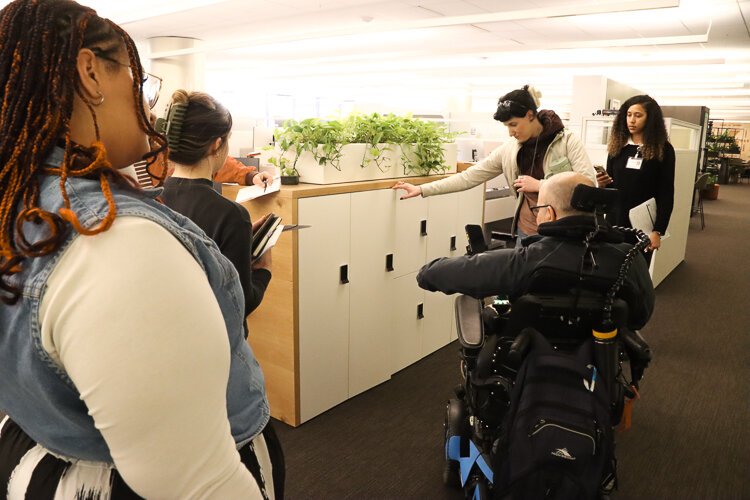
Steelcase has wholeheartedly embraced this feedback, moving beyond surface-level simulations to genuine engagement with people with disabilities. Rather than assuming what works, they listen to those who know best.
Bridging gaps with purposeful design
Kamara Sudberry, Global Inclusive Design Leader at Steelcase, has facilitated these accessibility reviews. She acknowledges that, despite Steelcase’s reputation as a leader in workplace design, DAKC’s Test Pilot program has uncovered areas for improvement they hadn’t previously considered.
“We don’t want to just meet compliance,” Sudberry says. “We want to create spaces where everyone feels comfortable, welcomed, and valued. The Test Pilots have helped us identify subtle but crucial design flaws — from seating arrangements that make people feel trapped to minor slopes that significantly impact mobility.”
The Steelcase team has taken the Test Pilots’ insights seriously, using their feedback to influence future workplace solutions that will be integrated into their corporate environment and the furniture and systems they design for clients globally.
Celebrating the power of inclusive design
Jenny Gauld is a key figure in the launch of this initiative, whose personal legacy at Steelcase speaks to a deep commitment to inclusive design. Having started her journey at Steelcase as an intern, Gauld has spent years fostering a culture prioritizing accessibility, innovation, and user-centered design. Her experience has allowed her to guide this program with institutional knowledge and a fresh approach to evolving challenges, including:.
- Longstanding Dedication to Inclusive Design: Gauld’s tenure at Steelcase has given her a unique perspective on how accessibility has evolved within corporate environments. Her ability to connect past learnings with present innovations has ensured accessibility remains a core part of Steelcase’s design ethos.
- Bridging Corporate Strategy and User Needs: With a deep understanding of business objectives and user experiences, Gauld and her teammates at Steelcase have played a critical role in translating Test Pilot feedback into actionable design improvements. Her leadership ensures that inclusivity is not an afterthought but an integral part of the product development process.
- Mentorship and Advocacy: In addition to her design and technical expertise, Gauld has mentored many within Steelcase and advocated for a more inclusive workplace culture. These efforts have helped shape a new generation of designers and other departments who view accessibility as essential to good design rather than a compliance requirement to pass the ADA bar.
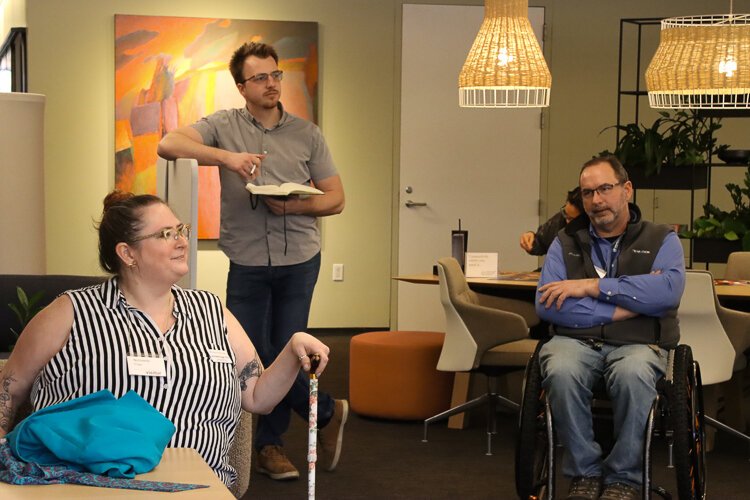
The Test Pilot program is a DAKC initiative where individuals with disabilities evaluate spaces and provide direct feedback on how environments can better accommodate all users.
On the day that Rapid Growth visited Steelcase during their fourth and final DAKC-led experience, Gauld appeared genuinely touched by the feedback from the Test Pilots.
“Hearing our Test Pilots express gratitude was something I didn’t expect. I think we can always do better, so to hear that we are making a real impact was incredibly moving,” Gauld says as she reflects on the four test pilot sessions. “This experience reinforced how important it is to bring in outside perspectives and truly listen. We have put so much heart into this work, and knowing that it’s creating a positive difference is deeply fulfilling.”
The emotional impact of being heard
For the test pilots, this process has been more than just an assessment — it has been a moment of validation. Many of them, including Schmidt, spoke about the emotional weight of finally feeling seen and heard in spaces that traditionally overlook their needs.
“You get used to adapting to a world that wasn’t built for you,” Schmidt says. “And then you come into a place like Steelcase, where they don’t just listen — they ask for more. They want the hard truths, the real challenges, the things that make daily life exhausting for people with disabilities. That’s rare, and it’s powerful.”
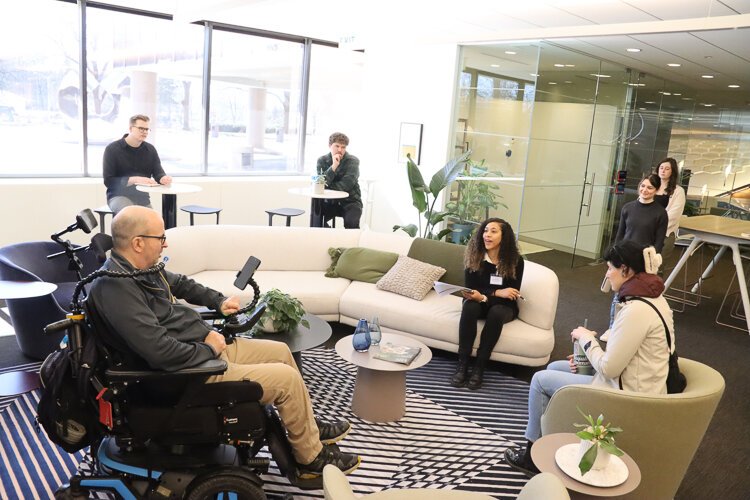
Steelcase hosted its final accessibility tour with a group of DAKC Test Pilots, a process that has uncovered invaluable insights throughout multiple sessions.
A growing movement toward true inclusion
DAKC’s Development Director, Peggy Helsel, has witnessed firsthand how the Test Pilot program has gained momentum since its inception in 2019. Initially a small-scale effort, the program has expanded into a vital tool for businesses looking to foster more inclusive environments.
“We’ve seen a shift in the community,” Helsel says. “Organizations are realizing that accessibility isn’t just a compliance issue — it’s a human issue. And it’s not just about making workspaces better for employees; it’s about welcoming everyone who walks through their doors.”
Helsel noted that the Test Pilots’ impact extends beyond Steelcase. Recent reviews have been conducted at major venues such as Acrisure Amphitheater and the new downtown soccer stadium. Test Pilot feedback has led to real-time changes in these cases, preventing costly mistakes before construction is finalized.
How to get involved
With a growing demand for accessibility reviews, DAKC is always looking for new Test Pilots. Anyone with a disability interested in shaping more inclusive spaces can simply contact DAKC to learn more about this exciting program.
Companies looking to follow Steelcase’s lead should follow the message from DAKC and its Test Pilots: Engage with the Disability community, listen to lived experiences, and build with inclusivity in mind from the start.
Beyond compliance, toward belonging
As someone who spent four months in a wheelchair following a near-fatal car collision in 2006, I know firsthand that accessibility isn’t just about mobility — it’s about dignity. The work that Steelcase and DAKC are doing together isn’t just about compliance. It’s about fostering a sense of belonging, ensuring that everyone — regardless of ability — can move through a space with the same ease, confidence, and respect as anyone else.
What’s happening inside the Steelcase corporate offices isn’t just an internal shift; it’s a call to action. If more organizations follow suit, we could see a future where accessibility isn’t just an afterthought but a fundamental pillar of good design. And that is a world worth striving for.
______________
Rapid Growth’s Disability Inclusion original story series is made possible through a partnership with Centers for Independent Living organizations across West Michigan.
All photos are by Tommy Allen.
Related Articles
Grand Rapids improves access to help everyone enjoy the city
Local groups work with people with disabilities to improve access, share travel details and make Grand Rapids easier to explore.

Language access begins by asking people how they communicate best
Tom Hoxsie explains how language barriers affect Deaf people and how interpreters, captions, and community partnerships can improve access to information.

Hartford Nationals returns to Grand Rapids for a third year
The Hartford Nationals will return to Grand Rapids in 2027, giving adaptive athletes like Elizabeth Woller another chance to compete nationally.


