
Ticket to Work helps people with disabilities return to work safely
The program offers guidance and support so people with disabilities can work without losing benefits, addressing fears, complexity, and financial instability.
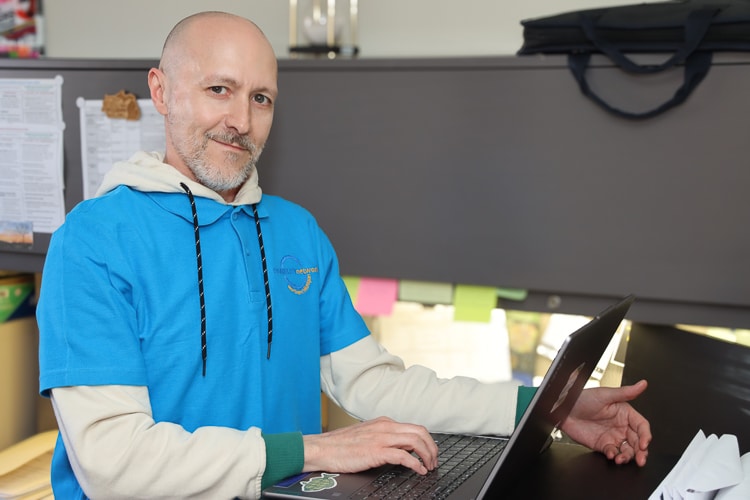
George Gray spends much of his day helping people decide a difficult question: Is it worth the risk to work?
Gray is the office lead at Disability Network Northern Michigan in Traverse City. He works with people who want jobs but worry about what they might lose in the process. While a paycheck can help cover bills, it can also affect disability benefits and health coverage that many rely on.
“I help people who want to go back to work by understanding how working may impact their benefits,” Gray says.
That challenge impacts the decisions many people with disabilities face. Working is about more than finding employment. It often means navigating a complicated system in which income, benefits, and health insurance are intertwined. A misstep can have real consequences.
John Burtrum, a benefits counselor for Disability Network Northern Michigan, sees how that creates hesitation among his clients.
“It’s the fear of the unknown,” Burtrum says. “People are like walking on eggshells trying to navigate this stuff.”
The federal Ticket to Work program is designed to offer a path forward within that complexity. It allows people receiving disability benefits to test employment while still receiving guidance and support.
Available to people ages 18 to 64, the program connects participants with employment networks such as Disability Network Northern Michigan that can guide them through their decision.
Rebuilding a life
After a traumatic brain injury at age 15 from a crash that caused extensive injury to her face and head, Laura has spent her adult life rebuilding her life and finding a path into the workforce.
Now living in Traverse City, Laura, who asked that only her first name be used for privacy, says support from Disability Network Northern Michigan and the Ticket to Work program played a key role in helping her return to employment.
“It’s like a team effort when you have a disability or a brain injury,” she says.
Laura says the program provided a mix of practical and emotional support as she navigated work after her injury.
“They are very supportive with emotional support, professional support, and just overall empathy and understanding,” she says.

Through Ticket to Work, she worked with counselors who helped her think through job options, workplace needs, and how to communicate effectively with employers. That guidance helped her advocate for herself when applying for jobs.
“They created a job for me because I knew what to ask for and how to ask,” she says.
Laura works at a cardiovascular practice. She helps manage patient scheduling and administrative workflows. The role was tailored in part to fit her needs, including a quieter workspace that allows her to focus. Her coworkers also don’t mind if she repeats questions.
She credits the program with helping her build the confidence and structure needed to succeed.
“I got to where I am today through a line of professionals that all work together,” says Laura, who describes the program as a critical starting point for people navigating disability and employment. “Everything I needed I got from them. It’s as good as it gets.”
Maintaining needed benefits
People receiving Social Security Disability Insurance or Supplemental Security Income depend on those programs for basic needs like housing, food, and medical care. The possibility of losing them or even misunderstanding the rules can keep people from pursuing work.
That has helped fuel a misconception that people with disabilities do not want to work. In practice, Gray says, many are trying to make ends meet with limited resources.
“Nine out of 10 times they can’t live and survive off the benefits they’re receiving,” he says.

With SSI payments under $1,000 a month, covering rent, transportation, and food can be a constant challenge without holding a job.
“They can’t pay their rent,” Gray says. “They don’t have a choice.”
Others have different reasons for wanting to enter the job market. Some have seen improvements in their health and want to test what they can do. Others want routine, independence, or a chance to reconnect with their communities.
However, the system can feel overwhelming.
“Social Security is very confusing and complex,” Burtrum says.
Income limits, reporting requirements, and interactions between different benefits programs can be difficult to track. Clients often arrive unsure what type of benefits they receive or how long they have been on them. Many do not know how work incentives operate or how earnings will be counted.
Health coverage adds another layer of concern.
“Working is going to impact not just their Social Security benefits, but their Medicare and Medicaid,” Gray says.
That concern can stop people from taking the next step, especially when medical coverage is tied to ongoing treatment or medications.
“Some people don’t know if they want to jeopardize that,” he says.
‘They’re not alone’
Participants find their way to the program through word of mouth, online searches, or referrals from Social Security or Michigan Works.
The process often begins with reassurance.
“You can start working before your ticket’s open. It’s not going to hurt anything,” Gray says.
Counselors request detailed reports from Social Security that outline what benefits a person receives, how long they have received them, and whether they have worked in the past. That information allows counselors to build a clearer picture of each client’s situation.
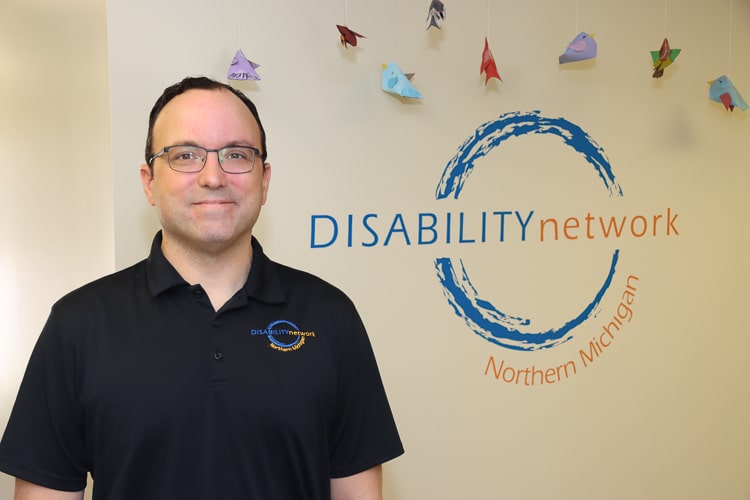
From there, they explain work incentives that allow people to earn income without immediately losing benefits. They walk clients through different scenarios, showing what happens if someone works part-time, increases hours, or transitions to full-time employment.
“They should definitely know that they’re not alone,” Burtrum says. “We advocate for them and support them, helping them navigate the whole process.”
Support often includes handling paperwork, helping clients track wages, and communicating directly with Social Security. Taking on those tasks reduces the risk of errors that can lead to overpayments, situations where individuals may have to repay benefits, sometimes months or years later.
Someone working limited hours may not need to enroll right away. Instead, counselors may focus on tracking wages and building toward more consistent employment.
Counselors stay up to date
Understanding those rules is not simple, even for the professionals who guide people through them.
Gray and Burtrum completed about six months of training to become certified work incentive practitioners, taking intensive coursework through Cornell University. The training covered the details of Social Security programs, work incentives, wage reporting, and case analysis. The material included readings, lectures, and exercises designed to simulate real-life scenarios.
“It was very intense,” Gray says. “You really learn more when you start to apply some of that stuff in real-world situations.”
Burtrum says the coursework required them to analyze how different employment situations would affect benefits over time, including the interaction of income levels, hours worked, and types of benefits.
Even after certification, the learning continues. Policies shift, income thresholds change, and new rules are introduced.
“Things change with Social Security all the time,” Gray says.
Both counselors are required to meet continuing education standards, logging dozens of hours to maintain certification. They attend trainings, review policy updates, and discuss cases with other professionals to keep their knowledge up to date.
That level of preparation reflects the complexity of the system they help clients navigate daily.
“It’s such a complex thing,” Burtrum says.
Benefits of work
Burtrum says work can offer more than financial relief. Work can bring structure, interaction, and a sense of direction that extends beyond income. It can also help people build confidence as they test what they can do.
“We’re talking numbers and money and making ends meet,” he says. “But also, the value of purpose and work is fulfilling.”
Progress is rarely linear. Many clients try different jobs before finding one that fits their abilities and schedules.
“Sometimes it’s changing jobs two, three times to find the right job,” Gray says.
He points to a client who started working long shifts in a hospital but found the schedule too physically demanding. After switching to shorter shifts in a school cafeteria, work became manageable and sustainable.
“She’s now more successful because she was able to find the right type of employment,” he says.
Some participants eventually reach a point where employment replaces the support they once relied on, allowing them to reduce or move off benefits entirely.
“The ultimate goal is to achieve self-sufficiency,” Burtrum says.
Such outcomes push back on the idea that people with disabilities are a burden on public systems. They highlight how individuals can contribute when barriers are reduced and when they have access to accurate information and support.
At the same time, the system remains complex, and decisions about work are rarely simple. Each person must weigh the potential gains against the risks tied to benefits and health coverage.
That makes guidance critical as people consider their options.
“It can’t hurt to try,” Gray says. “At least give it a try.”
Photos by Tommy Allen
The multi-regional Disability Inclusion series is made possible through a partnership with Centers for Independent Living organizations across West Michigan.
Author

Related Articles

Who tells the story matters: Anishinaabek returns to the Grand Rapids Public Museum
After more than three decades, a reimagined exhibition puts Indigenous voices, lived experience, and community collaboration at the center of how West Michigan meets the original people of this place.

Grand Rapids improves access to help everyone enjoy the city
Local groups work with people with disabilities to improve access, share travel details and make Grand Rapids easier to explore.

Language access begins by asking people how they communicate best
Tom Hoxsie explains how language barriers affect Deaf people and how interpreters, captions, and community partnerships can improve access to information.


