
West Michigan accessibility event expands regionally amid rising demand
Absolutely Accessible grows beyond Kent County, drawing larger crowds, new partners, and an expanded focus on housing, design, and regional accessibility solutions.
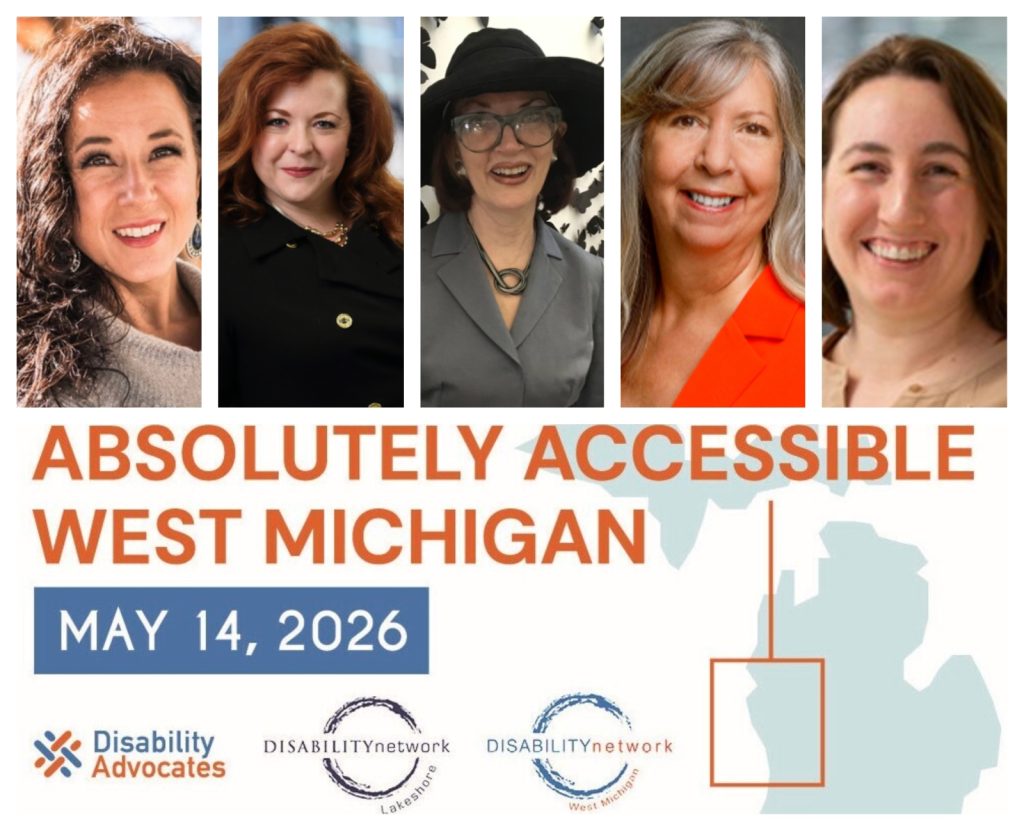
Speakers at the 2026 Absolutely Accessible West Michigan conference include real estate broker Sarah Takens; urban planning leader Suzanne Schulz; Valerie Fletcher, executive director of the Institute for Human Centered Design; occupational therapist Judi Siegert; and architect Kate Dailey.
Amanda Rhines-Poehlman sees the shift happening across West Michigan.
As executive director of Disability Network Lakeshore, she has worked alongside partners in Kent County and Muskegon to grow an accessibility initiative that is now reaching beyond its original boundaries. What began as a local workshop has become a regional effort to rethink how communities design homes, neighborhoods, and public spaces.
“We all have a role to play in this,” Rhines-Poehlman says. “This matters just as much in small and rural areas as it does in big cities.”
That broader vision is taking shape as Absolutely Accessible Kent County expands to become Absolutely Accessible West Michigan, reflecting rising demand and a wider push to address accessibility challenges across the region.
The eighth annual workshop, scheduled for May 14, will take place at DeVos Place in downtown Grand Rapids after outgrowing its previous home at Grand Valley State University’s Eberhard Center. Organizers expect more than 300 attendees this year, up from about 250 last year.
For Rhines-Poehlman, the growth reflects a deeper understanding of how accessibility affects everyday life, particularly in housing and community design.
“We talk about West Michigan as a whole,” she says. “But geographically, we’re divided. Bringing this together helps bridge that.”
Not just a local issue
The expansion is built on a partnership among Disability Advocates Kent County, Disability Network Lakeshore and Disability Network West Michigan, organizations that serve a wide range of communities across Kent, Ottawa, Allegan, Muskegon, Mason, Lake, Oceana, and Newaygo counties.
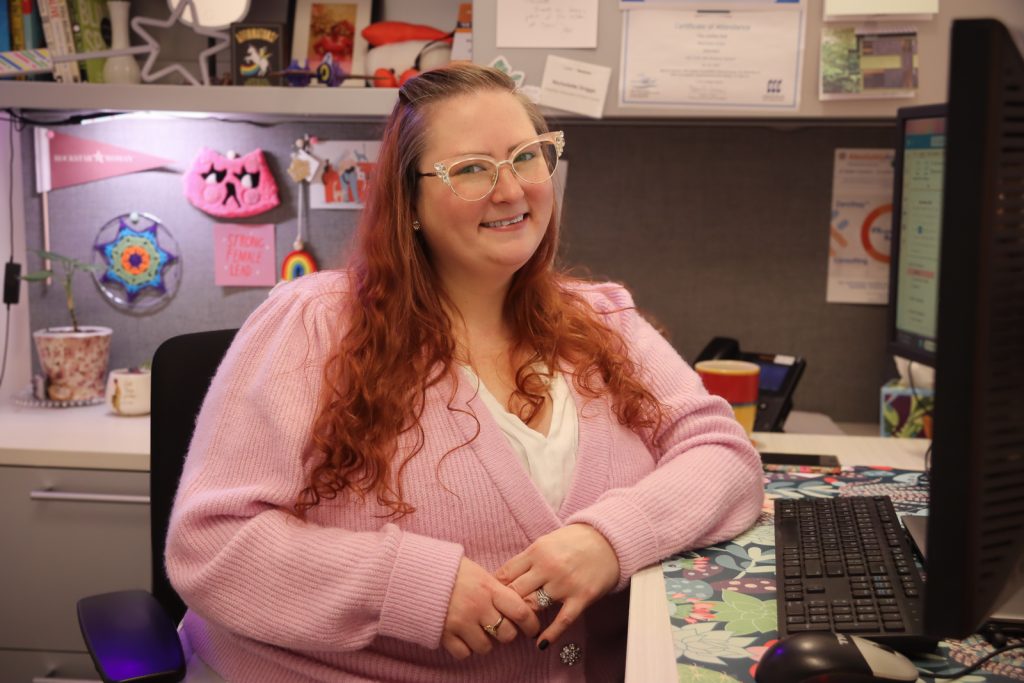
Nicholette Driggs, business development coordinator at Disability Advocates Kent County, has helped guide the event’s evolution for the past two years. She says attendance growth and community feedback have pushed organizers to think beyond a single county.
“There is proof that the need is there and that the desire is there,” Driggs says.
That demand, she says, is tied to persistent gaps in accessibility, especially in housing.
“The ADA does not cover home accessibility, and we have an extreme lack of accessible housing,” Driggs says.
The workshop focuses on accessibility in the built environment, bringing together professionals from architecture, planning, real estate, and community advocacy to share strategies and solutions.
Attendee input has shaped the event’s direction.
“Absolutely Accessible has always been a space where we have taken the feedback of our community to really make the event better,” Driggs says.
This year, that feedback has led to new programming, including breakout sessions on residential design and real estate, areas organizers say are critical.
“We need the people building the houses, the people selling them, and the people buying them all advocating for more accessible homes,” Driggs says.
Spreading the word
Will Wilson, CEO of Disability Network West Michigan, says expanding participation across counties comes with challenges.
“Trying to convince individuals from other counties to travel is a challenge,” he says. “But the more people we have in the room that share a common interest in accessibility. This will increase our number of ambassadors.”
Those ambassadors, Wilson says, help carry ideas back into their own communities.
“It won’t be just our centers getting the word out,” he says. “We’re going to have individuals who attended this event that can also share the word.”
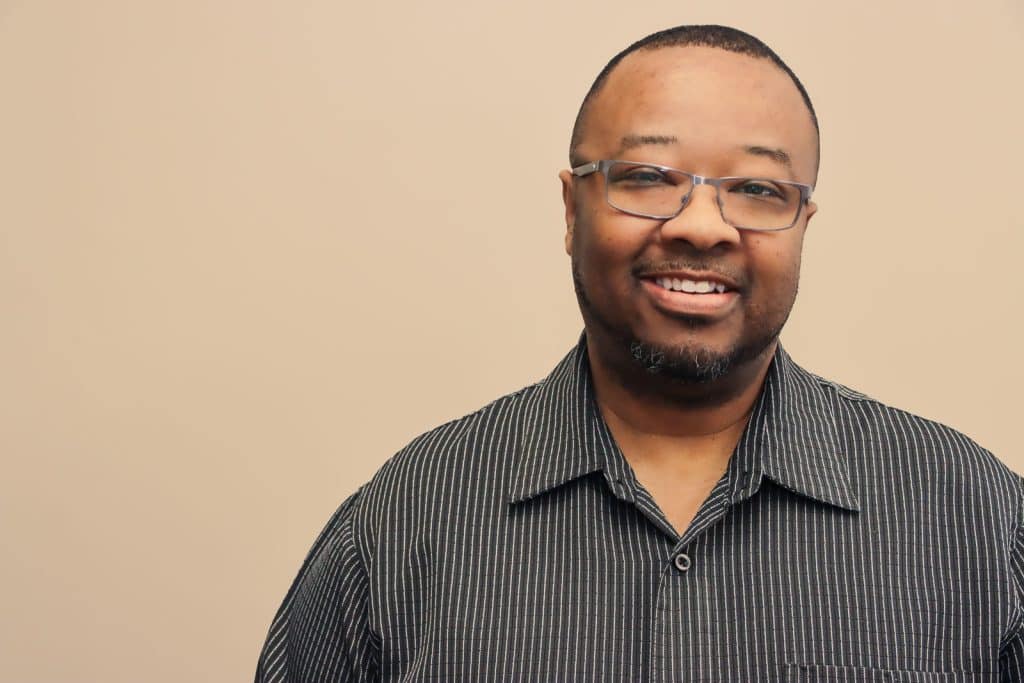
Wilson says the regional approach helps expand outreach to communities with fewer resources.
“Oftentimes, people associate us with one city,” he says. “But we’re trying to increase our presence in those northern counties to show that we’re including everyone.”
National, local presenters
The event’s speaker lineup combines national expertise with local perspectives.
Keynote speaker Valerie Fletcher, executive director of the Institute for Human Centered Design, brings decades of experience in inclusive design and international research focused on accessibility in diverse communities.
“Hearing from a national-level expert lends a sense of credibility,” Rhines says.
Other sessions focus on practical applications across industries.
- Architect Kate Dailey will present on inclusive design strategies that can reduce long-term costs and create adaptable spaces.
- Occupational therapist Judi Siegert will introduce home accessibility approaches, including zero-step design principles.
- Urban planning leader Suzanne Schulz will examine how transportation and land use decisions affect accessibility.
- Real estate broker Sarah Takens will discuss how housing professionals can incorporate accessibility into their work.
“I love being able to bring in people who are doing this on a national scale but also really highlight the work that’s being done locally,” she says. “It’s not just aspirational, but it’s actually being done, boots on the ground in our community.”
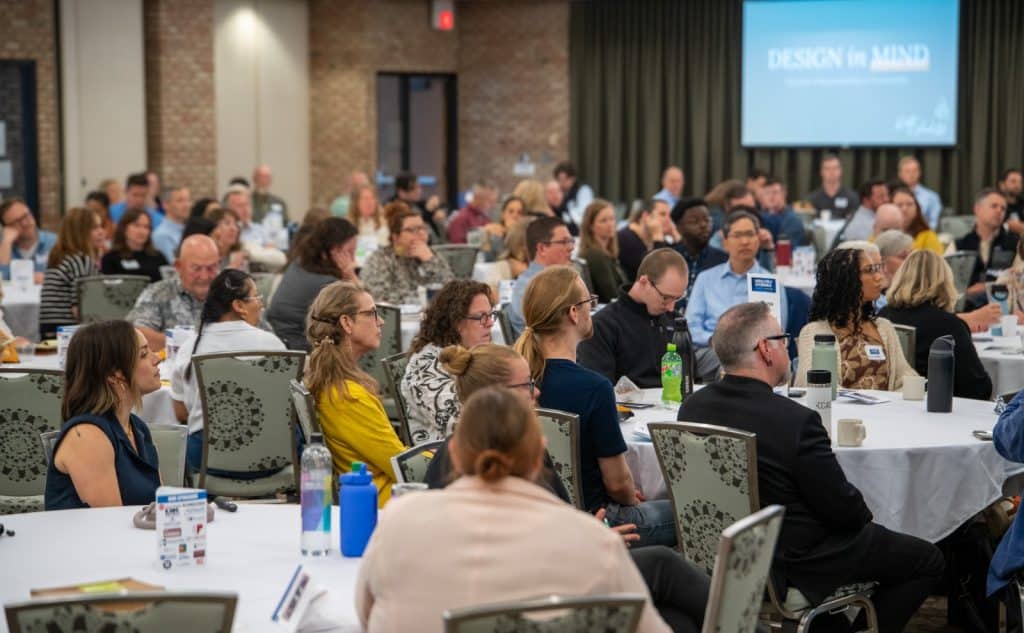
The event also provides scholarships and accommodations to support participation from people with disabilities, students, and other community members.
Rhines-Poehlman says the initiative reflects a broader culture in West Michigan that values collaboration and action.
“There’s something about West Michigan and that ‘roll your sleeves up and get to it’ attitude,” she says.
As the event continues to grow, Rhines sees its expansion as part of a longer effort to bring more people into the conversation and into the work.
“We all have a role to play in this,” she says.
Photos by Tommy Allen and courtesy of DAKC
The multi-regional Disability Inclusion series is made possible through a partnership with Centers for Independent Living organizations across West Michigan.
Author
Related Articles
#RG20LookBack: A lesson in inclusion, revisited at an uncertain moment
In his 22nd #RG20LookBack, Rapid Growth Publisher Tommy Allen revisits his 2025 story, “Beyond Compliance: Area nonprofit and corporation are redefining inclusive workplaces,” showing how companies like Steelcase value the insights of people who navigate barriers every day.
Disability Network West Michigan expands rural accessibility services across northern counties
Residents in Oceana, Mason, Lake, and Newaygo counties gain disability services, transportation support, and accessibility resources.
How a gaming group created a friendship circle for people with disabilities
Disability Network Northern Michigan’s gaming group reduced isolation, inspired friendships, and even inspired an effort to create a nonprofit for railroad preservation.


