
#RG20LookBack: West Michigan models making progress over time
In his 21st #RG20LookBack, Rapid Growth Publisher Tommy Allen revisits Deborah Johnson Wood’s 2009 story about efforts to restore rapids to the Grand River — a timely reflection following last week’s groundbreaking of the Grand River Restoration’s Lower Reach project.
Last week, on June 1, community leaders, tribal representatives, environmental advocates, elected officials, and longtime supporters gathered on the Gillett Bridge in downtown Grand Rapids, near the Grand River, to celebrate the groundbreaking of the Grand River Restoration, Lower Reach.
Members of the Grand River Bands of Ottawa Indians Water Protectors began the ceremony with a Blessing of the Waters. They then, along with project leaders, placed the first rocks into the river, marking the official beginning of in-river construction.
The groundbreaking symbolized that many of Grand Rapids’ most ambitious civic projects demand years of dedicated effort before they materialize into visible results.
For many watching, it felt like the start of something new. However, in reality, it was merely the latest chapter in a story Rapid Growth has been documenting for nearly two decades.
Similar to the Central Station Early Childhood Center, which opened on June 8 at The Rapid’s Central Station, the restoration of the rapids began with a straightforward text exchange, as W.K. Kellogg Foundation Program Officer Tracie Coffman mentioned during the dedication. As shown in our RG20LookBack story, it started with a conversation, an idea, and a group of residents eager to envision a different future for their city.
One of the earliest signs of progress emerged in December 2009, when Deborah Johnson Wood of Rapid Growth wrote in her article, “Grassroots initiative keeps Grand River whitewater park idea afloat,” about a community effort dedicated to preserving the vision of restoring the Grand River.
She reported that the effort came together that year when two friends—mountain bikers Chris Muller and Chip Richards—founded Grand Rapids Whitewater after years of talking to anyone who would listen about the river’s potential.
At that time, the idea was frequently presented as a whitewater park focused on kayaking and recreational activities. Momentum continued to grow in 2010 when Founders Brewing made a $50,000 donation to support engineering and planning efforts. This showed that local businesses were willing to invest in a vision that many still saw as ambitious.
Looking back, it’s striking how often the project nearly stalled, especially after a major setback when Michigan’s environmental regulators rejected an earlier design.
Instead, Grand Rapids responded to the obstacle by uniting a broader coalition of supporters, continuing to attract more allies, funding, and public support for an idea that surpassed the scope of any one organization.
As plans developed, the river itself started to influence the discussion.
Reporting in Rapid Growth over the next decade documented a significant transformation: what began as a recreation project developed into a restoration initiative centered on ecology, history, culture, and public access.
Over time, engineers discovered rare limestone bedrock, while biologists identified opportunities to restore habitats for native species such as lake sturgeon and the federally endangered snuffbox mussel. In 2024, John Ball Zoo assisted in recovering and relocating hundreds of mussels from the river before construction.
Tribal voices helped communities understand the cultural importance of restoring the river to its near-natural condition.
As more voices joined over time, the project shifted from merely creating rapids to restoring a living river system that had been changed for generations.
Perhaps that explains why an outside observer regarded this as something exceptional. In 2012, the Detroit Free Press called Grand Rapids’ rapids restoration a “model for progress,” highlighting not only the project but also the civic spirit supporting it.
This phrase still feels relevant today, and not only at the river.
The $9.1 million Central Station Early Childhood Center, supported by the W.K. Kellogg Foundation, the YMCA of Greater Grand Rapids, Grand Rapids Public Schools, Head Start for Kent County, and The Rapid, exemplifies a story of patience and collaboration. An idea planted years ago has been nurtured by dedicated partners and is now ready to serve up to 100 children starting this September.
The initial stones placed in the Grand River on June 1 symbolize years of planning, setbacks, fundraising, public meetings, scientific research, and community perseverance. They also serve as a reminder that transformative projects often start quietly—not with grand ceremonies, but with simple conversations on mountain bike trails, text messages among colleagues, or residents believing in a better future for their city.
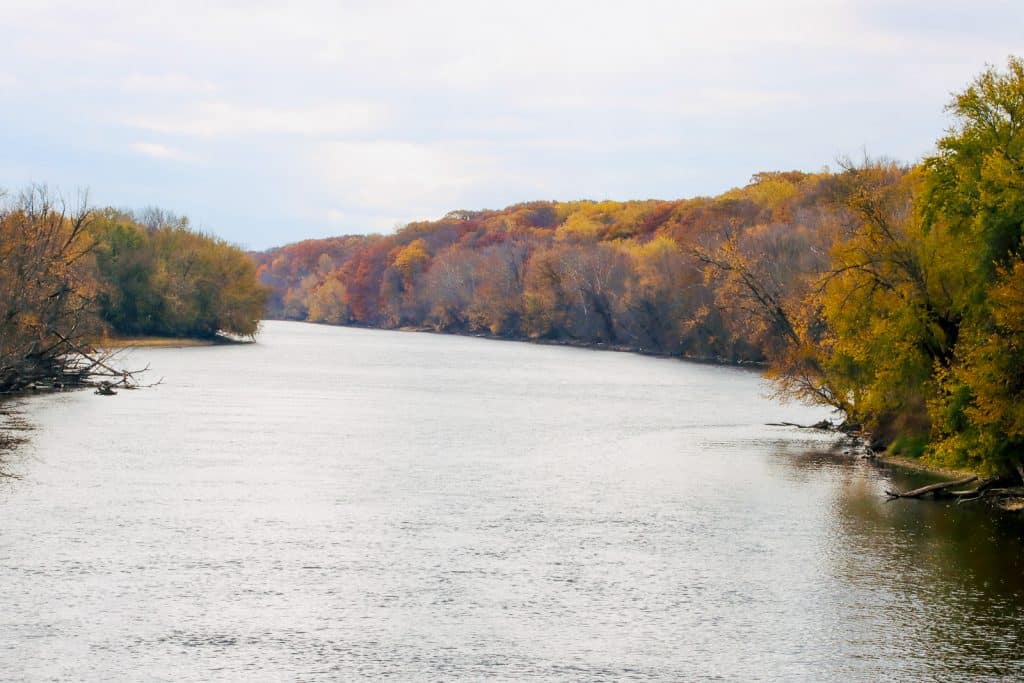
Grassroots initiative keeps Grand River whitewater park idea afloat
A grassroots initiative to bring the rapids back to the Grand River and establish a whitewater kayaking and canoeing park from Riverside Park through downtown Grand Rapids is moving ahead, carried by a current of community support.
Grand Rapids White Water is the brainchild of Chris Muller, who returned to Grand Rapids after five years in Washington D.C. Muller missed the thrill of whitewater kayaking on the Potomac, which was easily accessible because of “park and play” areas.
“After work, I’d go home and get my boat and within an hour I’d be paddling some great whitewater,” he says. “But on the Grand it’s really too dangerous to go over the Fourth Street dam (also known as the Sixth Street dam) by Fish Ladder Park, so you can’t go from Riverside Park and end up down by Grand Valley (State University).”
Between Leonard and Fulton streets the rapids drop 18 feet – 13 of that is at the dam – but the dam and the deep backwater cover the rapids.
Muller and GRWW associate Chip Richards want to uncover the rapids and create what whitewater thrill seekers call eddy lines, holes and standing waves.
So they’ve begun the process of making GRWW a nonprofit, and then will hire an engineering firm to conduct a feasibility study of removing all or part of the dam.
“The defined item we’re trying to create is a whitewater park that includes park and play,” Muller says. He envisions a whitewater park generating economic activity for nearby restaurants, pubs and shops.
Muller is adamant that fishing below the dam isn’t adversely affected and that there are no negative environmental issues. Even so, there is still a lot of upstream paddling before any development can happen.
“It would bring a lot to Grand Rapids in addition to being a cool place to live,” he says. “The city is named after the river, but it’s not there to be usable.”
Deborah Johnson Wood is development news editor for Rapid Growth Media. She can be contacted at deborah@rapidgrowthmedia.com.
Photo by Tommy Allen
Related Articles
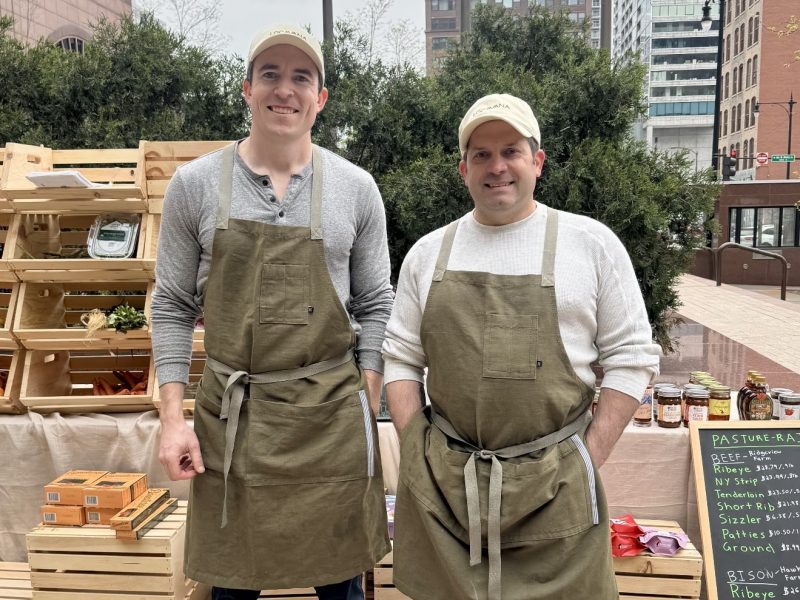
Startup tackles food system inefficiency with direct farm-to-home delivery
Zeeland-based Locavana expands delivery, helping residents buy local food easily while increasing farmer earnings and improving access across West Michigan communities.
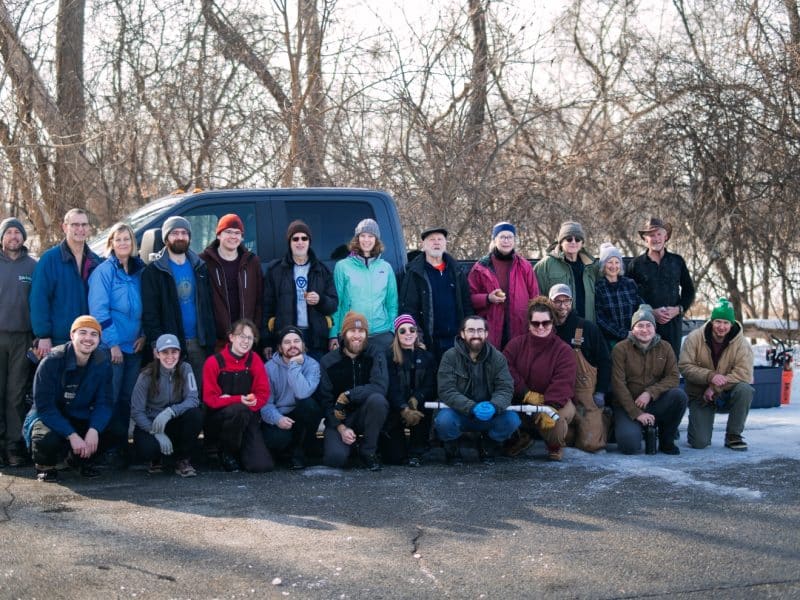
The Land Conservancy’s 50-year fight to save West Michigan’s natural areas
The Land Conservancy of West Michigan celebrates a half-century of working to keep nature nearby.
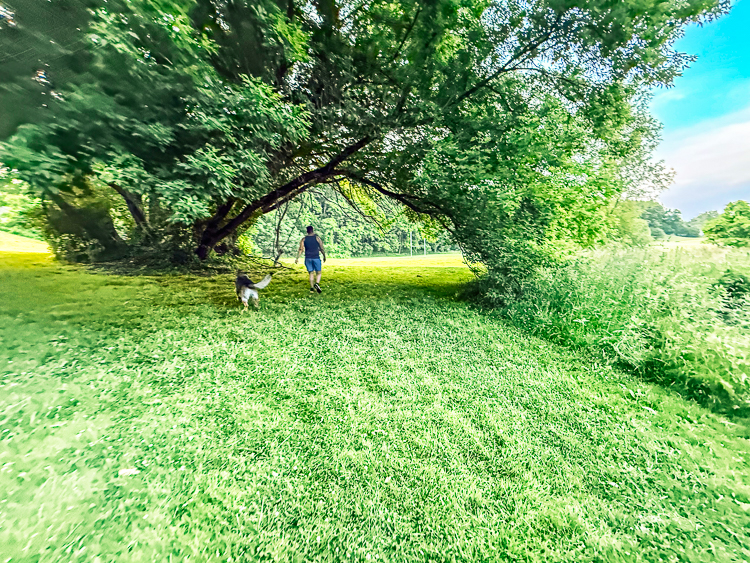
#RG20LookBack: Before the riverfront boom, a broader civic vision was inked by the community
In his 15th #RG20LookBack, Rapid Growth Publisher Tommy Allen revisits Nikos Monoyios’s 2008 article, “Why Civic Centers Matter,” which frames green spaces as essential to a thriving civic environment.


