
Language access begins by asking people how they communicate best
Tom Hoxsie explains how language barriers affect Deaf people and how interpreters, captions, and community partnerships can improve access to information.

English is Tom Hoxsie’s second language.
His first is American Sign Language.
Hoxsie grew up in a family where his parents and several other relatives are deaf. He is a CODA, or child of a deaf adult, and ASL was the language he learned first.
He knows firsthand that language access isn’t only an immigration issue. It also affects Americans who are Deaf or hard of hearing.
Hoxsie is director of Deaf services at Grand Traverse Industries in Traverse City, where he coordinates and provides interpreting services through the Local Interpreter Services Network. He also collaborates with Disability Network Northern Michigan to help people who are deaf or hard of hearing get information and services.
“The biggest thing that we struggle with with American Sign Language is the label that American automatically means English,” Hoxsie says, or that ASL is English translated into signs.
It isn’t.
“American Sign Language is not the same as English,” Hoxsie says.
ASL has its own grammar and word order. It also has its own ways of sharing ideas. Someone who grows up using ASL may learn English as a second language.
“It really is a matter of first language American Sign Language, second language English, and trying to function in both,” Hoxsie says.
Hoxsie says improving access can begin with one question.
“Ideally, we start with a very fundamental question of, ‘What is the best way for you to communicate? What do you prefer?’” Hoxsie says. “And we don’t ask that enough.”
What works best?
People who are Deaf or hard of hearing communicate in different ways. Some use ASL as their first language. Others learn ASL after growing up with English. People who are hard of hearing may prefer captions or words typed on a screen as someone speaks.
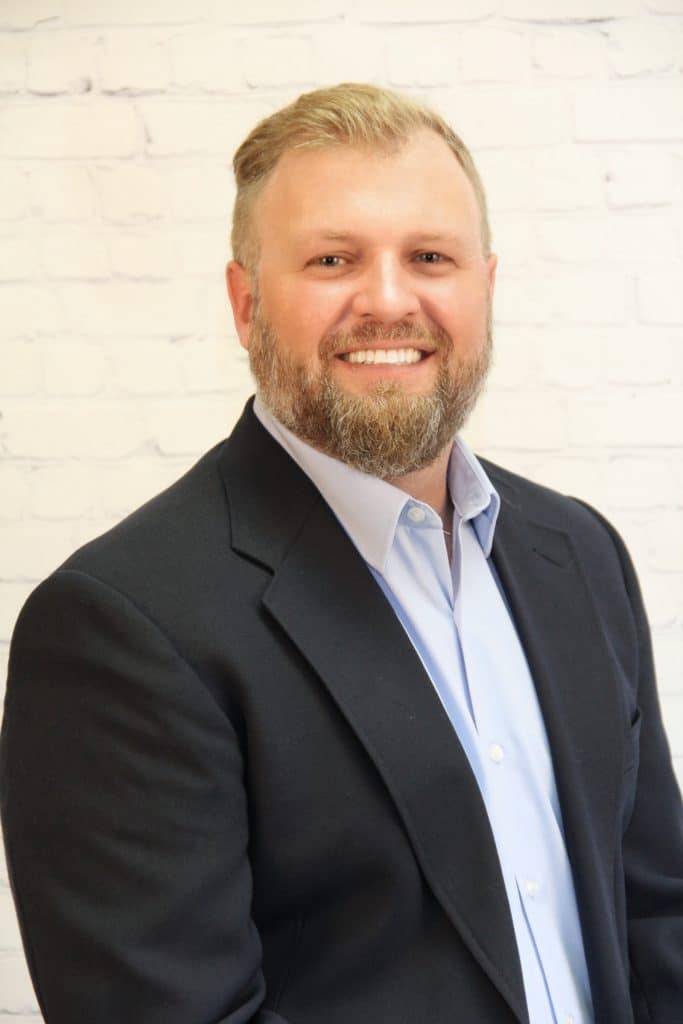
“Just because they’re Deaf or hard of hearing does not mean they fit one specific mold,” Hoxsie says.
That approach guides a partnership between Grand Traverse Industries and Disability Network Northern Michigan. The two groups work together to help people understand information and find the services they need.
A common example of that starts with a letter in the mail. Social Security, insurance companies, health care providers, and other organizations usually communicate in written English. That can present a challenge to someone whose first language is ASL.
“Our Deaf community receives that, and it’s in their second language,” Hoxsie says
Someone may get a Social Security letter and not know what to do. Another person may get a letter and wonder if it is a scam. People can bring these letters to GTI’s program for help. A qualified and state-registered interpreter can explain what the letter says. If more help is needed, Disability Network staff can step in. A benefits counselor can advise the person on what to do next.
The partnership also helps people find language services and other support from Disability Network. That help is important in Northern Michigan, Hoxsie says. The area covers 17 counties, and an interpreter may not always be close by. His program helps about 200 to 230 people in the region.
The need may be greater than those numbers show. Hoxsie says people experiencing hearing loss don’t always identify as hard of hearing.
Tech has benefits, limits
Technology has created more ways to communicate. Speech-to-text on a phone might be enough for a quick conversation. A medical procedure, legal matter, or mental health appointment may require a qualified and state-registered interpreter.
Captions are another tool that can help more people than many realize. An older adult experiencing hearing loss may rely on captions without identifying as hard of hearing. A hearing person might use them to follow a television in a noisy restaurant or bar.
“When we provide access like that, it serves a larger group of people,” Hoxsie says.
Captions, however, don’t work equally well for everyone.
“English word order is not the same as American Sign Language,” Hoxsie says.
ASL includes concepts that don’t have direct English equivalents. English also has expressions that don’t translate directly into ASL.
Someone whose first language is ASL may use captions and visual clues to follow a movie, but Hoxsie says that isn’t the same as watching it in ASL. Some streaming programs are beginning to offer ASL versions of movies that feature a Deaf performer or Deaf interpreter signing the story as the movie plays. That gives children who use ASL a chance to watch a movie in their first language.
“Developmentally, for a child to be able to watch these children’s movies and watch them in their first language is a big deal,” Hoxsie says.
The need for different forms of communication becomes especially clear during emergencies.
Hoxsie remembers what happened after the Sept. 11, 2001, terrorist attacks. Flights were grounded, and travelers in airports were trying to understand what was happening. Deaf travelers didn’t always have access to the announcements other passengers could hear.
“We didn’t have the closed captioning we thought we had,” Hoxsie says. “We didn’t have the communication access that we thought we had.”
Captions and ASL interpreters are more common during emergency announcements now, but Hoxsie says having a qualified interpreter matters. Michigan requires credentialed, registered and endorsed interpreters working in nearly all settings, including medical, legal, mental health, and deaf-blind interpreting.
Uncomfortable barriers
The expressive movements and facial expressions of interpreters during emergency broadcasts sometimes draw attention from hearing viewers. Hoxsie says those expressions are part of communicating the information.
“There’s a reason why that person is signing the way they are,” he says. “Those interpreters are often CDIs or Certified Deaf Interpreters. They are communicating to reach the broadest audience so that as many possible Deaf community members can receive critical information. It is not for show or for attention.”
Hoxsie says hearing people can get a glimpse of a language barrier when they are the ones who don’t understand. Two Deaf people may be signing nearby, leaving a hearing person wondering what they are discussing.
“When they don’t understand another language, there’s a defensiveness,” Hoxsie says. “There’s kind of a guarded approach.”
A similar feeling can happen when someone travels to another country and doesn’t understand the language. They may nod along because they don’t want to look confused or offend someone.
Hoxsie sees Deaf people do the same thing when trying to follow conversations in English.
Changing that experience doesn’t require every organization to use the same approach. A person may need captions in one situation, an interpreter in another, or help understanding a written document in another.
Hoxsie says figuring out what works starts with the person who needs the information.
“What works best for you?” he says.
Photo courtesy of Tom Hoxsie
The multi-regional Disability Inclusion series is made possible through a partnership with Centers for Independent Living organizations across West Michigan.
Author
Related Articles

Hartford Nationals returns to Grand Rapids for a third year
The Hartford Nationals will return to Grand Rapids in 2027, giving adaptive athletes like Elizabeth Woller another chance to compete nationally.
Alpena builds accessibility roadmap by listening first, improving public spaces for everyone
Alpena’s accessibility assessment helps prioritize affordable improvements, showing small communities how resident input can guide inclusive planning and investment.
#RG20LookBack: A lesson in inclusion, revisited at an uncertain moment
In his 22nd #RG20LookBack, Rapid Growth Publisher Tommy Allen revisits his 2025 story, “Beyond Compliance: Area nonprofit and corporation are redefining inclusive workplaces,” showing how companies like Steelcase value the insights of people who navigate barriers every day.


