
Fresh vegetables connect West Michigan farms, volunteers and families
Kids’ Food Basket’s Holland farm grows produce that volunteers help deliver to local pantries, expanding access to fresh, healthy food.
People start lining up before the doors open.
On days when fresh vegetables come from Kids’ Food Basket’s Holland farm, families wait outside St. Vincent de Paul’s food pantry in Holland. They hope to get tomatoes, peppers, onions, cilantro and other vegetables picked that morning.
“There are days where people know our food stocking schedule,” says Tom Eggleston, who oversees the pantry. “So on days where we get fresh vegetables before we open, there’s a lineup at the door because people want to get the best selection.”
The line didn’t exist a few years ago.
“It’s hard for me to overstate the difference that has made,” Eggleston says. “It’s really changed the culture of our center because we have lots more people coming in on a more regular basis, more people seeking fresh vegetables.”
The vegetables begin their journey a few miles away on land owned by Ridge Point Church.
The church approached Kids’ Food Basket about using part of its property to serve the community. The nonprofit had been looking for a way to get fresh produce to families experiencing food insecurity.
“We were using a CSA model, and in a lot of ways our CSA model was really successful,” says Austin Roelofs, vice president of food access and agriculture for Kids’ Food Basket. “But what we found is that it wasn’t serving the target population because there were barriers with pricing and transportation.”
Different model, better fit
Conversations with pantry partners pointed to another need. Many had shelf-stable food but struggled to offer fresh fruits and vegetables.
The result was a different approach. Kids’ Food Basket began growing produce specifically for pantry partners. Ridge Point Church provided the land, creating what is now the nonprofit’s Holland farm, where more than 10 acres produce food for organizations across the Lakeshore.
The Holland farm doesn’t mirror Kids’ Food Basket’s Grand Rapids farm. Jason Lundberg, the nonprofit’s senior farm manager, says each location grows crops that match its soil and the needs of nearby pantry partners.
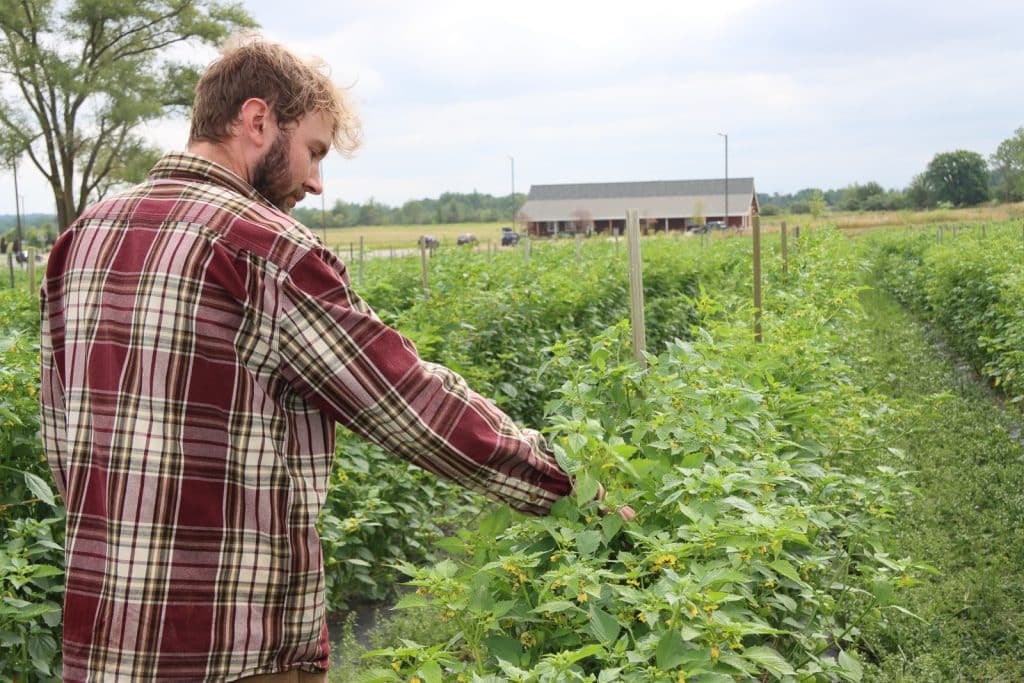
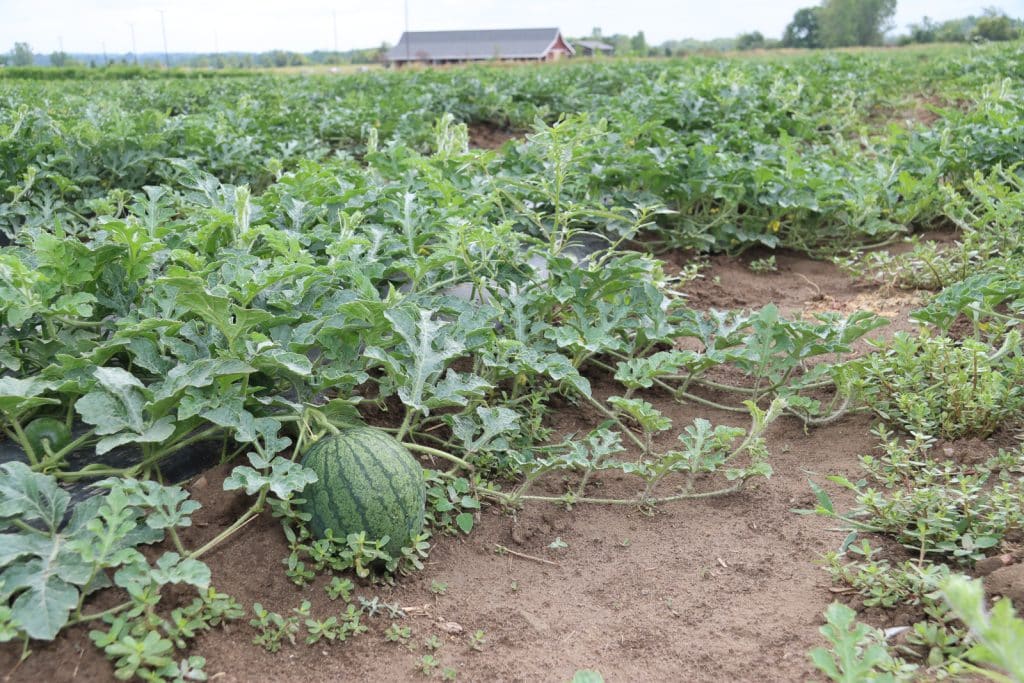
Potatoes thrive in Holland’s sandy soil. Watermelon, peppers and tomatillos also perform well there, alongside kale, collards, lettuce and beets. The Grand Rapids farm grows a different mix based on its land and community partnerships.
Roelofs says the produce quality is different from what many food pantries traditionally receive.
“This produce is grown directly for the pantries,” he says. “This is not leftovers. It’s not seconds. It’s not things that are going to the composter in two days. This is fresh produce, probably as fresh as you can get, fresher than the grocery store.”
Pantry partners have shared another observation.
“It brings dignity,” Roelofs says. “This is specifically grown for our community.”
Volunteer-driven
The food reaches local pantries thanks to hundreds of volunteers in what Lundberg describes as “a beautiful journey.”
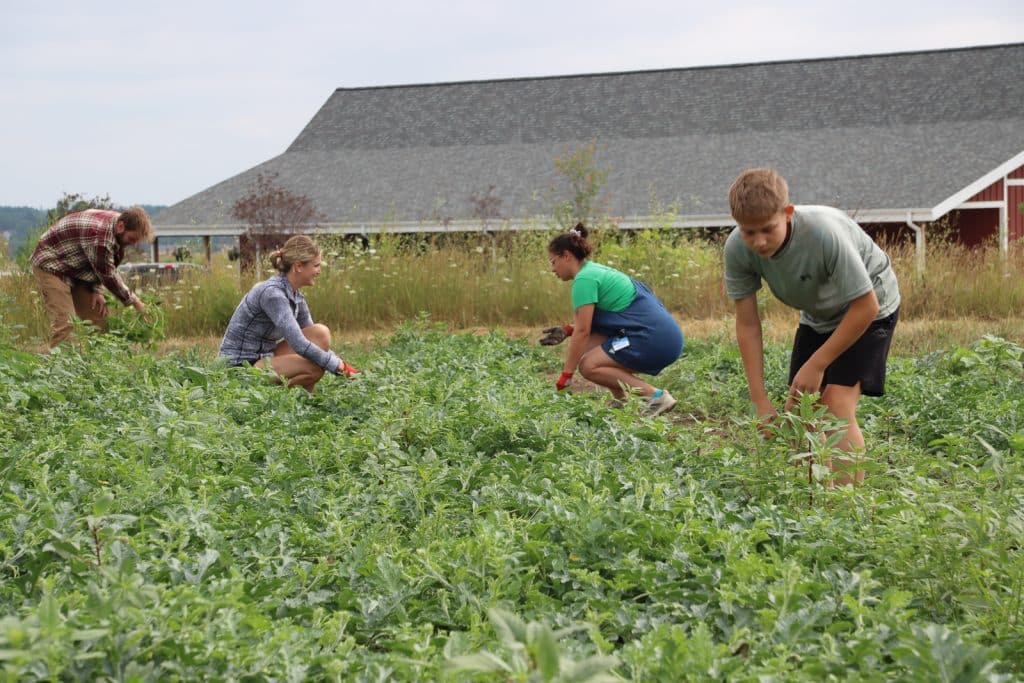
Community donations purchase the seeds. Volunteers plant them in the greenhouse during the winter, prepare planting beds in the spring, transplant seedlings, pull weeds, and harvest vegetables throughout the growing season. Volunteer drivers load refrigerated vans and deliver the produce to pantry partners across West Michigan.
Last year, Kids’ Food Basket’s two farms produced more than 54,000 pounds of fruits and vegetables, about 359,000 servings, with a small farm staff supported by nearly 2,000 volunteers. The organization partners with 18 food pantries that receive produce at no cost.
The farm has become more than a place to grow vegetables.
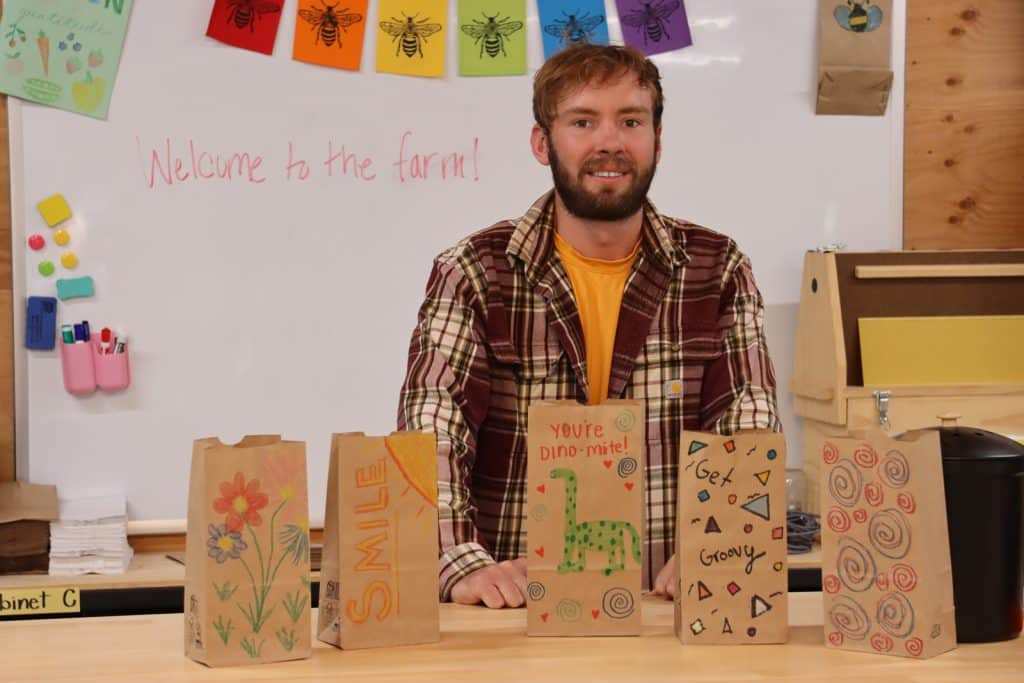
Families volunteer together. Children learn where carrots, tomatoes, and peppers come from. Visitors explore a sensory garden, watch honeybees through an observation hive, taste herbs, and learn about hydroponics.
“We’re so disconnected from that,” Lundberg says. “When you touch the soil, you are happier.”
Volunteers leave knowing they helped grow fresh food. They also learn more about where their food comes from.
Soon, those fresh vegetables are at local food pantries.
“When you’re the type of person who’s living paycheck to paycheck, and $5 truly matters to you, a lot of times you’re going to not purchase something that you know could go bad in a few days or weeks,” says Jordan Palladino, executive director of Harvest Stand Ministries.
Fresh produce changes that equation.
“If we can get free produce into our clients’ hands, that’s something they might not be choosing at the grocery store,” Palladino says. “Any time we get fresh fruits and vegetables into the hands of our clients, it’s a huge win.”
Palladino says the timing also matters. Most donated produce reaches pantries near the end of its shelf life. Kids’ Food Basket’s harvest arrives much earlier.
“This is straight from the farm, so it’s on the front of the life cycle,” he says. “It’s been a great blessing for us to have that partnership.”
Familiar flavors and new tastes
Eggleston says the produce reflects the tastes of the people who visit the pantry. More than half of the families who visit St. Vincent de Paul’s food pantry are Hispanic. Kids’ Food Basket grows tomatoes, onions, peppers, jalapeños, and cilantro because they are foods many families already cook at home.
Sometimes the farm also grows vegetables that may be new to some families, such as kohlrabi, Swiss chard, or bok choy. Those vegetables often start conversations. Families share recipes and cooking tips with each other, while volunteers answer questions about how to cook vegetables that may be new to them.
The program continues to grow and evolve as partners find new ways to meet families’ needs.
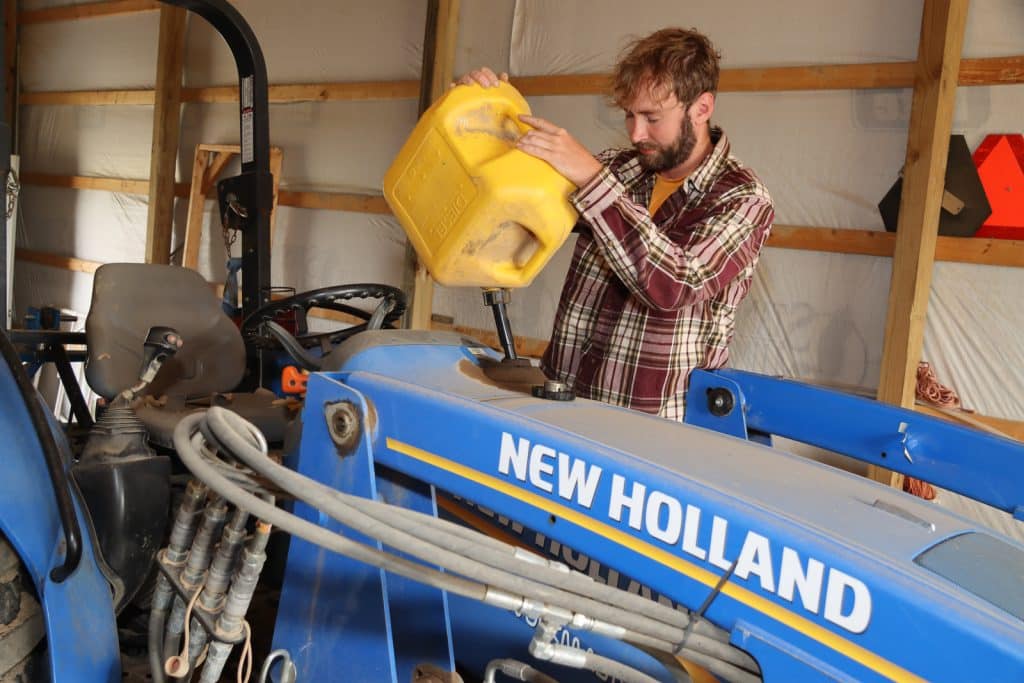
Lundberg says weather, organic growing practices, and extreme heat can affect production and volunteer schedules. The farms have adjusted over time, focusing on crops that grow well while making the best use of volunteer efforts.
Roelofs says the program also depends on continued financial support.
A grant helped start the program, but growing vegetables, welcoming volunteers, and delivering fresh produce takes ongoing donations. Because food pantries have limited budgets, Kids’ Food Basket provides nearly all of the vegetables at no cost.
For Eggleston, the partnership between Kids’ Food Basket and the food pantries shows what can happen when organizations work together to meet a community’s needs.
“We’re on the same team,” he says.
Photos by Tommy Allen
Nourishing Futures: How food builds thriving youth and stronger communities explores the many ways food nourishes young people, strengthens families, and supports healthier communities. This story series highlights innovative programs, collaborative partnerships, and the lasting impact of food access across West Michigan. It is made possible through the support of Kids Food Basket.
Author

Related Articles
#RG20LookBack: A fresh food facelift…timely revisited
In his 26th #RG20LookBack column, Rapid Growth Publisher Tommy Allen revisits his 2013 story about the more than 50 farmers markets and fruit stands that connected West Michiganders with fresh, locally grown food.

#RG20LookBack: Hungry for community? Step out; mingle.
In his eleventh #RG20LookBack column, Rapid Growth Publisher Tommy Allen revisits his 2014 story, “The Vegan Kitchen Takeover: Tip Top Deluxe Bar & Grill,” reflecting on how local restaurants can be spaces for connection and community.
West Michigan schools respond as families face “new hunger cliff”
As the new ‘hunger cliff’ approaches, schools and nonprofits are working together to help families facing rising hunger and uncertain food assistance.


