
How startup Vanly is mapping the future of life on the road
Vanly, a West Michigan-based startup, addresses the critical “where-to-sleep” anxiety by connecting travelers with a nationwide network of private parking hosts.
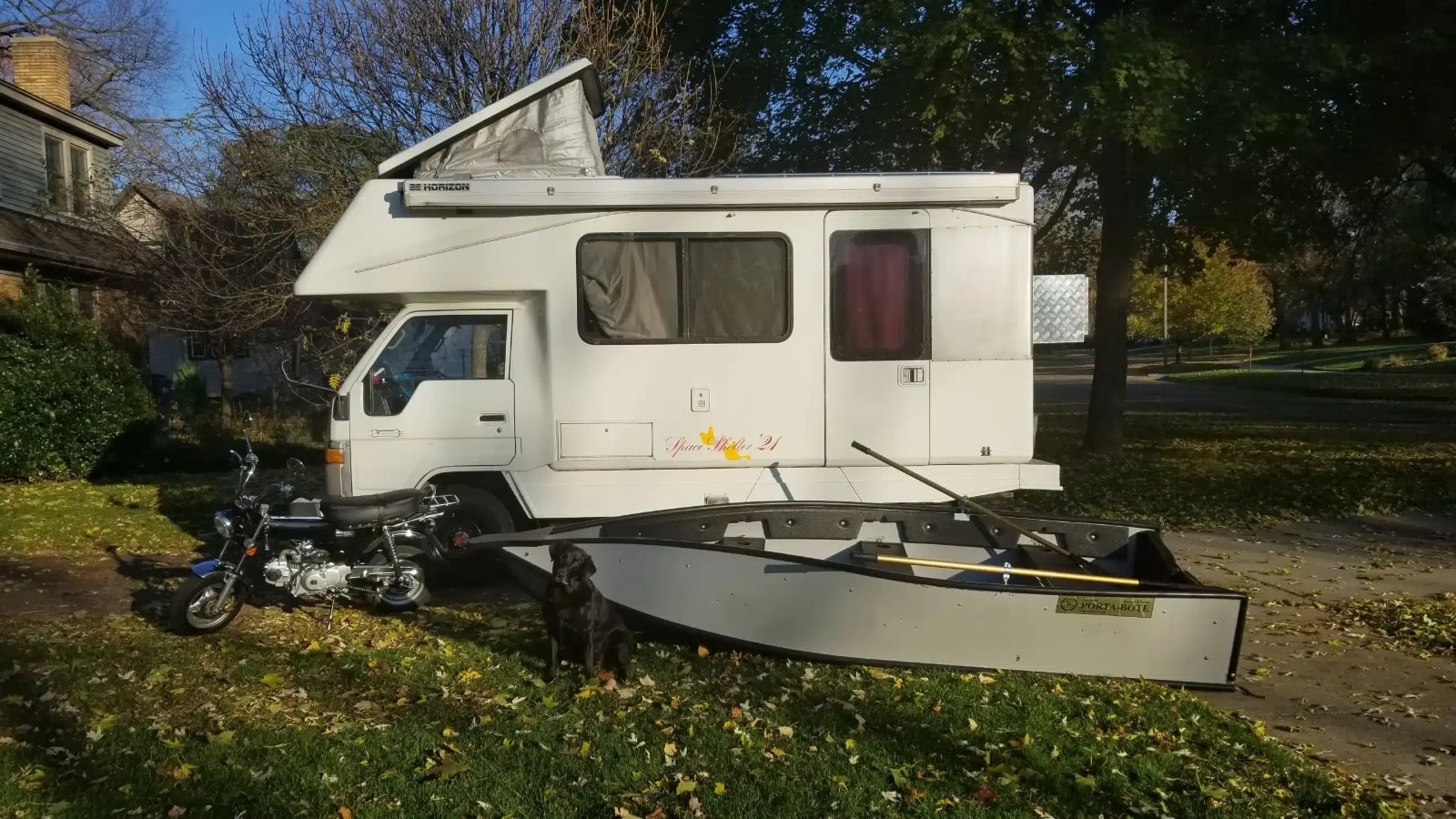
Modern nomadic freedom is a paradox: it is the primal desire to be submerged in the wilderness without ever truly being out of reach.
It is a day spent hiking a Northern Michigan trail or scaling a Colorado ridgeline, followed by an evening at a crackling fire pit—all before retreating to a van that serves as both a sanctuary and a high-functioning executive suite. By 9 a.m., whether parked at a bustling local coffee shop or perched on a remote, wind-swept bluff, Starlink ensures the inbox remains full.
What began as a reactionary, pandemic-era trend has matured into a steady, intentional lifestyle for a growing cohort that views mobility not as an escape from reality, but as a sustainable way to inhabit it. As this movement matures, the infrastructure supporting it is undergoing a radical evolution.
Vanly: A Safe Haven for the Road
Enter Vanly, a platform launched by Grand Rapids entrepreneur and educator Matt Larson that functions as a “safe haven” for the modern nomad. By establishing a network of reliable parking across the country, the startup allows travelers to embrace the spontaneity of the journey without the nightly “where-do-I-sleep” anxiety.
Essentially, Larson’s marketplace helps RV and van nomads book convenient overnight parking in small towns, bustling cities, and near major attractions or remote forests. Through the app, travelers search by location and dates, filtering for essential amenities like high-speed WiFi, potable water, shower access, and dedicated office space.
The model creates a symbiotic ecosystem: Hosts monetize underused assets—driveways, small business lots, and private land—while travelers secure a reliable, low-stress place to stay close to their desired destinations.
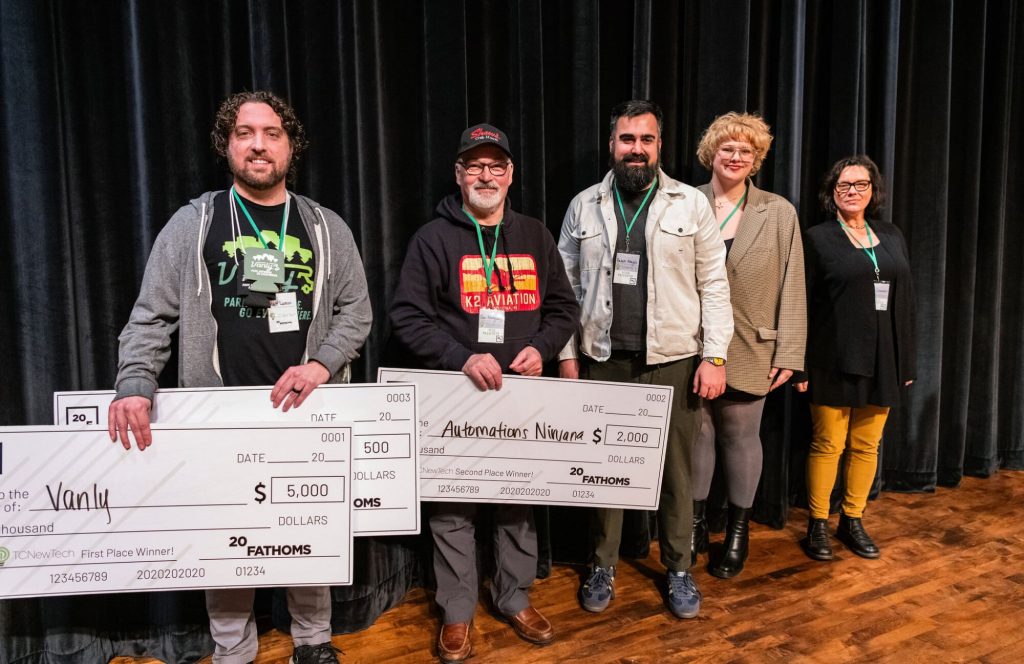
Hosts maintain flexibility, enabling overnight stays, hourly parking, or both. This innovative approach earned Vanly both the top prize ($5,000) and the People’s Choice award ($500) at a 20Fathoms TCNewTech pitch competition in Traverse City earlier this year.
Beyond individual convenience, the platform serves as an economic engine. By making urban and suburban locales more accessible to the van-dwelling community, Vanly drives incremental visitor spending toward local restaurants, boutiques, and entertainment venues.
RV Market Performance: The 2025-2026 Outlook
While the broader RV industry has faced headwinds, the specific niche of Class B Van Campers is showing remarkable resilience.
- Year-to-Date Performance: Total shipments reached 8,217 units, a slight 1.6% decrease from the 8,349 units shipped in 2024.
- A Sharp Finish: December saw a significant rebound with 902 units shipped—a 70.8% increase over December 2024.
- Market Sentiment: Experts suggest demand is “evening out,” with buyers returning to the market steadily rather than in volatile waves.
RV Industry Association President & CEO Craig Kirby notes that these figures align with long-term forecasts. Looking ahead, Kirby highlights 2026 as a landmark year for American travel, propelled by a “perfect storm” of cultural milestones:
- America’s 250th Birthday: Nationwide Semiquincentennial celebrations.
- FIFA World Cup: A global influx of international travelers hitting U.S. roads.
- Route 66 Centennial: The 100th anniversary of the country’s most iconic highway.
“There has never been a more iconic year for travelers to experience the freedom of the open road,” Kirby stated.
The Anatomy of a Modern Nomad
As of early 2026, Vanly reports more than 40,000 users and 3,000 host listings spanning all 50 states. California remains the epicenter of host density, driven by high demand in coastal hubs. The host network is diverse, including homeowners, breweries, churches, museums, and urban lots. Top-tier destinations include San Diego, Flagstaff, Lake Tahoe, and Michigan’s Upper Peninsula.
Despite the stereotypes, the “typical” user remains elusive. Larson, a former Entrepreneur in Residence at Grand Valley State University, notes that the community has evolved far beyond a narrow demographic.
“It’s really across the board,” Larson explains. “It could be a teacher, a lawyer, a plumber, or a construction company owner. What they have in common is the intentional choice to invest in this lifestyle.”
That choice typically comes with significant disposable income—a point Larson emphasizes when pitching potential hosts. A spare driveway doesn’t just generate a small revenue stream; it invites a visitor who is likely to spend money at the nearby brewery or grocery store. “Most of us bought a vehicle we didn’t necessarily need,” he says. “When we travel, we are usually looking to spend money in the communities where we stop.”
This community relies on a shared ethos, specifically a “Leave No Trace” approach that keeps overnight stays low-impact and respectful. For Larson, the platform is an informal network built by people who have all faced the same struggle. “If you’ve ever scrambled to find a safe place to park at 10 p.m., you get it,” he says. “That shared pain is where the community comes from.”
Chasing #VanLife: From Aesthetic to Utility
Living out of a converted camper van has taken on an aspirational, almost cinematic sheen for Millennials and Gen Z. While vans may not carry the literal weight of the massive RV industry, they serve as its premier marketing department.
The digital footprint of this movement is staggering:
- TikTok: Over 30 billion views for #vanlife worldwide.
- Instagram: Growth from 1 million posts in 2017 to over 18 million in 2026.
- YouTube: The top four “van life” channels boast over 3 million subscribers and 400 million views.
The imagery—highways stretching toward infinity, canyon sunrises, and oceanside sunsets—often looks like a curated desktop background. However, Vanly is working to bridge the gap between that aesthetic dream and functional reality.
One of the platform’s upcoming features, Vanly Pro, is designed to map complex trips with surgical precision. While the free tool currently suggests stops, the paid version (launching in June 2026) will allow users to build itineraries around hyper-specific personal preferences.
“You’ll be able to say, ‘I need to stop in Atlanta to see a cousin, but I only want to see historical sites along the way, eat at gluten-free restaurants, and stop at pet-friendly dog parks,’” Larson says. “The AI helps you map the entire experience.”
This blend of utility and discovery is fueling Vanly’s expansion. Larson is using the recent prize money for product development and operating costs, always keeping an ear to the ground for the “pain points” of his users. In the end, Vanly is an attempt to fill the gaps in the modern journey—providing a place to stop, a place to stay, and a temporary home that offers both adventure and security in equal measure
Related Articles

Atomic Object marks 25 years growing Grand Rapids tech community
Atomic Object celebrates 25 years of developing local talent, supporting businesses, and helping grow Grand Rapids’ expanding technology community.
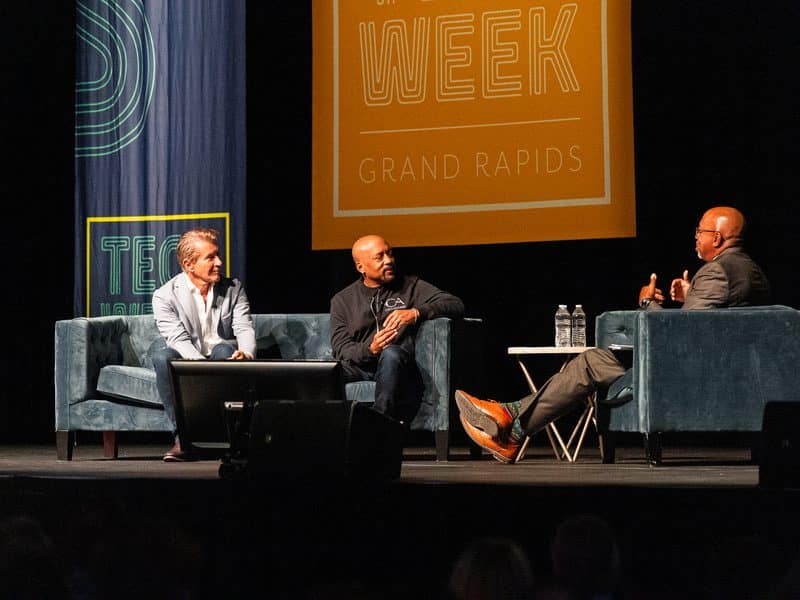
Tech Week Grand Rapids proves the most important technology on display wasn’t technology at all
From 11 events to 160 — Tech Week’s growth chart is impressive. What’s happening in the room is the real story.
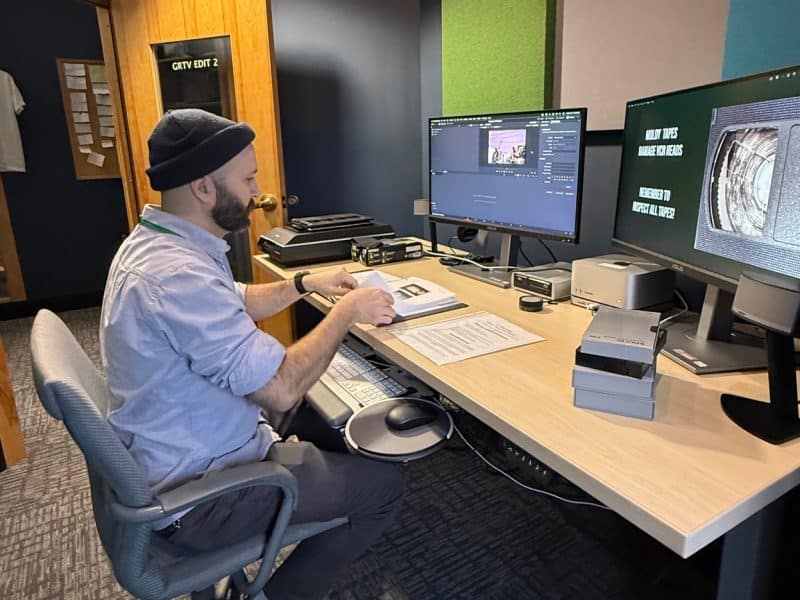
Community Media Center helps convert old tapes into lasting digital memories
Grand Rapids Community Media Center helps residents digitize aging tapes and photo negatives, offering affordable tools and training to preserve family memories for future generations.


