
New talent report highlights AI gap, workforce shifts in region
The Right Place’s 2026 Talent Report outlines AI challenges, labor shifts, and strategies to attract, develop, and retain the regional workforce.
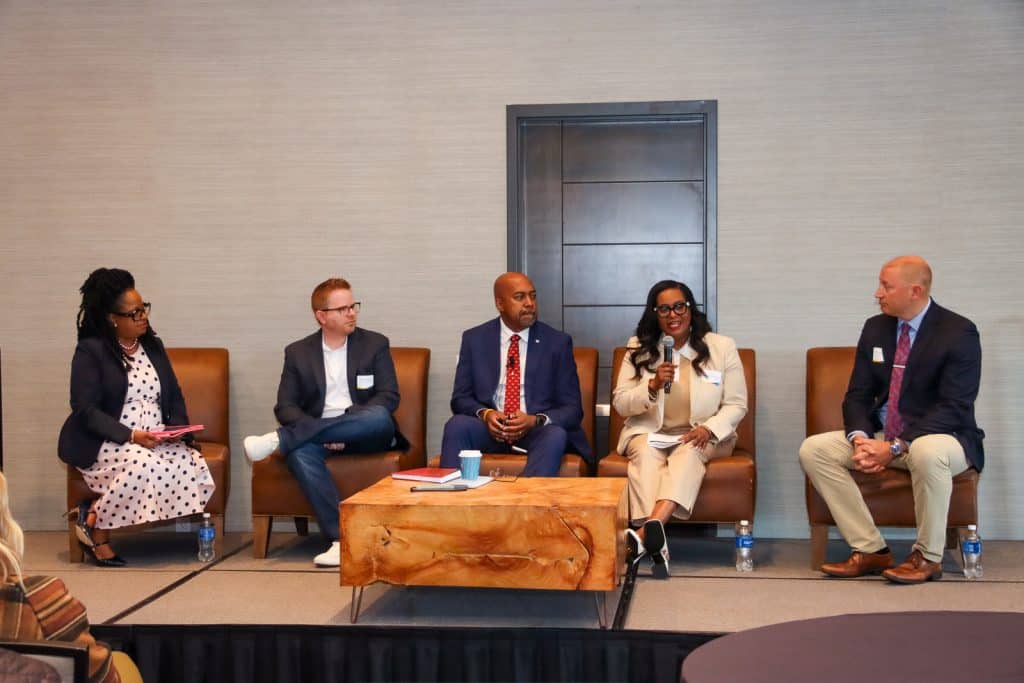
Artificial intelligence may be reshaping the workforce, but many organizations are still struggling to use it effectively, a gap regional leaders say could define the next phase of economic growth in West Michigan.
“Only 6% feel like we’re really achieving what we need with AI,” says Mike Marsiglia, co-CEO of Atomic Object, a Grand Rapids-based software design and development firm. “And I think this is going to be the challenge for all of us over the next three to five years.”
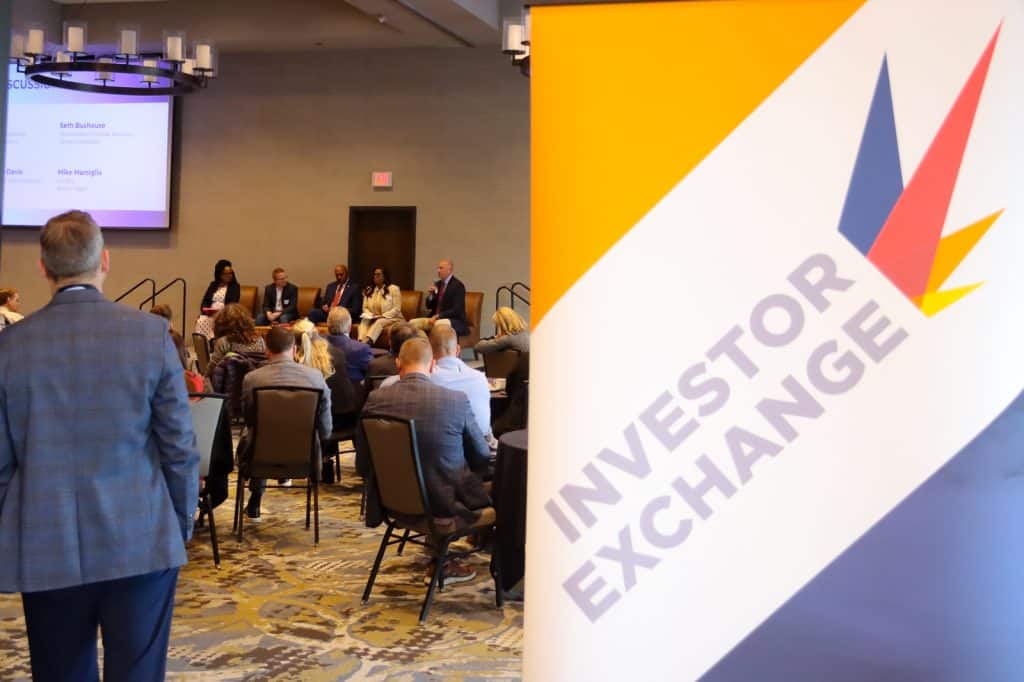
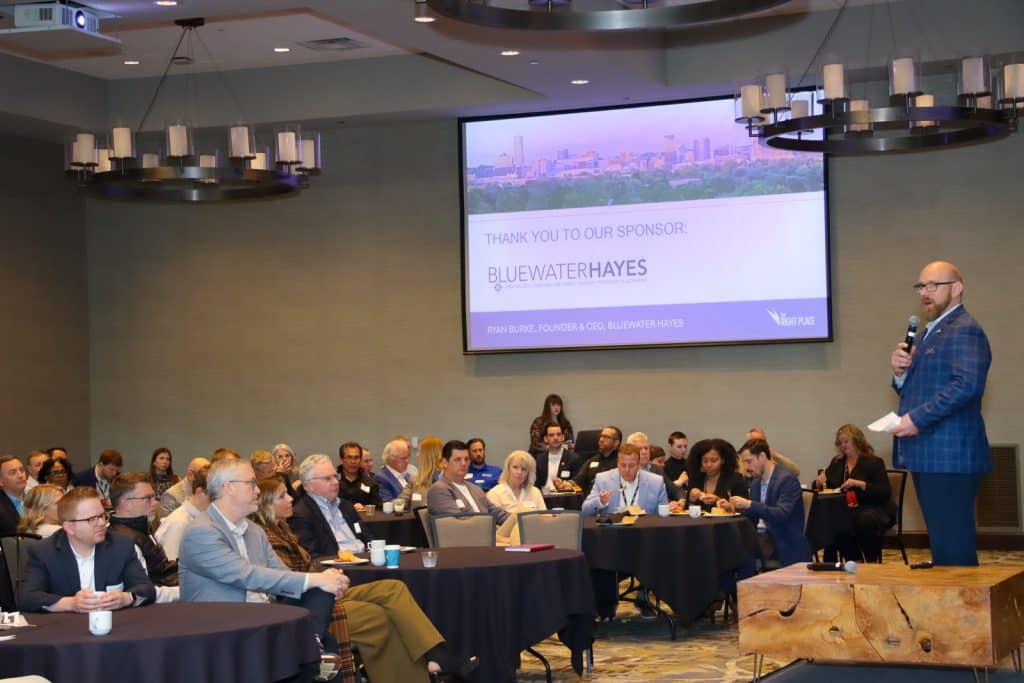
That challenge and broader workforce questions took center stage during The Right Place Investor Exchange, where TaRita Johnson, senior vice president of talent and diversity at The Right Place, presented an early look at the organization’s 2026 Talent Report.
Hosted by The Right Place at the Embassy Suites by Hilton Grand Rapids Downtown, the event brought together business leaders, educators, and employers to examine how talent trends, including AI adoption and demographic changes, are influencing the future of the seven-county Greater Grand Rapids region.
“We all must play together,” Johnson says. “When we think about talent, there’s both a short-term and long-term strategy.”
‘Candidate-rich environment’
After years of pandemic-driven hiring surges, the labor market in West Michigan has stabilized. Employers are hiring more selectively and, in some cases, delaying replacement hires.
“This is a candidate-rich environment,” Johnson says. “But that means we have to be more intentional about how we identify and develop talent.”
That shift has led to increased workloads in some workplaces and rising concerns about burnout. “People are doing more with less,” she says.
Even as wages increase, workplace experience continues to influence whether employees stay.
“The No. 1 reason people leave jobs is their manager,” Johnson says. “Just because you’re good at your job doesn’t mean you know how to lead people.”
Organizations are responding by investing more in leadership training and employee development, reflecting a shift toward longer-term workforce planning.
The report highlights demographic changes across the region. Population growth has slowed due to declining birth rates, while diversity continues to increase.
“Diversity has been our growth engine in this region,” Johnson says.
At the same time, employers are managing a workforce that spans multiple generations while competing to retain younger workers, particularly those ages 25 to 34.
Greater Grand Rapids holds an advantage in that age group compared with similar regions, but keeping that talent remains a challenge.
Community connection plays a role in whether people stay in the region. “If we don’t connect people in community, they’re more likely to leave,” Johnson says.
Keeping college grads here
That concern is echoed by Bill Pink, president of Ferris State University, who says many students leave the state after graduation.
“Just because they grew up here doesn’t mean they plan to stay here,” Pink says.
He says stronger collaboration between employers and educators can help students see local opportunities more clearly.
“How do we attract those students to stay in Michigan?” he says.
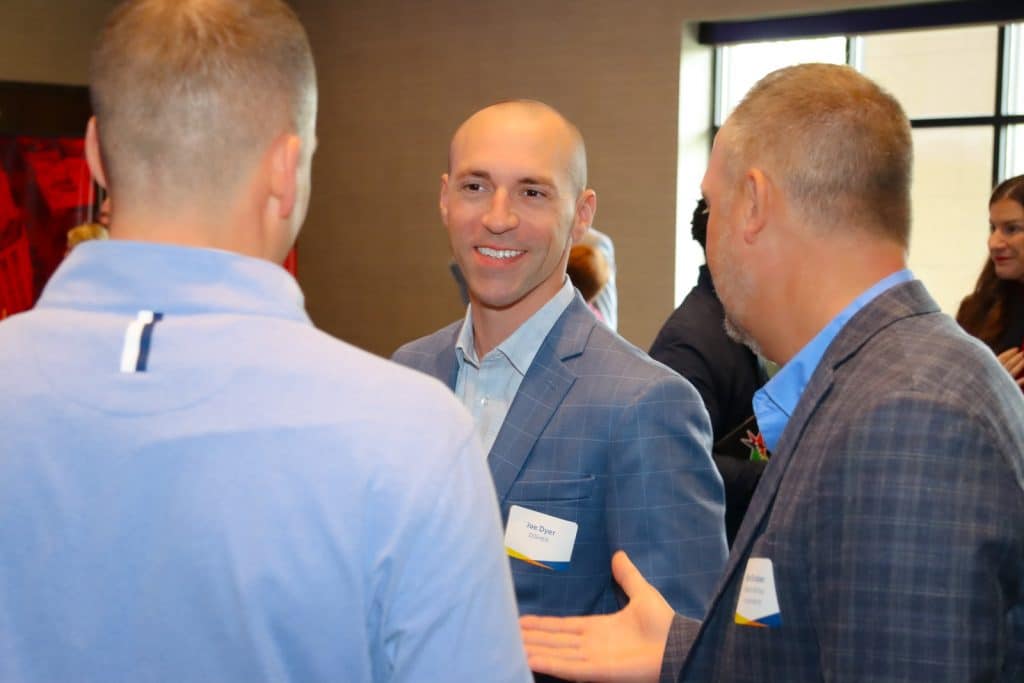
Exposure plays a key role in that effort. “If I don’t know about it, how can I be it?” Pink says.
Internships and hands-on experiences can help students make informed career decisions.
“Get them in. Give them the experience. And pay them,” Pink says. “That’s a small investment to find great talent.”
He also emphasized that career pathways vary.
“That doesn’t always mean a four-year degree; sometimes it’s a credential,” Pink says.
Don’t fear AI
Artificial intelligence continues to gain attention across industries, though adoption varies widely.
“We shouldn’t be afraid of it,” Johnson says. “We need the combination of human plus AI.”
Marsiglia says the main barrier is not access to tools, but how organizations use them. The tools alone are not enough. We need to rethink processes to really unlock AI,” he says.
Many companies remain in an exploratory phase, testing tools without making broader operational changes.
“People aren’t making the investment yet,” Marsiglia says. “This is a multi-year journey.”
Panelists described how their organizations are addressing workforce challenges. At Corewell Health, Jan Harrington-Davis, senior vice president of talent attraction at Corewell Health, says workforce shortages remain a concern.
“In healthcare, we have shortages in every single clinical area,” she says.
Those shortages extend beyond nursing to include several clinical roles. “If we don’t do something about it, we will have a big crisis,” Harrington-Davis says.
The organization has introduced programs to develop talent internally.
“We’ve developed ‘earn to learn’ programs so people can work and go to school at the same time,” she says. “We’re shifting from being requisition-driven to candidate-driven.”
‘Retain and retrain’
At Gentex Corp., Seth Bushouse says the region already has a strong base of talent.
“If you squint your eyes at the data, everybody in this room should be grateful,” Bushouse says. “We have a gift.”
Maintaining that advantage requires continued investment.
“The new battlefield is talent development,” he says. “Retain and retrain needs to be a business priority again.”
Gentex has focused on early exposure programs.
“Start as early as you can,” Bushouse says. “We bring in students on ‘yellow bus days’ to expose them to our work.”
Panelists pointed to collaboration as a key part of addressing workforce challenges.
“It’s a partnership between employers and education,” Bushouse says.
Johnson agrees, adding that learning happens across generations.
“The mentorship goes both ways,” she says.
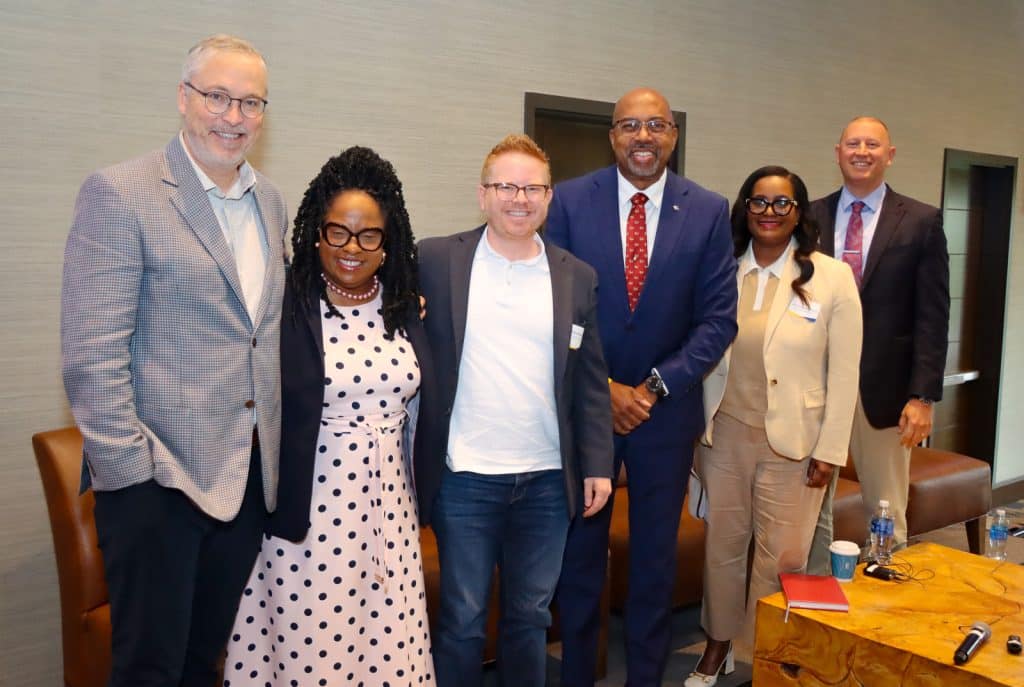
(Atomic Object), Bill Pink (Ferris State University), Jan Herrington-Davis (Corewell Health), and Seth Bushouse (Gentex Corporation).
Randy Thelen, CEO of The Right Place, says the report’s central theme starts with people. The organization’s mission has long centered on the people behind the region’s economy.
“It wasn’t about the brick and mortar, it’s because of the people within those buildings,” he says.
The latest report, he adds, reflects a turning point in the labor market.
“The labor market is much more in balance today than it was coming out of COVID,” says Thelen, when employers were raising wages and advertising for talent on billboards and everywhere else.
That shift has changed how companies approach growth.
“Before, there were concerns they couldn’t find the talent to grow their business,” he says. “Now they can find the people, so the focus moves to growth.”
Photos by Tommy Allen
This series, West Michigan Tech, aims to spotlight tech organizations and employers in the Greater Grand Rapids area that are delivering innovative programs, addressing talent pipeline challenges, and striving to develop, attract, and retain top talent in West Michigan. This series is underwritten by The Right Place.
Author

Related Articles

Why early childhood belongs on every Michigan voter’s ballot
Why Michigan voters should pay attention candidates’ stands on childcare and early learning.
La crisis de la fuerza laboral en el cuidado infantil en Michigan impulsa la búsqueda de reformas salariales permanentes
Los bajos salarios siguen impulsando la inestabilidad laboral.

أزمة القوى العاملة في قطاع رعاية الأطفال في ميشيغان تدفع نحو إصلاحات دائمة للأجور
انخفاض الأجور يواصل دفع عدم استقرار القوى العاملة


