
How a gaming group created a friendship circle for people with disabilities
Disability Network Northern Michigan’s gaming group reduced isolation, inspired friendships, and even inspired an effort to create a nonprofit for railroad preservation.
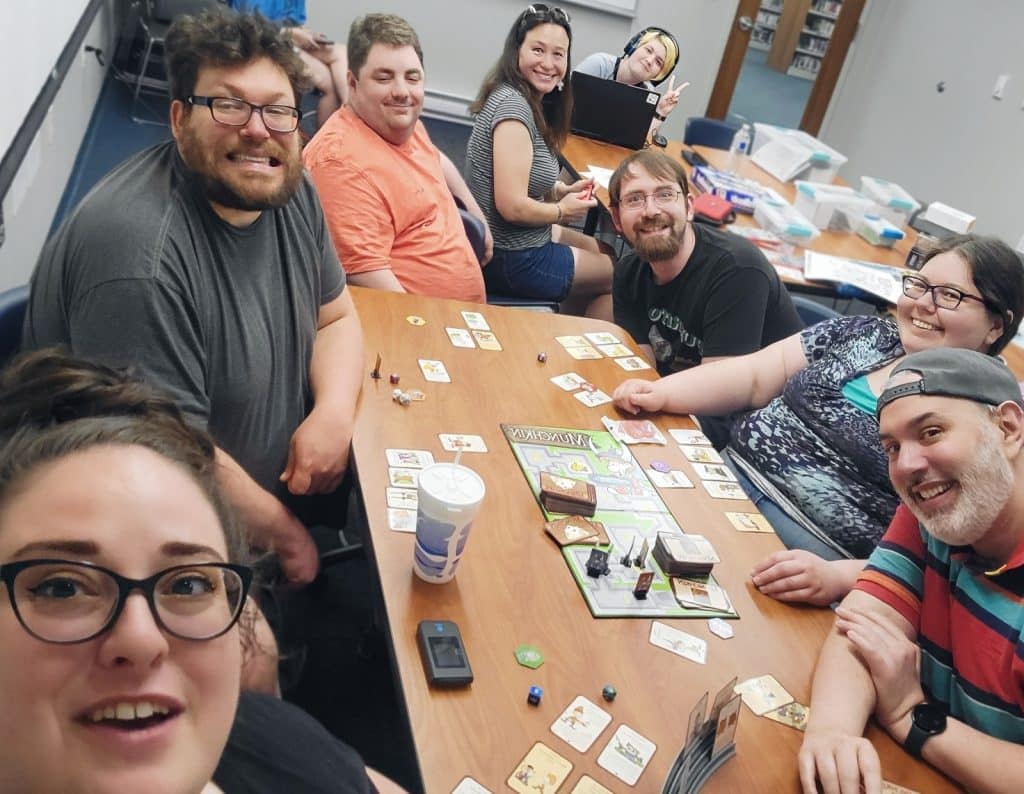
When many young adults were still emerging from the isolation of the pandemic, Luke Leach joined a gaming group through Disability Network Northern Michigan, looking for connection.
“I just wanted to know more people outside my usual community,” he says.
Leach, who is autistic, says he quickly found more than a place to play video games. The group connected him with friends who shared his interests in gaming, history, and railroads. Those friendships later helped inspire a drive for a new railroad preservation nonprofit in northern Michigan.
“It was just wonderful to be surrounded by people in the same boat as I am,” he says.
The gaming group, which combined online and in-person sessions centered around video games and board games, was one of several peer-support programs offered by Disability Network Northern Michigan for people with disabilities.
Like the organization’s other programs, the gaming group aimed to reduce isolation and help participants build friendships, confidence, and life skills through shared interests and connection.
The program eventually faded after staffing and funding changes, but staff members and former participants say its impact lasted well beyond the sessions. Disability Network Northern Michigan is now exploring ways to revive the gaming group.
Lasting effects
The impact of the program continues years later for Leach.
“A lot of my relationships with a lot of my friends at Disability Network came from the gaming group,” he says.
One of those friendships was with Chris Timm, the former staff member who led the gaming group. The two bonded over trains, rail history, and gaming culture.
“Me and Chris really connected,” Leach says.
That friendship later evolved into a new mission. They are helping organize the Traverse Rail Heritage Alliance, a developing nonprofit focused on railroad preservation and historical education in northern Michigan.
“All this was because of the gaming group, really,” Leach says. “The gaming group gave us a lot of good people.”
The organization is still in its early fundraising stages, but Leach says the goal is to create opportunities for people with disabilities and others in the community to participate in preservation work, learn restoration skills, and connect through a shared passion for history.
“Our history belongs to everybody, and everybody deserves to experience their history,” he says.
Leach says the project also could create opportunities for people with disabilities to gain hands-on experience in areas such as welding, restoration work, and track maintenance.
“We feel like this is a good opportunity for people with disabilities to learn skills they can’t learn anywhere else,” he says.
Importance of connection
Stories like Leach’s reflect why peer-support programs matter, staff members at Disability Network Northern Michigan say.
Youth services staff member David Kaggwa, who worked with the gaming group in addition to transition-age students and young adults up to age 25, says the group succeeded because it created natural opportunities for social interaction.
“One of the consumers came in and was very shy, didn’t want to talk to anyone, but within two or three meetings he was part of the team, and he was engaging,” Kaggwa says.
Kaggwa says gaming and tabletop activities gave participants a shared activity that lowered social pressure and encouraged collaboration.
“There is that engagement of a challenge, problem solving, communicating, networking,” he says.
Participants played a variety of games, from multiplayer video games to traditional board games. Some activities were held online through virtual meetings, while others took place in person, all with the goal of being accessible to participants of all abilities. Participants often helped one another learn games, solve problems, or navigate technology. Adaptive equipment was used to increase accessibility.
Some participants preferred competitive video games, while others gravitated toward collaborative or tabletop games.
“Nobody’s going to really either look down upon us or challenge us in that negative way, so everything seemed to be positive,” Kaggwa says.
The group became especially important for young adults who struggled to connect socially outside of family or school settings.
“Most of them really do not connect with many others outside of their own, probably sometimes family,” Kaggwa says. “If they get to a point where they can connect with those who have alike interests and have some of those friendships continue, I think that’s a plus.”
The gaming group also reflected a growing recognition among disability organizations that peer connection and community engagement can play a critical role in improving quality of life.
Instead of focusing only on formal programs or support services, organizations are trying to build social groups around shared interests and hobbies.
Gaming turned out to be a successful way for Disability Network Northern Michigan to help people connect.
“When I go to schools and I mention it, you see that people’s eyes open up and brighten and want to know more,” Kaggwa says.
Moving forward
But the program also exposed challenges.
Staff members became concerned about participant safety. Many people with disabilities encounter scammers and predators who troll platforms seeking less experienced users, including individuals with disabilities related to social, cognitive, intellectual, and impulse impairments. While group members were carefully vetted, some participants encountered troublesome situations if they ventured beyond the Disability Network Northern Michigan group.
The organization hopes to apply those lessons if the gaming group returns. Kaggwa says future versions of the program would have a safer, more structured format and may emphasize in-person gaming, the best way to control who participates.
“That will be the first lesson, to be safe online,” he says.
While increased direct supervision is not possible because of funding cuts, the organization will explore ways to help its clients build online safety skills outside gaming groups.
Despite the challenges, staff members and participants say the group demonstrated how valuable shared interests can be in building confidence and a sense of belonging.
Leach says the experience reinforced the importance of creating spaces where people with disabilities are valued for their passions and personalities rather than defined by diagnoses.
“I’m very passionate about people with disabilities getting the experiences,” he says. “We’re human, just like everybody else. We just have a little uniqueness in our lives.”
Years after joining the gaming group, he still sees its effects in the friendships he formed, the confidence he gained, and the mission he now pursues with people he met while playing games.
“It’s just so weird to think that a couple of guys who got together wanting to play video games found out that all of us love trains,” Leach says.
The multi-regional Disability Inclusion series is made possible through a partnership with Centers for Independent Living organizations across West Michigan.
Author
Related Articles
#RG20LookBack: Placemaking’s missing piece is you
In his 19th #RG20LookBack, Rapid Growth Publisher Tommy Allen revisits the 2013 piece “RapidBlog: Reflections on the DAAC” by Emma Heemskerk, reflecting on one of Grand Rapids’ small but vital cultural spaces where culture was created through participation, not just consumption.
#RG20LookBack: Sunday Soup and the power of community support
In his 17th #RG20LookBack, Rapid Growth Publisher Tommy Allen revisits Juliet Bennett Rylah’s 2010 story on the rise of community investment funding in the urban core.
Michigan Food Club Network names leader to expand innovative model
Lura Barber leads statewide Food Club Network expansion, scaling grocery-style access model that improves food choice, dignity, and community-driven solutions.


