
MSU medical school programs aim to alleviate shortage of rural physicians
By encouraging students like Elizabeth Phelps, the College of Human Medicine tackles the need for doctors in small communities.
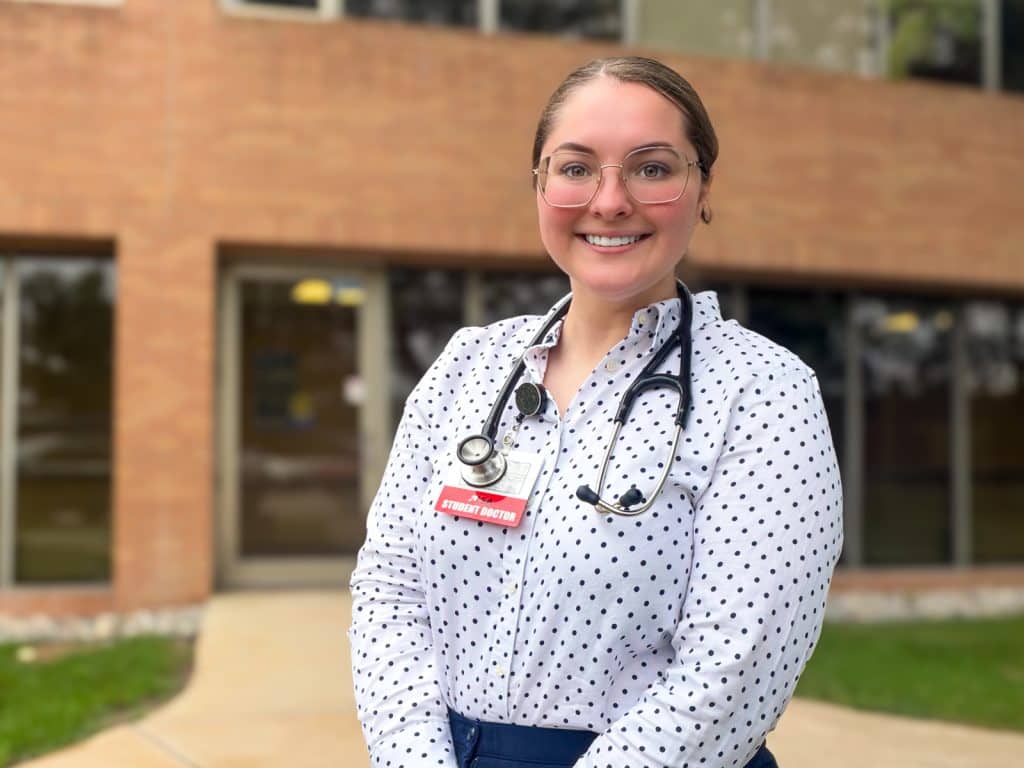
Elizabeth Phelps was 10 when she learned what a lack of trusted healthcare can mean for a rural family.
Her grandfather was a farmer and Vietnam War veteran who lived 30 to 40 minutes from the nearest hospital. When he began having chest pain, he resisted going.
“He didn’t want to die in a hospital,” Phelps says. “He didn’t want to die surrounded by people that he felt didn’t really understand him or care about him.”
Her grandmother finally convinced him to leave, but he died in the front seat of the car on the way to the hospital.
Phelps remembers sitting beside her grandmother at the funeral and thinking about what she could do to keep another family from experiencing the same pain.
More than a decade later, Phelps is working toward that goal.
The 23-year-old third-year student at Michigan State University College of Human Medicine is a Dean’s Scholar and part of the college’s Leadership in Rural Medicine certificate program. She recently moved to Grayling and will spend the final two years of medical school training in Northern Michigan.
Phelps grew up in the rural Michigan community of Napoleon, southeast of Jackson, and has attended state and national rural health conferences. Her work also includes peer mental health, rural health policy and street medicine.
She says MSU’s commitment to rural health helped draw her to the medical school. She hopes to eventually practice primary care in rural Michigan.
Rural doctors needed
Her journey offers a look at one way MSU is trying to build the state’s rural physician workforce: recruit students with ties to rural communities, help them find a path into medicine, and give them opportunities to train in places that need doctors.
“We need more passionate people in rural areas,” Phelps says. “It’s not just that we need more physicians; we need people who care about the community that they’re going to work in.”
Dr. Andrea Wendling understands that connection.
Wendling, director of rural medicine and senior associate dean for academic affairs at MSU’s College of Human Medicine, grew up on a farm in Michigan’s Thumb. She saw how a lack of medical care affected her family, friends, and neighbors.
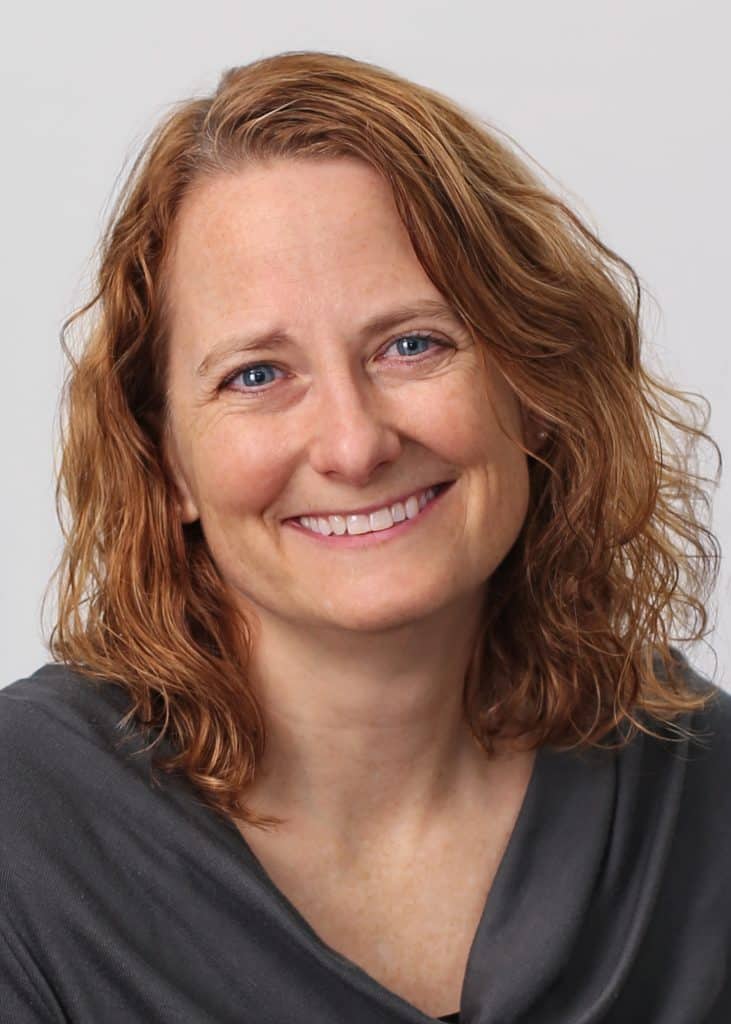
“I went to medical school and realized that I could be part of the solution,” Wendling says. “I could be a rural family physician and could bring that care to a community.”
Wendling has practiced in Boyne City with Munson’s Charlevoix Hospital since 2003 and has taught medical students in her rural practice throughout that time.
She says rural communities have faced shortages of primary care doctors for decades. The problem is getting worse as rural doctors retire and fewer medical students choose to practice in rural areas.
Nationally, about 20% of the population lives in rural communities, but only about 5% of medical students come from rural areas, Wendling says.
That matters because students who grow up in rural communities or spend time training there are among those most likely to eventually practice there, she says.
Michigan also could be short more than 800 primary care doctors by 2030, according to projections cited by Dr. Julie Phillips, chair of MSU’s Department of Family Medicine, in her 2025 essay, “Michigan Needs More Primary Care Doctors.”
“Family medicine and primary care generally is, in my view, the foundation of a functional healthcare system,” Phillips says.
When people don’t have a regular primary care doctor, the effects can spread throughout the health care system.
“When patients don’t have a regular source of primary care, they’re more likely to use the emergency room, more likely to be hospitalized for preventable conditions, more likely to die from illnesses that can be screened for, like cancers, and actually have a shorter lifespan,” Phillips says.
Finding her path
Phelps’ high school class in Napoleon had about 80 students. She estimates about half of her classmates went to college. The other half went straight to work.
Her parents were the first in their families to attend college, so they were able to help her take that step. Medical school was different.
Phelps worked three jobs while attending MSU as an undergraduate, including as a medical scribe. The work gave her experience and connections with doctors.
She says students who lack those experiences or don’t have doctors in their families may have to figure out the process on their own. Giving them guidance could bring more rural students into medicine, she says.
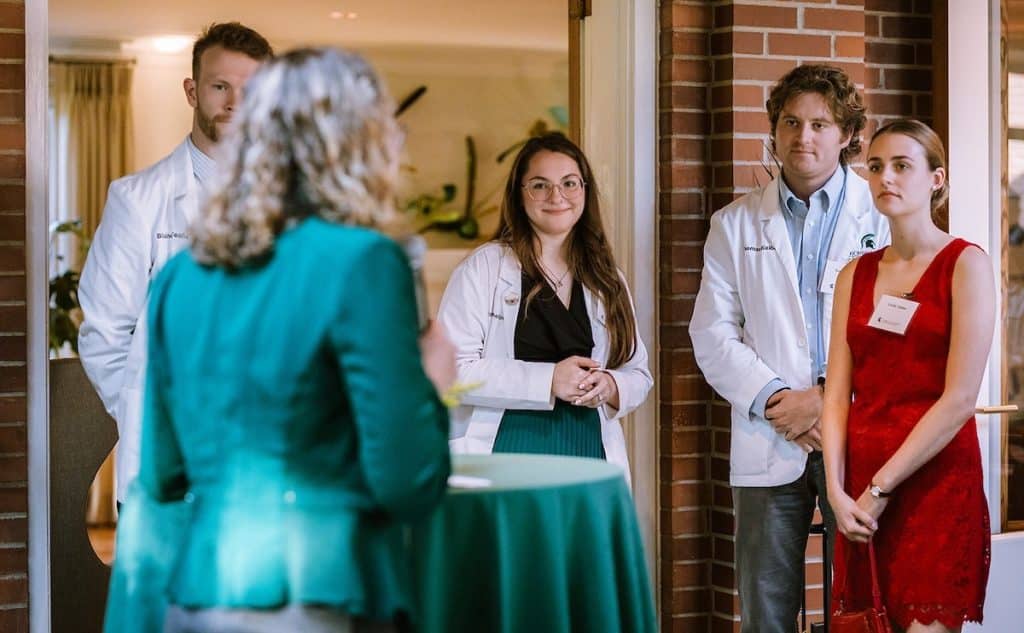
“It’s really like helping them through that process,” Phelps says. “What do they need to do?”
“A lot of times, it’s not that they’re not fit for that job. They just don’t know how to get there because no one’s ever shown them the way or paved the path.”
Wendling says rural students can face barriers long before medical school. They may have fewer educational opportunities and resources, along with the challenge of traveling long distances for college or medical experiences.
MSU works with community colleges, colleges, and universities across Michigan to find students interested in rural and underserved medicine.
The college also runs the Rural Premedical Internship Program each summer. The program helps students from rural Michigan gain experience and support as they prepare to apply to medical school.
Once at MSU, about 30 students each year enter the Leadership in Rural Medicine program, Wendling says. They make up about 15% to 20% of the medical school class.
Phelps is one of them.
MSU’s rural training
When she started looking at medical schools, she knew she wanted one with a rural medicine program. MSU’s College of Human Medicine became her first choice.
“In rural medicine, you are a member of the community first and foremost,” Phelps says.
That can bring responsibilities beyond caring for patients, she says. Rural residents may see their doctor as someone they trust and turn to with other concerns.
“You can be a person that advocates for your community not only in hospitals and in clinics and in exam rooms, but at a local and a state and even a national level,” Phelps says.
MSU’s Leadership in Rural Medicine program gives medical students hands-on experience in rural communities across Michigan. Its website includes information about its programs, rural campuses, admissions, pipeline programs, and opportunities for students.
Students spend their first two years based in East Lansing or Grand Rapids before moving to one of three rural campuses for their third and fourth years: Midland, Traverse City, or Marquette.
They train in rural hospitals and clinics while completing clerkships in areas such as family medicine, internal medicine, pediatrics, surgery, psychiatry, and obstetrics and gynecology.
Students also can get experience in areas such as street medicine and wilderness medicine.
“It is one of the most comprehensive programs for rural training in the country,” Wendling says.
Phelps’ first rural experience showed her how much family doctors are asked to do when specialists aren’t nearby.
Mental health care stood out.
“It felt like every other patient had a mental health concern,” Phelps says.
She says physicians often cared for patients with mental health needs because those patients couldn’t easily see a psychiatrist. Some doctors encouraged her to get more psychiatry training because they encountered those needs so often.
Phelps took that experience back to medical school. She worked with the college to develop a peer support program where interested students receive more training in talking with people experiencing mental health challenges.
Her rural training is now moving into its next stage.
Phelps recently moved from East Lansing to Grayling. She expects to complete clinical training at health care sites in Grayling, Gaylord and Traverse City.
“I’m going to work in the rural places that I hope to serve when I graduate,” she says.
Does rural training work?
MSU has tracked graduates of its rural programs since its Upper Peninsula campus began in the 1970s.
Wendling says the results offer evidence that recruiting students interested in rural medicine and training them in rural communities can help build the physician workforce.
About half of MSU’s rural program graduates enter primary care, she says. Nearly 75% enter specialties needed in rural communities, including primary care, general surgery, psychiatry and obstetrics and gynecology.
More than half practice in Michigan, 45% practice in a rural community, and 63% work in a Health Professional Shortage Area, according to Wendling.
The rural practice rate stands out when compared with national figures. Wendling says about 9% to 11% of U.S. physicians practice in rural communities.
Where students train also appears to matter.
Among graduates from the first 30 years of MSU’s Upper Peninsula regional campus, 26% went on to practice in a U.P. county, Wendling says.
“We can track these outcomes over time, and have shown that decade-by-decade, as the campus has matured, our workforce outcomes have improved,” she says.
Medical school is only one step, however.
After medical school, doctors train in residency programs in the type of medicine they want to practice. Phelps says where doctors complete that training can affect where they choose to work later.
“That’s a next big step for getting more physicians into rural areas,” she says.
Phelps says Michigan needs more rural residency programs. Rural communities also need specialists, including psychiatrists and doctors who care for women during pregnancy and childbirth.
When specialists are hard to find, family doctors may have to provide some of that care. Phelps saw that at the rural clinic, where family doctors were helping patients with mental health needs while they waited to see a psychiatrist.
Financial support
Recruiting and training rural students does not remove another major barrier: the cost of becoming a doctor.
Phelps received a Dean’s Scholars Program scholarship after her first year that covers her tuition. Only three students per class receive the scholarship, she says.
Before receiving it, Phelps used a low-interest private loan through her local community foundation to help pay for her first two semesters. She also used savings from working and received help from her parents and her then-fiance, now her husband, who was working full time.
Without the scholarship, Phelps says she would have used federal loans or lower-interest loans available to some students interested in primary care. She knows other students who have paid for medical school entirely through federal loans.
Phillips says the cost of medical school can affect what type of medicine students choose. Limits on how much professional students can borrow through federal programs force some to turn to private loans with higher interest rates.
“Higher interest loans increase the financial incentive for people to choose higher income specialties,” Phillips says, and those specialties tend to be located in larger hospitals and urban areas, not in rural settings.
Scholarships and loan repayment programs offer one response. Phillips points to the National Health Service Corps, which offers scholarships and loan repayment to health care professionals who agree to work in communities with shortages.
“There are not enough National Health Service Corps scholarships for all the students who want them,” Phillips says. “So expansion of that program would likely be helpful.”
Money isn’t the only issue, Phillips says.
“I would say improved working conditions would be helpful,” she says.
Part of the community
Phelps is still deciding what kind of doctor she wants to become. Family medicine is her top choice, but she also enjoyed emergency medicine.
She spent several overnight shifts with a doctor at a critical access hospital in Ionia. Some patients came to the emergency room because they didn’t have a primary care doctor. Others didn’t know how to find one or couldn’t afford one.
“The emergency room is that kind of safety net for all of those patients,” Phelps says.
She found herself spending time educating patients, something she also likes about primary care.
“I love the relationship that you can build with patients in family medicine,” Phelps says.
Phillips understands the appeal.
She has patients she delivered as babies who are now in high school or college. Other patients and their families have been with her for 20 years.
“Family medicine is kind of built on that,” Phillips says. “It’s a relational model of care that’s intended that you would take care of patients over the course of their lifetime.”
Some of those relationships cross generations.
“I have patients in my practice that I’ve known for 20 years,” Phillips says. “I’ve watched their kids grow up. I’m their spouse’s doctor. I’m their mom’s doctor. I’m their sister’s doctor.”
Phelps has stepped outside the classroom and hospital to learn more about rural health.
She serves on a student group with the National Rural Health Association, where students discuss rural health issues and ways to improve care in rural communities.
She also has presented at the Michigan Rural Health Conference and the National Rural Health Association Annual Conference in California.
Phelps works as a student intern with the Michigan Center for Rural Health, where she has helped write reports and plan events that bring health care workers and community members together. Her work also includes peer mental health, rural health policy and street medicine.
Those experiences have helped her better understand how location, income and other barriers can make it harder to get health care. They also have shown her how a rural doctor’s role can reach beyond the exam room.
In a small community, people may turn to their doctor because they know and trust that person.
Phelps understands that trust from her own experience.
As a teenager, she switched to a female doctor who made her feel heard and cared for. That doctor graduated from the same medical school Phelps now attends.
“She was one of the first people that, like, I felt really understood me and cared for me and wanted the best for me outside of my parents,” Phelps says.
That relationship gave Phelps another example of the kind of doctor she wanted to become.
“I could really see what a difference that a caring physician could make in my life,” she says.
Wendling has already traveled a version of the path Phelps hopes to follow. She grew up in rural Michigan, became a family doctor and returned to practice in a small community.
Her experiences as a rural doctor and teacher now guide programs designed to help more students take that path.
Phelps is preparing to find out where her own path takes her.
“When everyone has access to the same resources,” Phelps says, “it’s amazing what people that you might not have expected, what they can do.”
Photos courtesy of Elizabeth Phelps and Andrea Wendling, and edited by Tommy Allen
Author
Related Articles
How public libraries instill literacy in littles
Libraries’ children’s programming builds kindergarten readiness and a lifelong love for reading.
Childcare fraud myth misses the larger story
The disproven allegations have burdened providers and threaten access as fewer seek to enter the field.
El mito del fraude en el cuidado infantil oculta una problemática más grande
Según el Departamento de Educación, Avance y Potencial para Toda la Vida de Michigan (MiLEAP, por sus siglas en inglés), las acusaciones eran falsas.


