
Kent County mobility study offers new path to transportation access
Kent County leaders, advocates and nonprofits are working together to expand transportation choices and help more residents stay connected and independent.
Charis Austin became a transportation advocate because she was worried she would lose the bus she relied on to get to work.
“My transportation advocacy started because I used GoBus (a service for people with disabilities) when I first moved to Grand Rapids over 40 years ago, and they threatened to take it away because they thought it cost a lot of money,” Austin says.
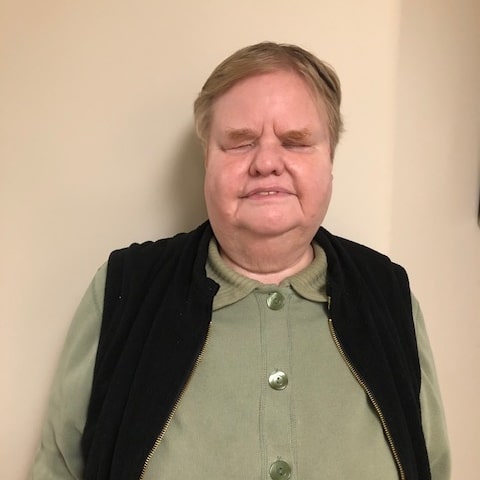
Austin, a client advocate for the Association for the Blind and Visually Impaired, has spent her 40-year career helping people who are blind or have low vision find services and support. She also pushed for a state law that created the Michigan Commission for the Blind, which later became the Bureau of Services for Blind Persons.
Transportation has also been a big part of her work. Austin served on the board of The Rapid and worked on other efforts to make transportation easier to use for people with disabilities.
Over the years, Austin and other advocates pushed for something bigger: more ways for people to get around Kent County, including communities without traditional public transit.
“I’ve had friends whose goal was, ‘I want to get countywide transportation before I die,’ and unfortunately, they didn’t,” Austin says.
Austin hasn’t given up on that goal.
Now, a regional effort is bringing together local governments, nonprofits, transportation providers, businesses and advocates to look at ways to close transportation gaps across Kent County.
Austin sees the effort as a chance to build on decades of work by advocates who want to help people get where they need to go when driving isn’t an option.
The Kent County Area Mobility Study found places where people need better transportation. The Grand Valley Metropolitan Council is now leading the next steps. Instead of creating one system for the whole county, the goal is for communities to build on services they already have, try new ideas, and learn from what works in other places.
“I’m hoping that they can come up with some kind of system that everyone will be able to use,” Austin says. “I’m hoping that they can come up with a system that everybody can live with, and I realize that it’s going to cost some money. But in order to get people around, we’re going to have to invest in it.”
Localized needs
The need is growing.
Some of Kent County’s fastest-growing communities are outside the Grand Rapids urban core. New homes and jobs mean more people need ways to reach work, medical appointments, stores, family and community activities.
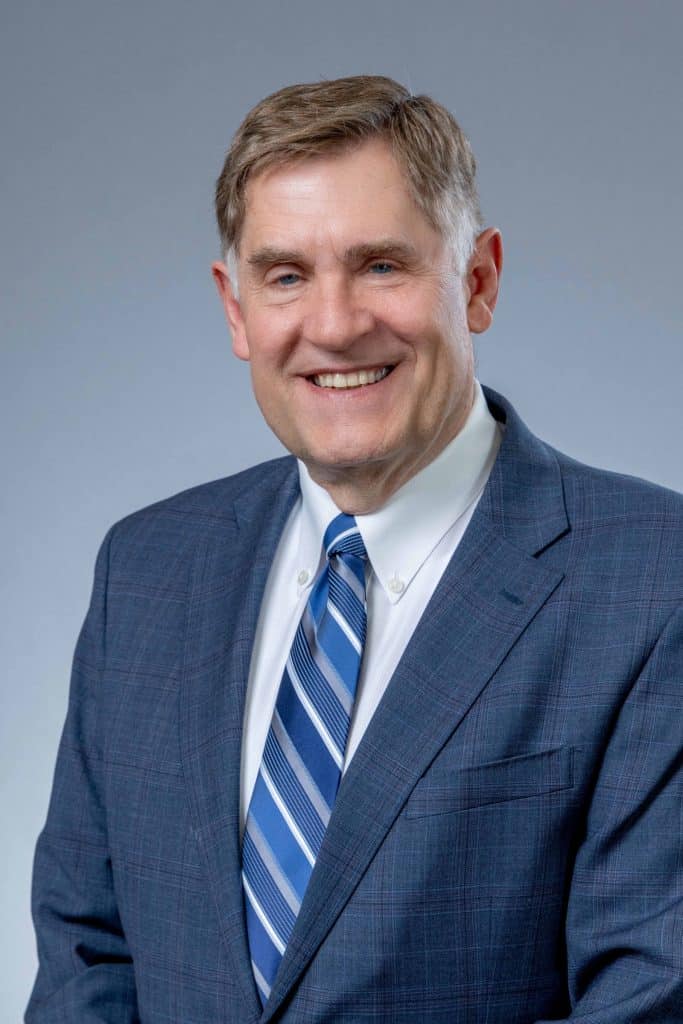
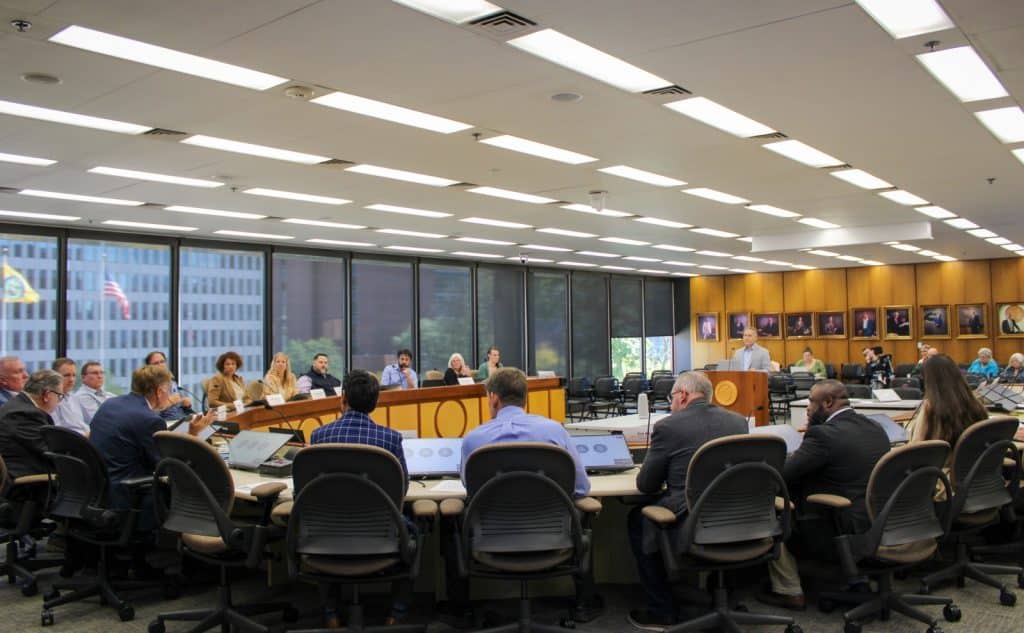
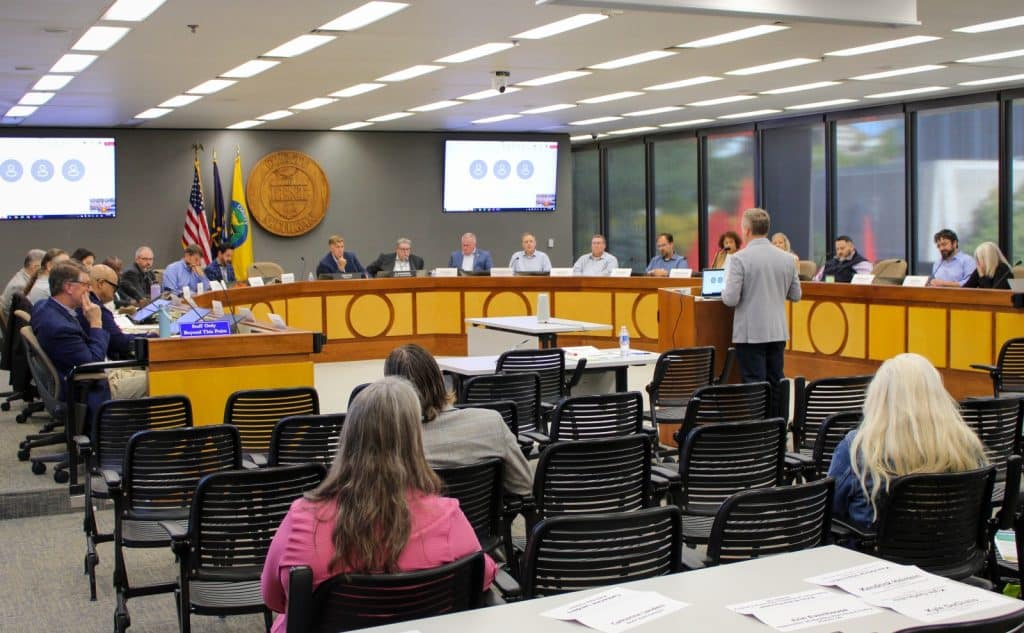
Stanley Stek, a Kent County commissioner who created the mobility task force when he was chair of the Board of Commissioners, says the county brought together people representing different communities and transportation needs. They looked at existing services, where gaps remained, and what opportunities could come next.
“Mobility is essential, but it’s essential in so many different ways,” he says. “It’s essential for solid, economically healthy communities, but it’s also a public justice issue. It’s essential for us to have processes and systems in our community that allow everybody to participate.”
That can look different depending on where someone lives.
Adrienne Goodstal, executive director of North Kent Connect, brought the perspective of northern Kent County to the task force. North Kent Connect works with Kent County RideLink to help older adults get to its food pantry and other places.
“One of the primary focuses that we are doing at North Kent Connect is around transportation because it’s probably the biggest barrier for our clients to really truly move forward,” Goodstal says.
Northern Kent County presents distinct transportation challenges.
“It’s quite a bit different of a challenge when you get into northern parts of the community because there are no Ubers or Lyfts, and of course the Rapid doesn’t come this far north. Goodstal says. “And access to necessities like grocery stores and doctors is even further apart.”
Goodstal sees transportation as an opportunity to help people who cannot drive stay active and connected to their community.
True mobility freedom, she says, improves everyday quality of life, “whether you want to find better employment or you want to go to cultural events, visit family and friends, or go to your medical appointments,” Goodstal says. “Transportation really is such a critical piece of that.”
Building on current services
Some responses are already in place.
North Kent Connect partners with Kent County RideLink to bring older adults to its food pantry and other destinations. Goodstal says that matters for seniors who no longer drive but still want to remain active and connected
“How do we make sure people are living in isolation and can still get out into the community and access the resources that they need?” Goodstal says.
Austin knows firsthand what transportation can make possible. She is blind and uses GoBus, Uber, and Lyft to get around. Those options have helped her work and participate in the community. She also knows people who don’t have the same choices.
“I have clients saying to me, ‘What am I going to do when I can’t drive?’” Austin says. “When they can’t drive anymore, they feel like their independence is taken because you can’t go out, get in your car, and go wherever it is you want to go.”
The mobility study brought many of those experiences into the same conversation.
The task force included people connected to The Rapid and the six cities in its service area, townships, Disability Advocates, Senior Neighbors, and state government, among others. Goodstal says the process included about a year and a half of community listening, focus groups and research into what communities similar to Kent County have tried.
“It’s very collaborative,” Goodstal says. “Solutions should be across sectors. Any sort of challenge that the community faces needs to be in collaboration.”
The study doesn’t call for one transportation system to serve all of Kent County. Instead, it looks at how communities can build on services already working and find options that fit local needs.
It also recommends better coordination among transportation providers, more options in communities outside The Rapid’s six-city service area, and ways to pay for those services long term. The Grand Valley Metropolitan Council is leading the next phase of that work.
“We need to identify processes more than absolute recipes for the final solutions,” Stek says.
“What isn’t changing is that people need to get from point A to point B,” he says. “And can we assist in helping them identify, community by community, good strategies that work for them, that allow them to meet those needs.”
That could allow communities to start with ideas that make sense for their residents.
“Cedar Springs is different from Plainfield Township and Gaines Township,” Stek says.
Metro Council takes lead
Task force members looked at who could keep people working together and help turn recommendations into action. Stek says the Grand Valley Metropolitan Council is taking the baton from the county.
“We need a champion who’s going to help to now put some, you know, no pun intended, wheels in motion for the recommendation,” Goodstal says.
Another step came in March 2026, when GVMC received a Michigan Mobility Fellowship through the Community Economic Development Association of Michigan. The fellowship allows GVMC to have a fellow spend 15 months focused on countywide mobility.
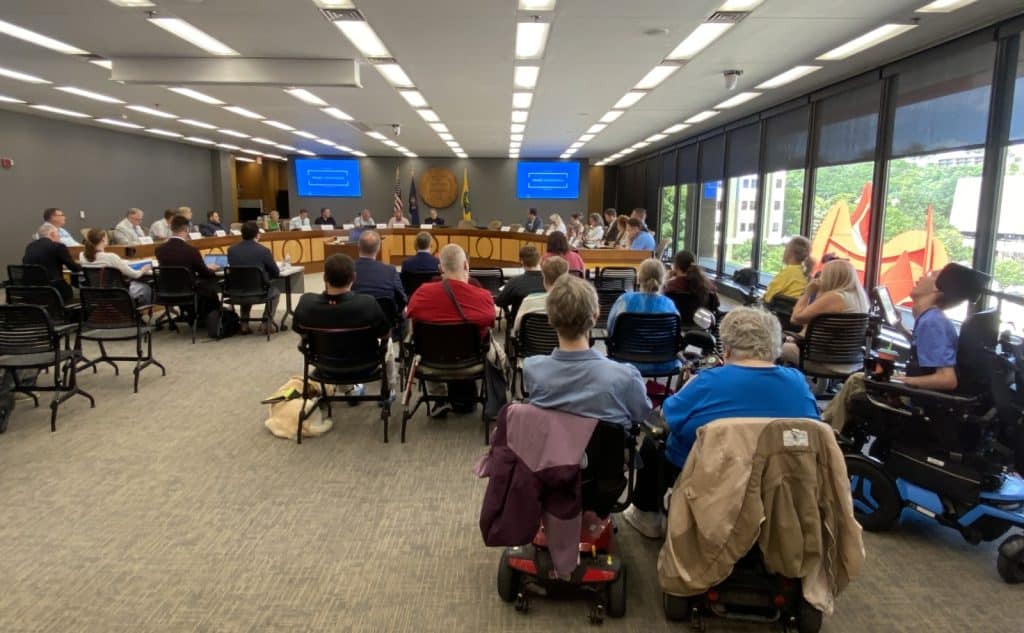
Goodstal says members of the original task force are also preparing to move from advising to working on the recommendations.
“It’s time to put action into the recommendations, if you will, to see new transportation opportunities take shape,” she says.
Businesses could have a role, too.
“We need businesses to be part of this work because if they are having a hard time retaining employees who are unable to get to their place of employment due to lack of transportation, then they have a role to play in helping find a solution for that,” Goodstal says.
Funding is the next question. Goodstal says partners, along with other key stakeholders, will have to determine how to pay for new opportunities.
“It will be hard to do anything without additional funding,” she says.
Austin also wants planners to think about how people use transportation in everyday life.
Some existing services require trips to be scheduled in advance. Austin would like to see options that give people more freedom to make plans at the last minute.
“I would like to see something that doesn’t necessarily have to be scheduled in advance, because sometimes you have to go,” she says. “I think there has to be choices of how you navigate the system.”
Stek doesn’t expect every community to change its transportation system at once.
“My hope is that it will lead to at least some communities or subsets of our communities that identify some of the strategies that we begin to sketch out there, being a good fit for them, such that they take it, run with it, and start implementing it,” Stek says.
That kind of progress could build momentum.
“Once we see some of these developed into concrete programs that enhance mobility in the county, I think you’re going to see it take off,” Stek says.
Austin has spent more than four decades advocating for better transportation. After all those years, she is still looking ahead. She knows change can take time. She also knows what transportation can give someone: the ability to work, see family, make an appointment, or simply decide where they want to go.
“I’m hoping that they can come up with a system that everybody can live with,” Austin says. “I realize that it’s going to cost some money. But in order to get people around, we’re going to have to invest in it.”
Photos courtesy of Kent County, Stanley Stek and Charis Austin
The multi-regional Disability Inclusion series is made possible through a partnership with Centers for Independent Living organizations across West Michigan.
Author

Related Articles
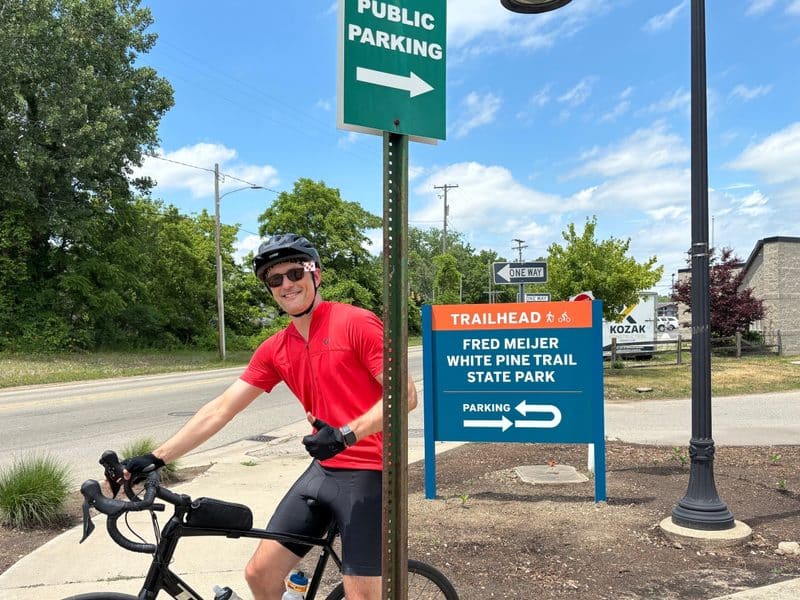
West Michigan trail signs aim to make exploring easier, safer
West Michigan Trails plans consistent signs to improve navigation, accessibility, and emergency response along more than 300 miles of routes.
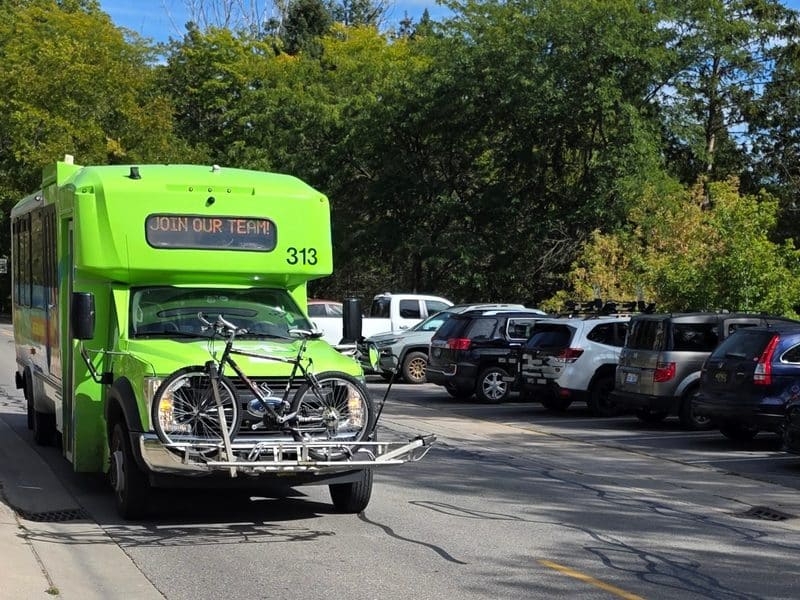
Traverse City plans safer streets for residents of all abilities
Residents and advocates explain how better crossings, connected sidewalks, and bus access can make trips across Traverse City safer.
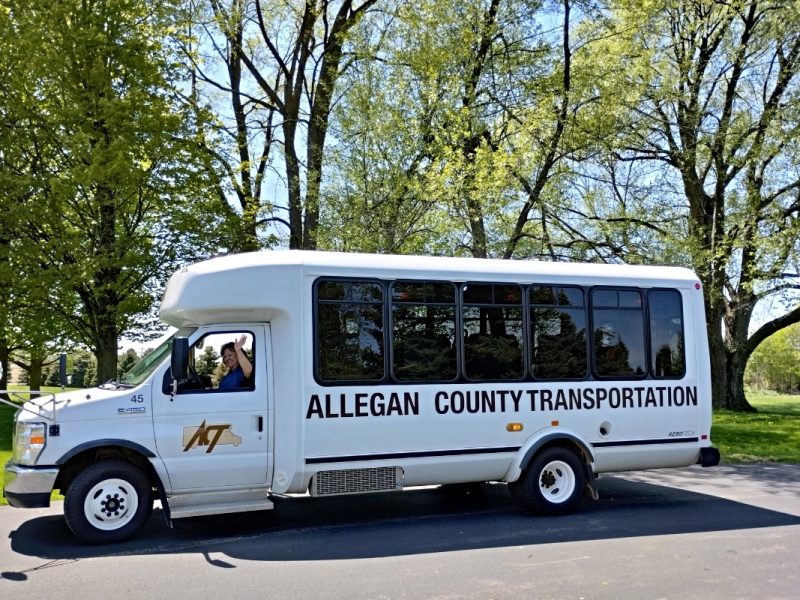
Transportation: An overlooked barrier to mental health care
Collaboration ensures Allegan County residents get mental health care when they need it.


