
Voices of Youth spotlights East Kentwood students’ family history project
Voices of Youth spotlights East Kentwood’s immigration storytelling project and shares three student essays preserving immigrant family histories and journeys.
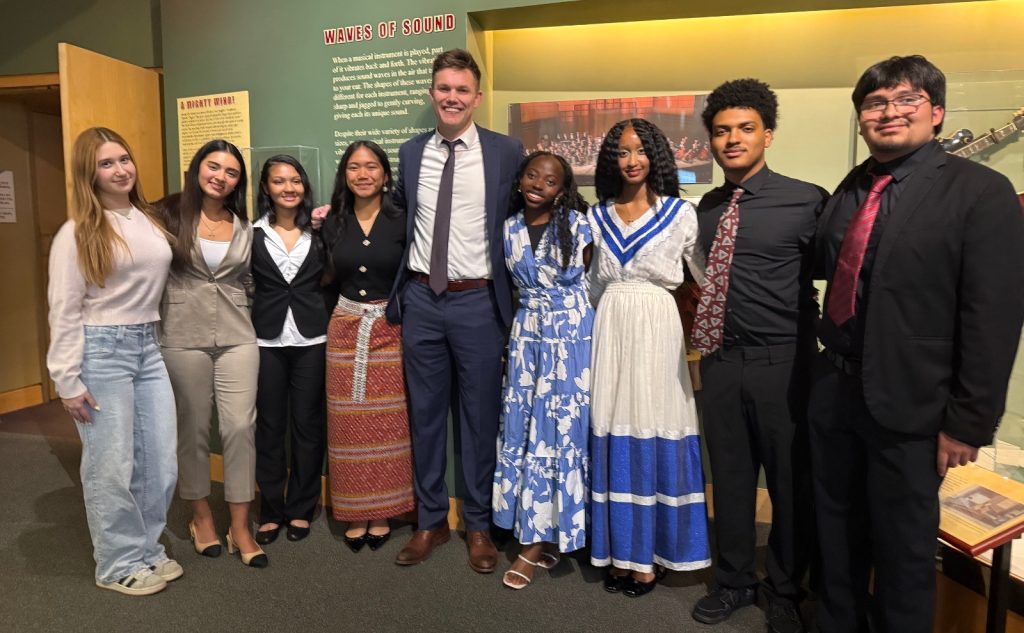
As part of the Voices of Youth project, which teaches students about journalism and its connection to democracy, we are highlighting a program that supports journalism at its most personal level by helping students understand the events, sacrifices, and decisions that brought their families to West Michigan.
The project encourages students to use the same tools journalists rely on every day: asking questions, conducting research, listening carefully, and documenting stories that might otherwise be lost. Through interviews with parents and grandparents, students examined migration, war, displacement, education, and identity while learning how personal stories connect to larger historical events.
This joint effort between the Grand Rapids Public Museum and East Kentwood High School is helping students preserve family migration stories before they disappear. Educators say this is especially important in immigrant communities, where war, displacement, and separation from relatives can cause family histories to fade within just a few generations
Here, we are sharing the stories of several East Kentwood High School students, along with essays from three of them: Edwin Lopez-Garcia, Hawthiya Malual, and Amina Povlakic. The essays were originally presented on May 13 during the “Our Composite Community” presentation at the museum. Through the students’ stories, the event explored how 19th-century abolitionist Frederick Douglass’ vision of a “composite nation” has taken shape in modern West Michigan.
Documenting family stories
Students gathered on May 13 at the Grand Rapids Public Museum to share the stories in front of family and friends in a project led by Matthew Vriesman, a history teacher at East Kentwood, and Le Tran, an art teacher there.
“Hearing our students tell their stories about the origins of the refugee program in the United States and the connection to Michigan, it was so empowering,” Vriesman says.
Students interviewed family members, documented migration stories, and preserved them through speeches, written narratives, and quilt artwork. This year, more than 40 student stories were donated to the museum archive, documenting journeys from countries including Vietnam, Bosnia, Myanmar, Ethiopia, South Sudan, and Mexico.
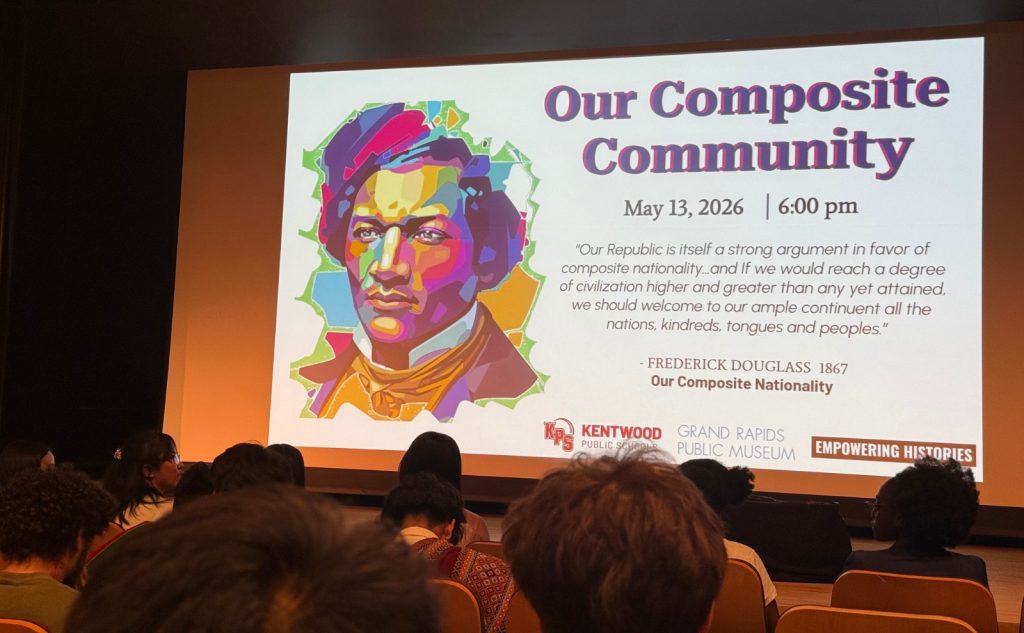
For many students, the assignment was the first time they had asked their parents detailed questions about how they came to the United States. Others uncovered histories that had nearly been lost because relatives remained overseas or painful memories had gone unspoken for years.
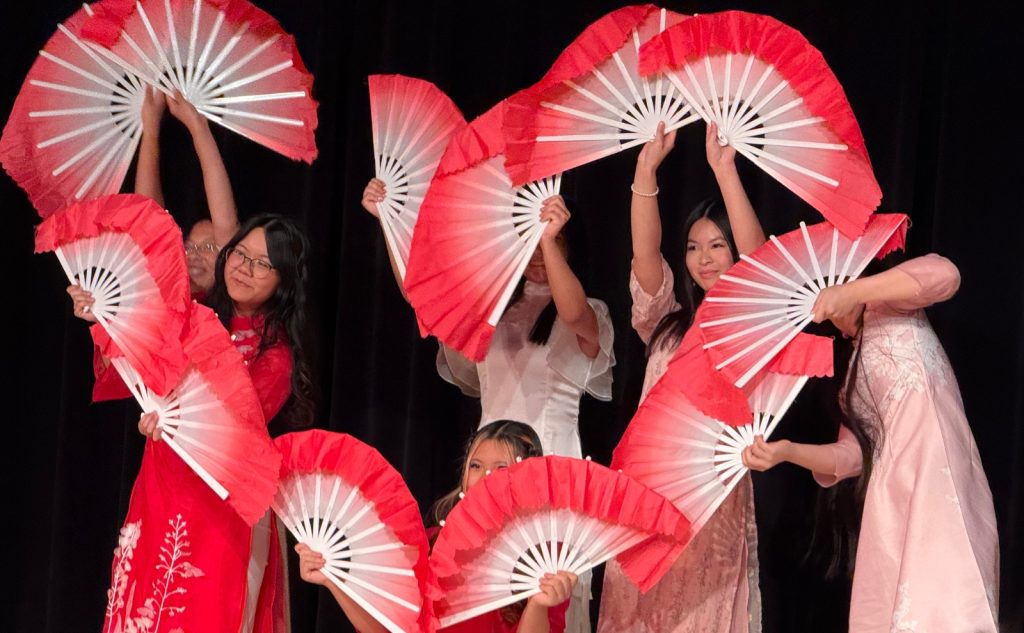
Students also shared stories through music and dance, demonstrating cultural traditions from their countries and regions.
“This program actually started about a year ago tonight when we were here,” Vriesman told the audience. “We were commemorating the 50th anniversary of the fall of Saigon, and we had our students of Vietnamese heritage go through a very similar project to what we are presenting tonight.”
Vriesman, who was named the 2023 National History Teacher of the Year by the Gilder Lehrman Institute of American History, connected the project to the idea of a “composite nation,” borrowing from abolitionist Frederick Douglass, who argued after the Civil War that democracy grows stronger when newcomers are welcomed rather than excluded.
“If you get to experience Kentwood schools on a daily basis, I don’t know of anywhere else like it,” Vriesman says. “It is really a special place.”
Many of the school’s 2,000 students are bilingual and represent more than 100 languages. East Kentwood, one of the largest high schools in Michigan, is considered one of the most diverse in the nation.
He encouraged students to recognize the value of their own stories and voices.
“Your voice matters,” Vriesman told students and families during the museum presentation. “Speak up, put your head up, get involved in the discussion.”
Part of the nation’s quilt
Helping students tell those stories is central to Tran’s work as an educator. Tran fled Vietnam with her family after the fall of Saigon in 1975.
“When I left Vietnam, I left behind my mother and my oldest brother, who was in the army, and a sister,” Tran says.
Her family escaped by boat before being rescued by a commercial ship and eventually arriving in Grand Rapids after spending time in refugee camps.
“We left on April 30 of 1975. We arrived in Grand Rapids on September 15 of 1975,” Tran says.
She says local churches and volunteers helped her family survive and adapt after arriving in Michigan.
“When we arrived here in Grand Rapids, after living in a couple of refugee camps, we would not be here without the generosity of the community, the churches, and the good-hearted people of this community,” Tran says.
She recalled volunteers driving refugee families to schools, doctor appointments, and stores.
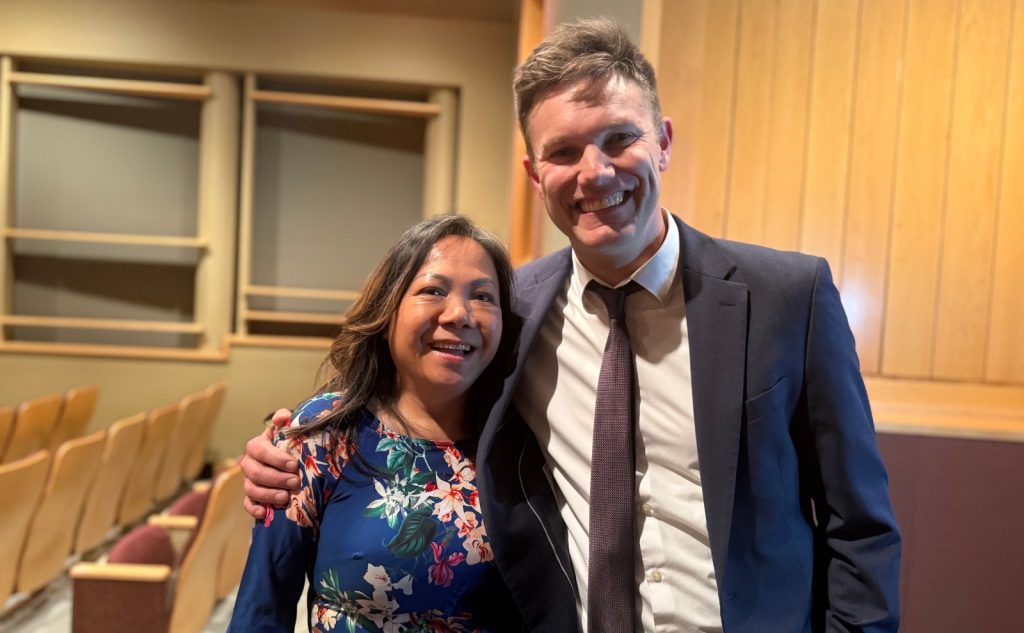
“That’s the America that I know and remember,” Tran says. “I long for those days when we were so accepting, so open and fearless.”
Tran described immigrants as “survivors” and “pioneers” who continue shaping communities across the country.
“Immigrants are survivors,” Tran says. “We build this country’s quilt.”
To accentuate this point, students created quilt panels representing their family histories. Each panel included cultural patterns, family photographs, and symbols tied to students’ heritage.
While sewing the quilt together the night before the presentation, Tran says she noticed some of the transferred photographs beginning to crumble.
“I thought, ‘Oh my goodness, families are so fragile,’” she says.
The unfinished quilt will continue growing as future students add their own migration stories.
“The quilt is left unfinished because as more newcomers come into East Kentwood, I’m going to add more interest to this quilt,” Tran says.
Exploring identity
For 11th-grader Kristin Pham, researching her family history meant uncovering details she had never heard about her Vietnamese grandparents’ refugee journey.
Pham learned that before arriving in Grand Rapids in 1979, her grandmother and eight relatives spent nine months in a refugee camp in Malaysia before receiving sponsorship assistance from St. Michael Church in Coopersville.
“I actually did not know when my grandparents came to America,” Pham says. “I didn’t know that they went to Malaysia before they came to America.”
Once settled in West Michigan, her family helped establish a string of Vietnamese-owned businesses along Division Avenue, including grocery stores, restaurants, and a coffee shop operated by her grandparents.
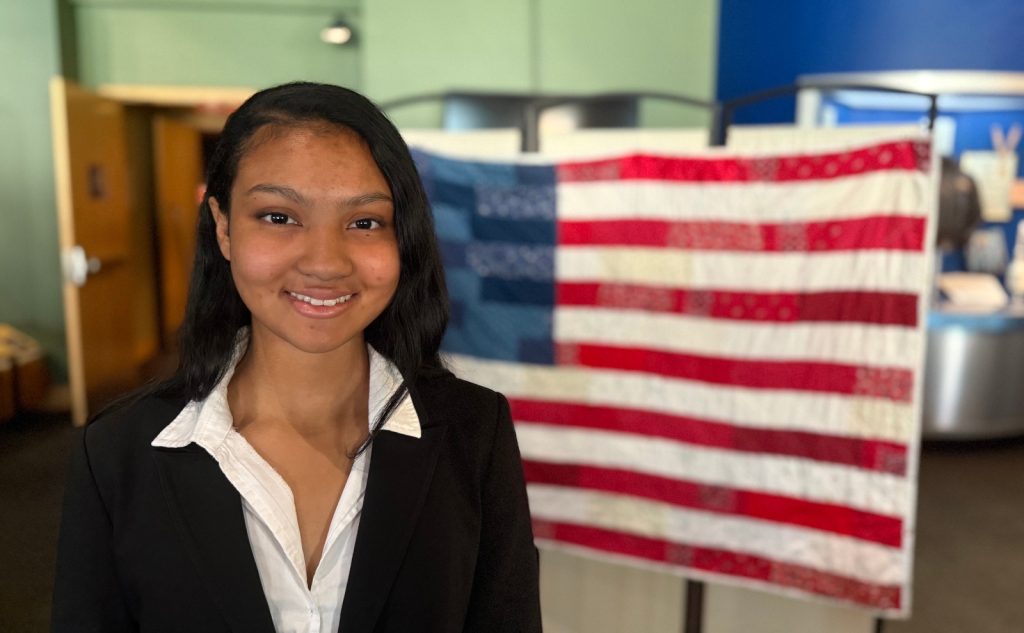
“These establishments are essential to making a community feel welcoming and make West Michigan feel like their home away from home,” Pham said during her presentation.
The project helped Pham publicly embrace an identity she says she has sometimes struggled to explain.
“I actually did feel that my appearance does not actually reflect how Asian I am,” she says. “Even with my mom — she is 100% Vietnamese — a lot of people assume I’m Hispanic or Hawaiian.”
She says those assumptions contributed to feelings of uncertainty because she does not speak Vietnamese fluently.
“Maybe being racially ambiguous is a good thing, but I do think that I have some identity issues,” Pham says.
Still, the experience left her feeling proud of her family’s contributions to West Michigan.
“My family has done great things in West Michigan,” she says. “I’m so proud to be a part of that and get to continue that legacy.”
Inspired by her family’s entrepreneurial background, Pham plans to attend Saginaw Valley State University as a business major and become the first person in her family to attend college.
Family sacrifices
East Kentwood freshman Amina Povlakic shared her father’s journey from Bosnia during the Bosnian War in the 1990s.
“He is from Bosnia, and he left due to the war happening and ethnic cleansing happening, and he came through the refugee program,” Povlakic says.
Interviewing her father revealed details she had never heard before.
“I learned that he went through a long process to be able to get here,” she says.
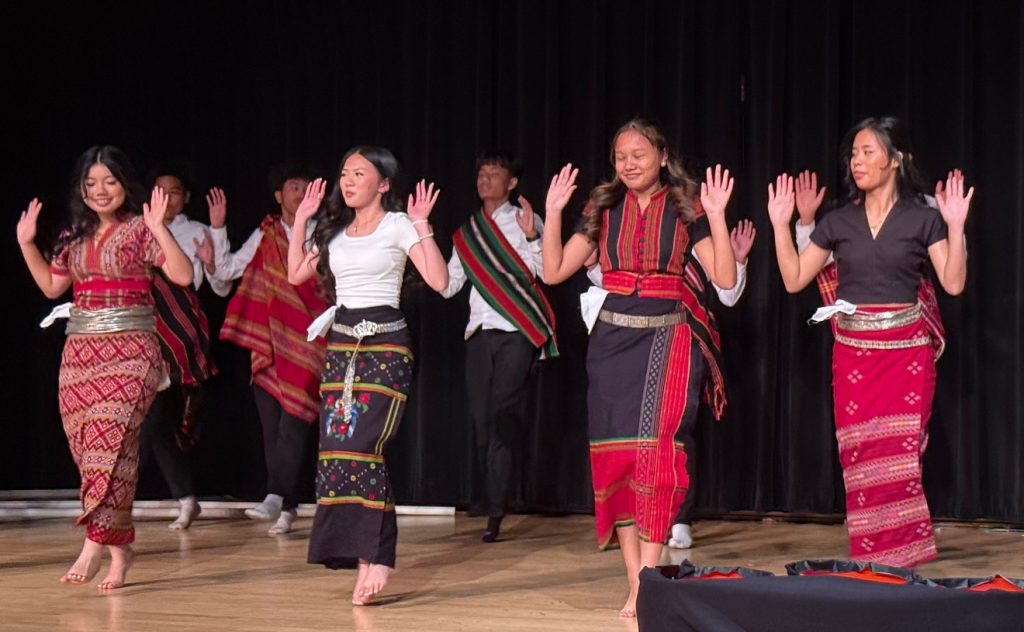
Her father first fled to another town in Bosnia after his hometown was destroyed, then traveled to Switzerland in search of work. Eventually, he and his brother applied to immigrate to the United States through Germany.
“They were able to come here and build a life with the community and cousins and all that stuff,” Povlakic says.
Another student presenter, Edwin Lopez-Garcia, who is graduating this year, focused his project on his family’s migration from Jalisco, Mexico, to Michigan during the 1990s.
“What I learned from doing this story is not only the history of how my family came to West Michigan, but also what it means for West Michigan to preserve their history through Kentwood Public Schools,” Lopez-Garcia says.
Lopez-Garcia says the project helped him better understand how local history shapes community identity.
“By signing up for AP history classes, I learned more about my local community and how important it is to preserve the history in those local communities,” he says.
While researching his family’s story, Lopez-Garcia says he gained a deeper appreciation for the sacrifices his parents made after arriving in Michigan.
“What I found really surprising is the stuff that my mom would do to help support us,” Lopez-Garcia says. “She would help babysit a lot of people, and sometimes she would help my dad with construction.”
Strength in diversity
Hawthiya Malual, also a senior, centered her project on why her parents chose to settle in West Michigan after her mother immigrated from Ethiopia and her father immigrated from South Sudan.
“For my father, the primary reason was seeing so many communities, especially ones from back home in Sudan, that reminded him of his childhood,” Malual says.
Her mother found comfort in the educational opportunities available.
“They valued the educational systems that allowed my dad to pursue higher education and allowed my mom to feel like this place would allow her kids to comfortably grow up and have opportunities she thought her children might never have,” Malual says.
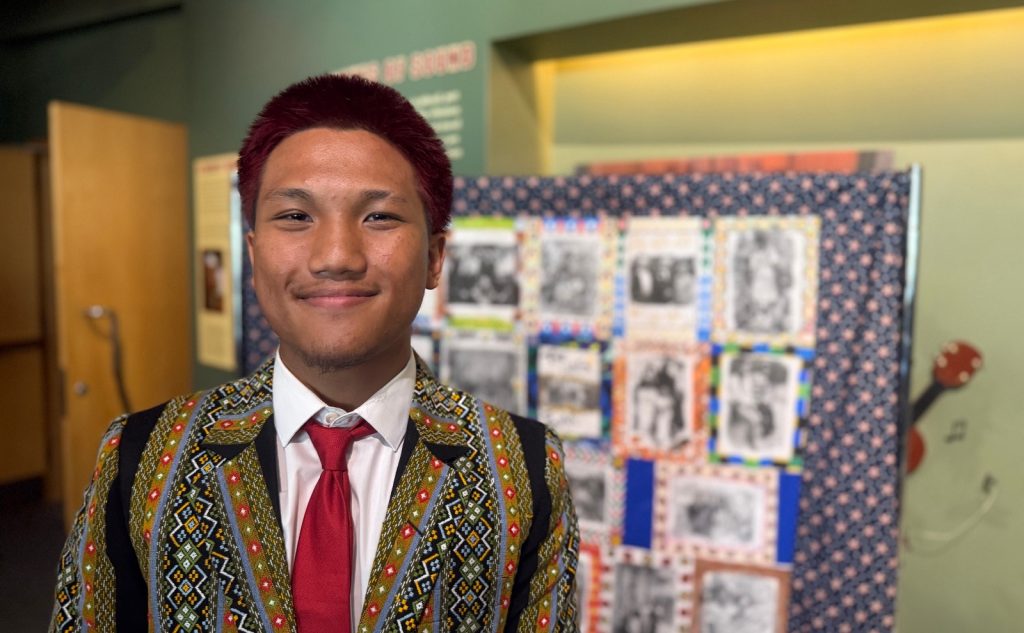
Like many students in the project, she says diversity itself became part of her family’s resilience.
“The primary reason they wanted to stay here is because the diversity allowed them to have a type of resilience they could pass on to their children,” she says.
For Kristopher Hmung, the project became an opportunity to process both fear and hope. Hmung shared his family’s story of fleeing civil war in Myanmar and rebuilding their lives in Kentwood.
His parents fled by truck across the Thailand border, where his father was arrested and jailed before later reuniting with his mother at a refugee camp in Malaysia.
“I thought they just flew on a plane there,” Hmung says afterward. “They took a truck, they went barefoot, and then they took trucks again. It was a whole process.”
After arriving in Grand Rapids in 2010, Hmung says, his family struggled financially while adapting to life in the United States.
“We were so broke, our daily food would be peanut butter and rice,” Hmung says. “But we were closer to the people we cared about, and that’s what mattered.”
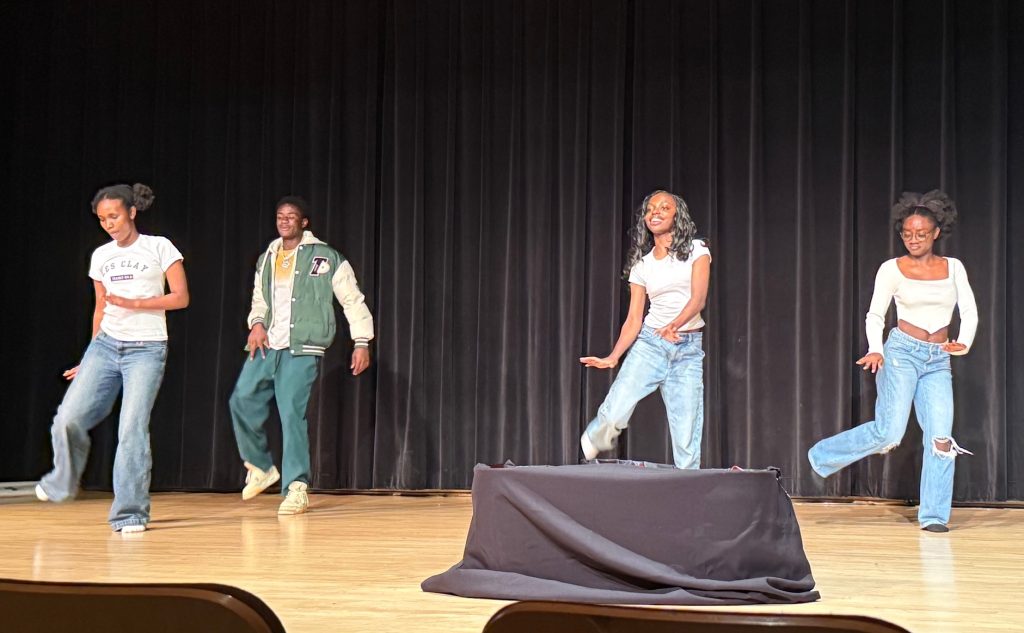
He also described reconnecting with his Chin culture through dance, church worship and soccer.
“I did everything I could to learn Hakha Chin,” Hmung says, “whether it was learning traditional dances, cooking cultural foods, or singing at church.”
The project coincided with a particularly emotional moment in Hmung’s life. After years of uncertainty about his immigration status, he says he is officially set to become a U.S. citizen later this month.
“That was very scary for me,” Hmung says. “I didn’t know what was going to happen to me. I’ve heard so many stories of people from my country being deported back. I was afraid and scared, but I prayed.”
The experience also reinforced his future goals.
“After receiving God, I found out that being a good person and helping others can do a lot,” Hmung says, adding that he plans to pursue a career in law enforcement. “I just wanted to pursue helping a lot of people.”
Photos by Shandra Martinez
To learn more about Rapid Growth’s Voices of Youth project and read other installments in the series, click here. This series is made possible via underwriting sponsorships from the Steelcase Foundation, Frey Foundation, PNC Foundation, and Kent ISD.
Author
Related Articles
Kent District Library lets neighbors borrow, discover and explore together
From birdwatching kits to local music, KDL helps people try new things, save money, and share experiences.
MSU medical school programs aim to alleviate shortage of rural physicians
By encouraging students like Elizabeth Phelps, the College of Human Medicine tackles the need for doctors in small communities.
How public libraries instill literacy in littles
Libraries’ children’s programming builds kindergarten readiness and a lifelong love for reading.


